

This guide compares eight manufacturers worth considering for industrial electromagnetic flow measurement: Endress+Hauser, FlowT, KROHNE, Siemens, ABB, Emerson/Rosemount, Yokogawa, and Badger Meter. The order is not a global ranking; it is a practical shortlist for engineers and buyers comparing a specific application.
If you are still evaluating the measurement principle, start with FlowT's guide to how magnetic flow meters work and where they are used, then review the current electromagnetic flow meter range.
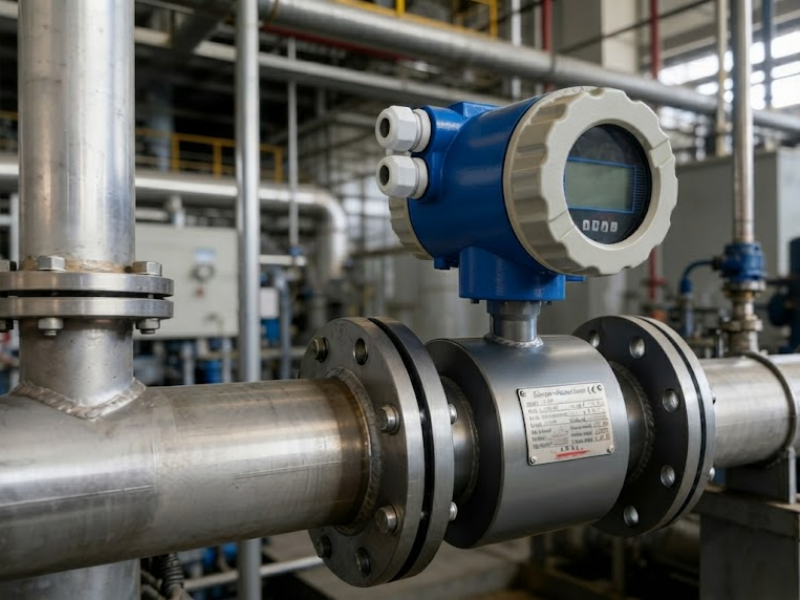
How We Compared the Brands
We compared six practical factors: application coverage, wetted materials, installation flexibility, diagnostics, control-system integration, and support requirements. We did not use hidden scores or unverified market-share claims. The right supplier changes with the fluid, process risk, plant standard, and budget. For a broader technology-level view, see FlowT's flow measurement selection guide.
Method note: Product-family descriptions for the international brands below were checked against current manufacturer information. Final selection should always use the latest datasheet, installation manual, material compatibility guidance, and written application confirmation for the exact model and process conditions.
Quick Comparison of 8 Magnetic Flow Meter Brands
| Brand | Representative Range | Useful Starting Point | Key Question Before Buying |
|---|---|---|---|
| Endress+Hauser | Promag | Water, wastewater, process and hygienic applications | Which Promag sensor and transmitter combination matches the duty? |
| FlowT | Inline and insertion electromagnetic meters | Water, wastewater and general conductive liquids | Which liner, electrodes, mounting and output configuration is required? |
| KROHNE | OPTIFLUX, WATERFLUX | Water, wastewater, process liquids and constrained piping | Does the selected model support the actual media and installation layout? |
| Siemens | SITRANS FM | Process plants and Siemens automation environments | Which sensor/transmitter and network configuration is needed? |
| ABB | ProcessMaster | Process and water applications | Which diagnostics, materials and approvals are included? |
| Emerson/Rosemount | Rosemount magnetic flow meters | Process, water/wastewater and slurry | Is a general-purpose or slurry-focused sensor required? |
| Yokogawa | ADMAG | Process, water and difficult conductivity applications | What is the conductivity limit of the exact sensor technology? |
| Badger Meter | ModMAG | Water and general industrial measurement | Which model covers the required size, materials and communications? |
Before Comparing Brands, Confirm a Magmeter Fits the Process
Conventional magnetic flow meters are designed for electrically conductive liquids flowing through a full pipe. They are widely used for water, wastewater, many water-based chemicals, sludge, and slurry because the measuring tube has no mechanical rotor or primary obstruction in the bore. They are generally not suitable for gases, steam, or non-conductive hydrocarbons and solvents.
Conductivity deserves particular attention because there is no single minimum value that applies to every magmeter. If the fluid is demineralized, solvent-rich, or otherwise close to the technology's operating limit, check the selected sensor rather than relying on a generic rule. FlowT's article on minimum conductivity for a mag flow meter explains the issue in more detail. Emerson likewise describes conductive-liquid measurement as a fundamental application requirement for conventional magnetic flow technology. :contentReference[oaicite:0]{index=0}
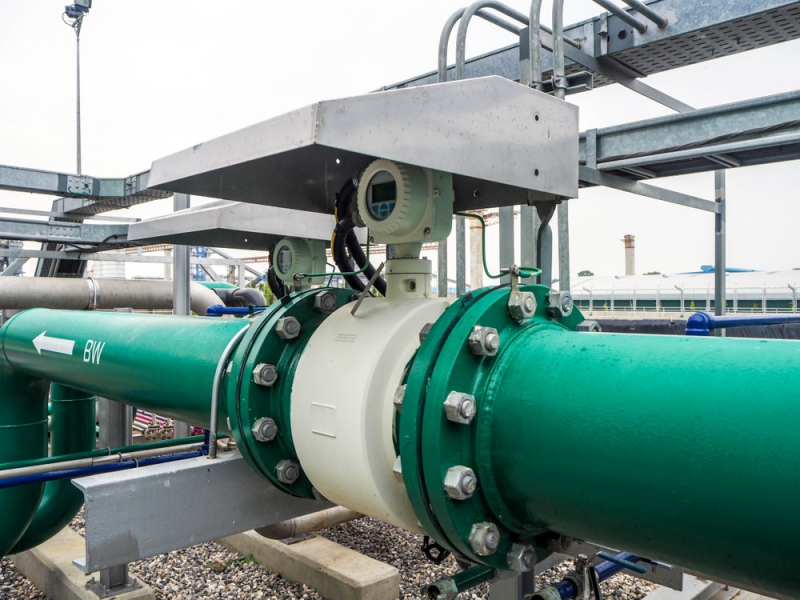
8 Magnetic Flow Meter Brands Worth Comparing
1. Endress+Hauser
Endress+Hauser's Promag family is divided by application rather than built around one universal sensor. Promag W targets water and wastewater, while other Promag families serve process and hygienic duties. Selected Promag W configurations also support a 0 x DN inlet run. Buyers should still specify the exact sensor, transmitter, liner, electrodes, approvals, and installation version. See the Endress+Hauser Promag W documentation. :contentReference[oaicite:1]{index=1}
2. FlowT
FlowT is worth shortlisting when a project needs a focused flow-measurement supplier rather than a broader automation platform. Its current sitemap includes an inline mag meter for water applications and an insertion-type magnetic flow meter. For water, wastewater, and general conductive liquids, compare FlowT with larger brands on the same RFQ: diameter, flow range, conductivity, liner, electrodes, pressure rating, mounting, outputs, enclosure, and calibration. FlowT's mag flow meter selection guide helps prepare that specification.
3. KROHNE
KROHNE offers WATERFLUX for water-focused service and OPTIFLUX for broader process duties. WATERFLUX 3400 is currently positioned for advanced water applications without required straight inlet or outlet runs, while OPTIFLUX models cover demanding process media. Treat these as model-specific capabilities and verify the exact installation and material limits in the KROHNE electromagnetic flowmeter portfolio. :contentReference[oaicite:2]{index=2}
4. Siemens
Siemens is particularly relevant in plants already using Siemens automation. The SITRANS FMT020 transmitter supports configurable communications including HART, PROFINET, EtherNet/IP, PROFIBUS, and Modbus. Integration is only one part of the decision: the sensor, liner, electrodes, process connection, and approvals still have to fit the application. See the Siemens SITRANS FMT020 product information. :contentReference[oaicite:3]{index=3}
5. ABB
ABB's ProcessMaster family covers process and water applications and is relevant where diagnostics and verification are part of the maintenance strategy. The quotation should state the liner, electrodes, communications, approvals, verification functions, and mounting arrangement rather than simply saying "ProcessMaster." Current configurations are listed in the ABB ProcessMaster portfolio. :contentReference[oaicite:4]{index=4}
6. Emerson / Rosemount
Rosemount magnetic flow meters cover process, water, wastewater, and difficult solids-bearing applications. Emerson currently offers the 8750W for water/wastewater and a dedicated MS sensor for challenging slurry service. In slurry applications, solids, abrasiveness, velocity, liner wear, electrode behavior, and entrained gas can matter more than headline accuracy. Review the Rosemount magnetic flow meter portfolio. :contentReference[oaicite:5]{index=5}
7. Yokogawa
Yokogawa's ADMAG range covers process and water applications, while its capacitance-type CA Series is specified for conductivity down to 0.01 μS/cm. That capability is model-specific and should not be applied to every ADMAG sensor. If conductivity is close to a conventional magmeter limit, identify the actual fluid value and verify the exact technology in the Yokogawa magnetic flowmeter portfolio. :contentReference[oaicite:6]{index=6}
8. Badger Meter
Badger Meter's ModMAG family is an established option for water and general industrial measurement, with current models such as M5000, M1000, and M4000 covering different size and performance ranges. Check liner, electrodes, environmental protection, communications, and verification requirements at model level through the Badger Meter ModMAG range. :contentReference[oaicite:7]{index=7}
Which Brands Fit Which Applications?
Water and Wastewater
Water is the broadest competitive area because almost every manufacturer above has relevant models. A useful shortlist may include Endress+Hauser Promag W, KROHNE WATERFLUX or OPTIFLUX, Rosemount 8750W, ABB water configurations, Yokogawa AXW, Badger ModMAG, Siemens water sensors, and suitable FlowT inline or insertion meters.
The final decision should come from the application: minimum flow, pipe size, solids, chemical dosing, burial or submersion, power availability, drinking-water approvals, communications, and available straight run. FlowT's water flow meter selection guide covers general water projects, while its wastewater flow meter guide adds considerations for treatment processes, solids, and dirty service.
Corrosive Chemicals
For corrosive liquids, start with chemistry rather than a preferred brand. Record the chemical name, concentration, normal and maximum temperature, pressure, and any cleaning or flushing media. These conditions determine which liner and electrode combinations should be investigated.
For example, a buyer should not ask whether PTFE is simply "better" than rubber. The real questions are whether the liner can tolerate the chemistry and temperature, whether abrasion or vacuum conditions matter, and whether the proposed electrode material is compatible with the process. FlowT's chemical flow meter guide and overview of mag flow meter lining materials provide a useful starting point before final manufacturer confirmation.
Slurry and Abrasive Service
Slurry applications need more detail than "dirty liquid." Provide solids concentration, particle size, particle shape, abrasiveness, minimum and maximum velocity, coating tendency, and the possibility of entrained air. A municipal sludge line, pulp stock, and mineral slurry can all be conductive, yet they create very different wear and signal conditions.
KROHNE's abrasive-media models and Emerson's slurry-specific Rosemount MS sensor demonstrate why model-level design matters. Other manufacturers may also have suitable configurations, but the supplier should confirm liner life considerations, electrode arrangement, signal stability, and recommended velocity for the actual slurry. Where wear risk is high, ask what failure mode is expected and what inspection or replacement strategy is practical.
Tight Piping and Retrofit Projects
Elbows, tees, pumps, reducers, and control valves can distort the velocity profile entering a meter. Traditional straight-run recommendations remain relevant for many installations, but selected current sensors are designed to tolerate much shorter runs. That means "all magmeters need 5D upstream and 2D downstream" is too broad to use as a purchasing rule.
Review FlowT's guidance on installing a magmeter near elbows and mag flow meter flow-profile requirements. Then use the installation manual for the exact shortlisted model. In a retrofit, also consider whether an insertion or non-intrusive technology would reduce piping work enough to justify a different measurement approach.
How to Build a Shortlist Before Requesting Quotes
A practical shortlist normally contains two or three suppliers. Eliminate any option that fails a non-negotiable requirement such as conductivity, chemical compatibility, hazardous-area approval, or control-system integration. Then compare application advantages rather than general reputation. Water projects may prioritize low-flow performance and installation; chemical plants may give more weight to wetted materials, verification, and approvals.
A Practical 6-Step Magnetic Flow Meter Selection and RFQ Process
- Confirm the fluid. Record conductivity, chemical composition or concentration, solids content, and whether the pipe remains full during normal and abnormal operation.
- Define the operating envelope. Provide minimum, normal, and maximum flow, plus normal and maximum temperature and pressure. Do not size solely from nominal pipe diameter.
- Select wetted materials. Match liner and electrode materials to corrosion, abrasion, temperature, cleaning chemicals, and any vacuum condition. For critical chemical service, ask for written application confirmation.
- Review the installation. Identify pipe material, upstream disturbances, grounding, orientation, vibration, submersion or outdoor exposure, and whether compact or remote electronics are preferable.
- Specify the plant interface. State the power supply and required 4-20 mA, pulse, HART, Modbus, PROFIBUS, PROFINET, EtherNet/IP, or other digital communication rather than paying for interfaces the plant will not use.
- Normalize quotations. Compare identical diameter, flange standard, pressure rating, liner, electrodes, transmitter, accuracy, approvals, calibration documents, cable length, accessories, warranty, and delivery scope.
Why Two Same-Size Magmeters Can Have Very Different Prices
Consider two hypothetical DN100 quotations. Supplier A proposes a standard liner, standard electrodes, compact transmitter, general-purpose enclosure, and basic analog communication. Supplier B proposes the same nominal diameter with a more chemically resistant liner, upgraded electrode material, remote electronics, hazardous-area approval, longer cable, and verification documentation.
Both lines on a purchasing spreadsheet may say "DN100 magnetic flow meter," yet they are not equivalent products. Price comparison only becomes meaningful after the technical scope is aligned. If Supplier B's additional materials and approvals are unnecessary, it may be over-specified. If Supplier A's configuration cannot survive the process, the lower purchase price is irrelevant.
Accuracy should be treated with the same discipline. A strong factory specification does not guarantee strong field performance if the meter is oversized, the pipe is partially full, grounding is poor, or the installation creates unstable flow. FlowT's article on verifying electromagnetic flow meter accuracy explains several practical checks after installation.
Common Magnetic Flow Meter Selection Mistakes
- Buying on accuracy alone. Materials, sizing, installation, and process stability can matter more than a small difference in published accuracy.
- Using one conductivity threshold for every meter. Check the exact sensor technology and the minimum conductivity expected during real operation.
- Choosing liner and electrodes by habit. Chemistry, concentration, temperature, abrasion, cleaning media, and coating risk can change the correct material choice.
- Sizing only from pipe diameter. A DN100 pipe does not automatically require a DN100 meter if the expected velocity range is unsuitable.
- Assuming every magmeter needs the same straight run. Installation requirements vary by sensor design and upstream disturbance.
- Ignoring full-pipe conditions. A conventional electromagnetic meter cannot produce a reliable liquid-flow measurement if the measuring tube is not properly filled.
- Comparing unequal quotations. Normalize the configuration before deciding which supplier is cheaper.
If conductivity, pipe access, or operating conditions make electromagnetic measurement questionable, compare it with FlowT's ultrasonic versus electromagnetic flow meter guide before committing to the technology.
Magnetic Flow Meter RFQ Checklist
- Fluid name and chemical concentration
- Minimum expected conductivity
- Solids content, particle characteristics, or abrasion risk
- Minimum, normal, and maximum flow
- Normal and maximum temperature
- Normal and maximum pressure
- Pipe size and pipe material
- Preferred liner and electrode material, if already specified
- Flange or process connection and pressure rating
- Compact or remote transmitter
- Power supply
- Analog, pulse, and digital communication requirements
- Available straight pipe and nearby disturbances
- Environmental or hazardous-area classification
- Calibration, verification, or certificate requirements
- Quantity, installation country, and required delivery scope
If you do not know which liner or electrode material to specify, provide the actual process data instead of guessing. A technically useful quotation should show what the supplier recommends and make the important assumptions visible.
FAQ
Q: What are the best magnetic flow meter brands?
A: There is no defensible universal number-one manufacturer. Endress+Hauser, FlowT, KROHNE, Siemens, ABB, Emerson/Rosemount, Yokogawa, and Badger Meter all offer relevant electromagnetic options, but the best shortlist depends on conductivity, chemistry, flow range, installation, communications, approvals, service expectations, and budget.
Q: Where does FlowT fit compared with larger global brands?
A: FlowT is a practical option for buyers who want to compare a focused flow-measurement manufacturer with larger automation and instrumentation groups. It is particularly relevant for water, wastewater, and general conductive-liquid projects where the technical specification is clearly defined. Large multinational brands may have an advantage when a plant requires an existing corporate vendor agreement, a specific automation ecosystem, or extensive local service infrastructure. Those factors should be compared alongside price rather than assumed to determine measurement quality by themselves.
Q: Which magnetic flow meter brand is best for wastewater?
A: Wastewater selection should begin with the process rather than the logo. Check conductivity, solids, abrasion, chemical dosing, minimum velocity, pipe size, submersion risk, power availability, and whether the pipe remains full. A treatment-plant water line, industrial effluent line, and sludge-transfer line may require different sensor configurations even when they share the same nominal diameter.
Q: How much straight pipe does a magnetic flow meter need?
A: There is no single requirement for all models. Some conventional installations still need defined upstream and downstream straight runs, while selected products from manufacturers such as Endress+Hauser and KROHNE are designed for special reduced-run or 0D configurations. The exact installation manual should take priority over a generic internet rule.
Q: Should I choose a premium global brand or a lower-cost manufacturer?
A: Match the supplier and specification to measurement risk. A critical chemical, hazardous-area, custody-transfer, or difficult slurry point may justify specialized materials, advanced diagnostics, certifications, and extensive service support. Straightforward conductive-water monitoring may not require the same level of complexity. Compare technical compliance and lifecycle requirements first, then Compare prices.
Final Recommendation
Begin with the process, not a brand ranking. Confirm the fluid and conductivity, define the real operating range, select compatible wetted materials, review the piping arrangement, specify the control-system interface, and identify calibration or certification requirements.
Then shortlist two or three manufacturers and send each the same RFQ. Endress+Hauser, FlowT, KROHNE, Siemens, ABB, Emerson/Rosemount, Yokogawa, and Badger Meter can all be valid candidates in the right application. The useful comparison is not which logo appears highest on a list; it is which correctly configured meter meets the process requirement without unnecessary cost or avoidable engineering risk.


