Hey there! If you're in the market for a mag flow meter, you're in the right place. I'm a supplier of mag flow meters, and I've helped countless customers choose the perfect meter for their applications. In this blog post, I'll share some tips on how to choose the right mag flow meter for your specific needs.
Understanding Mag Flow Meters
First things first, let's talk about what a mag flow meter is. A mag flow meter, short for magnetic flow meter, measures the flow rate of conductive liquids. It works based on Faraday's Law of Electromagnetic Induction. When a conductive fluid flows through a magnetic field generated by the meter, a voltage is induced. This voltage is proportional to the flow rate of the fluid, allowing the meter to accurately measure how much liquid is passing through.
Consider Your Application
The most important step in choosing a mag flow meter is understanding your application. Here are some key factors to consider:
1. Type of Fluid
The type of fluid you're measuring is crucial. Mag flow meters are designed to measure conductive liquids. The conductivity of the fluid should be above a certain threshold, typically around 5 μS/cm. Common fluids measured by mag flow meters include water, wastewater, slurries, and various chemical solutions. For example, if you're measuring water, a Magnetic Flow Meter for Water Measurement with Calibration would be a great option. It's specifically calibrated for accurate water measurement.
2. Flow Range
You need to know the minimum and maximum flow rates of the fluid in your system. Mag flow meters have a specific flow range within which they can accurately measure the flow. If the flow rate is too low, the meter may not be able to detect the flow accurately. On the other hand, if the flow rate is too high, it can cause damage to the meter or lead to inaccurate readings. Make sure to choose a meter with a flow range that matches your application.
3. Pipe Size
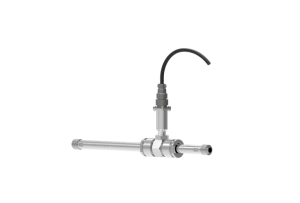
The size of the pipe where the mag flow meter will be installed is also important. Mag flow meters come in different sizes to fit various pipe diameters. You need to choose a meter that is compatible with your pipe size. For larger pipes, an Insertion Type Mag Flow Meter might be a suitable choice. It can be inserted into the pipe, making it easier to install and cost - effective for larger diameter pipes.
4. Temperature and Pressure
The temperature and pressure of the fluid in your system can affect the performance of the mag flow meter. Most mag flow meters have a specified temperature and pressure range within which they can operate. If the fluid temperature or pressure is outside this range, it can lead to inaccurate readings or even damage the meter. Make sure to choose a meter that can handle the temperature and pressure conditions of your application.
5. Accuracy Requirements
The level of accuracy you need depends on your application. Some applications, such as industrial processes where precise measurements are critical, require a high - accuracy mag flow meter. Other applications may tolerate a lower level of accuracy. Mag flow meters can typically achieve an accuracy of ±0.2% to ±2% of the measured value. Consider your accuracy requirements when choosing a meter.
Other Features to Look For
In addition to the factors related to your application, there are some other features you might want to consider:
1. Output Signals
Mag flow meters can provide different types of output signals, such as analog signals (4 - 20 mA) or digital signals (Modbus, Profibus). The type of output signal you need depends on your control system. Make sure the meter you choose can provide the output signal that is compatible with your system.


2. Liners and Electrodes
The liner and electrodes of the mag flow meter are in contact with the fluid. The liner protects the meter body from the corrosive effects of the fluid, while the electrodes detect the induced voltage. Different liner materials, such as PTFE, rubber, and ceramic, are suitable for different fluids. Similarly, different electrode materials, such as stainless steel, titanium, and Hastelloy, are also available. Choose the liner and electrode materials based on the chemical properties of the fluid you're measuring.
3. Installation and Maintenance
Consider how easy it is to install and maintain the mag flow meter. Some meters require special installation procedures, while others are more straightforward. Also, look for meters that are easy to clean and maintain. This can save you time and money in the long run.
Comparing Different Mag Flow Meters
Once you've considered all the factors above, it's time to compare different mag flow meters. Look at the specifications, features, and prices of different models. Don't just focus on the price; make sure you're getting a meter that meets your requirements. You can also read customer reviews and testimonials to get an idea of the performance and reliability of the meters.
Making the Right Choice
After comparing different options, you should be able to make an informed decision. Choose the mag flow meter that best suits your application, offers the features you need, and fits within your budget.
If you're still unsure about which mag flow meter is right for you, don't hesitate to reach out to us. As a mag flow meter supplier, we have the expertise and experience to help you choose the perfect meter for your needs. Whether you're measuring water, sewage, or other conductive fluids, we can provide you with the right solution. For sewage measurement, our Electromagnetic Flowmeters Electrical Meter For Sewage is a great option.
We understand that every application is unique, and we're here to assist you throughout the process. Contact us today to start the conversation about your mag flow meter needs. We'll work with you to find the best solution for your specific situation.
References
- Flow Measurement Handbook: Industrial Designs and Applications, by Richard W. Miller
- Principles of Flow Measurement, by Robert W. Miller
So, that's it! I hope this blog post has been helpful in guiding you on how to choose the right mag flow meter for your application. If you have any questions, feel free to leave a comment or contact us.