

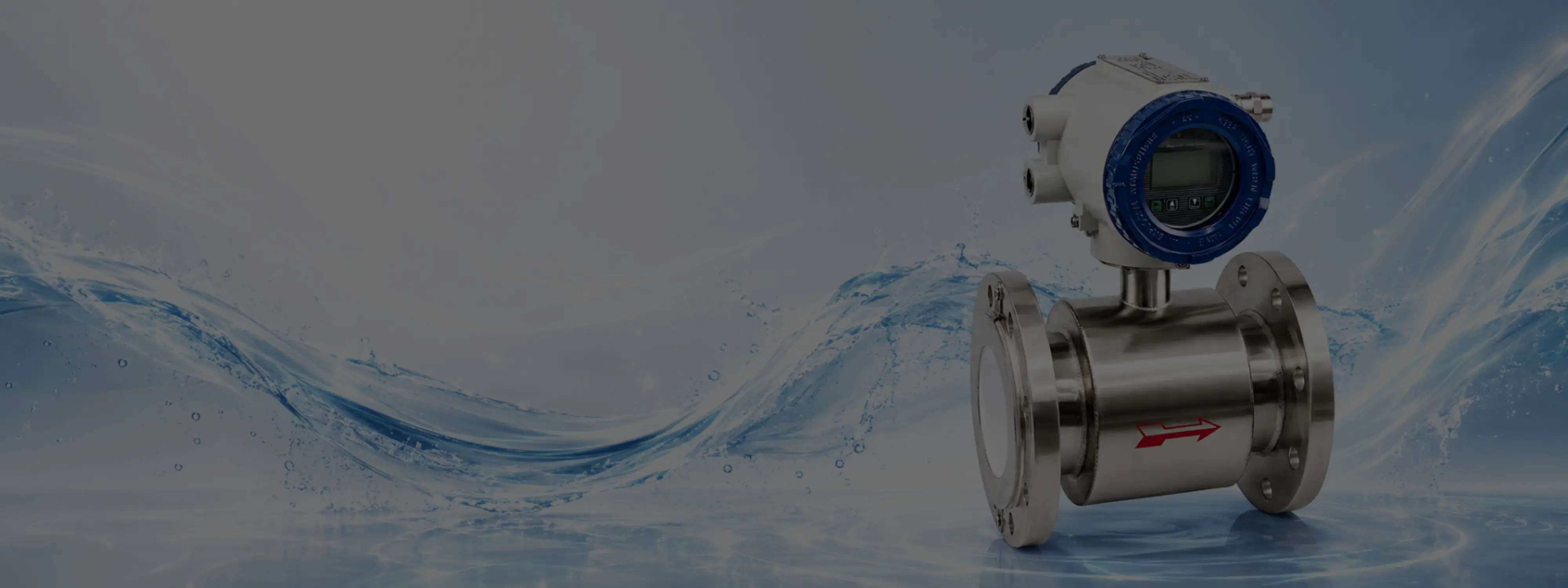
Electromagnetic Flow Meter Manufacturer & OEM/ODM Supplier
FlowT is an electromagnetic flow meter manufacturer and supplier in China, providing magnetic flow measurement solutions for water, wastewater, chemical processing, industrial automation and other conductive liquid applications.
With more than 20 years of experience in flow measurement, we support customers from product selection and standard supply to customized electromagnetic flow meters, OEM private labeling and project-based solutions.
Whether you are a distributor looking for a reliable magnetic flow meter supplier, a system integrator requiring a specific communication output, or an equipment manufacturer developing a customized flow measurement solution, our team can help you select and configure the right product for your application.
FlowT Instrument (Shenzhen) Limited:Your Trustworthy Electromagnetic Flow Meter Manufacturer!
Our Company is established by flow measurement professionals with more than 20 years of experience in flow measurement and flow standards. We are pioneers in the ultrasonic flow measurement industry and possess many years of experience valuable to our customers. Furthermore, We are innovative and on the cutting edge of ultrasonic technology with some revolutionary measurement techniques being introduced that will bring very high precision and true real time measurement.
Leading Service
We are committed to constantly innovating our products to provide foreign customers with a large number of high-quality products to exceed customer satisfaction. We can also provide customized services according to customers' requirements such as size, color, appearance, etc. We can provide the most favorable price and high-quality products.
Quality Guaranteed
We have been continuously researching and innovating to meet the needs of different customers. At the same time, we always adhere to strict quality control to ensure that the quality of every product meets international standards.
Wide Sales Countries
Our products have been exported to more than 40 countries, such as Russia, Australia, USA, UK, Germany, Ukraine, Iran, Romania, Hungary, Mexico, Brazil, Chile, Canada, Spain, Colombia, etc. We have agents in the USA, Australia, Singapore, Kuwait, Russia.
Various Types of Products
Our products include a wide range of flow meter like Ultrasonic Flow Meter,Electromagnetic Flow Meter, Vortex Flow Meter, Thermal Mass Flow Meter, Turbine Flow Meter, Liquid Level Flow Meter, Gear Flow Meter, Totalizer Flow Meter and so on.
-
![Electromagnetic Flowmeters Electrical Meter For Sewage]() Electromagnetic Flowmeters Electrical Meter For SewageElectromagnetic flow meters (or magmeters) are a type of velocity or volumetric flow meter that operate pursuant to Faraday's law of electromagnetic induction – which states that a voltage will be
Electromagnetic Flowmeters Electrical Meter For SewageElectromagnetic flow meters (or magmeters) are a type of velocity or volumetric flow meter that operate pursuant to Faraday's law of electromagnetic induction – which states that a voltage will be -
![Electromagnetic flowmeter for monitoring wastewater treatment]() Electromagnetic flowmeter for monitoring wastewater treatmentOur Electromagnetic Flowmeter is a cutting-edge solution designed to deliver precise and reliable flow measurement for wastewater treatment processes. Built with advanced electromagnetic technology,
Electromagnetic flowmeter for monitoring wastewater treatmentOur Electromagnetic Flowmeter is a cutting-edge solution designed to deliver precise and reliable flow measurement for wastewater treatment processes. Built with advanced electromagnetic technology, -
![4-20mA Magnetic Meter Electromagnetic Flowmeter Flow Meter]() 4-20mA Magnetic Meter Electromagnetic Flowmeter Flow MeterSmart Electromagnetic Flowmeter 4-20mA-Magnetic-Meter-Electromagnetic-Flowmeter-Flow-Mete is designed to measure the flow of conductive liquid media, including two-component, food, pollution
4-20mA Magnetic Meter Electromagnetic Flowmeter Flow MeterSmart Electromagnetic Flowmeter 4-20mA-Magnetic-Meter-Electromagnetic-Flowmeter-Flow-Mete is designed to measure the flow of conductive liquid media, including two-component, food, pollution -
![China Factory Promotions DN4-DN2000mm Electromagnetic Flowmeter]()
-
![Flange Electromagnetic Flow Meter With 316 Stainless Steel]()
-
![Insertion Flow Meter manufacturer]() Insertion Flow Meter manufacturerQ&A 1. The unit shows both LCD display, flow rate and totalizer Yes. 2. Diagnostic for signal strength and signal qualitys : Yes . 3. Velocity range +/-10 m/sec : Yes or no (please specify ours)
Insertion Flow Meter manufacturerQ&A 1. The unit shows both LCD display, flow rate and totalizer Yes. 2. Diagnostic for signal strength and signal qualitys : Yes . 3. Velocity range +/-10 m/sec : Yes or no (please specify ours) -
![Mag Meter Flow Meter for Water Inline Type Flange Connection]() Mag Meter Flow Meter for Water Inline Type Flange Connectionmag meter flow meter for water inline type flange connection Improved Performance and Function High anti-noise performance. Providing users a optional high anti-noise technology function. High
Mag Meter Flow Meter for Water Inline Type Flange Connectionmag meter flow meter for water inline type flange connection Improved Performance and Function High anti-noise performance. Providing users a optional high anti-noise technology function. High -
![Mag Meter for Liquid High Accuracy Insertion Flow Meter Easy to Installation]() Mag Meter for Liquid High Accuracy Insertion Flow Meter Easy to InstallationMag meter for liquid high accuracy insertion flow meter easy to installation DF400 serial is the smart electromagnetic flow meter, DF402 is the inline type and the DF404 is the remote type. DF400
Mag Meter for Liquid High Accuracy Insertion Flow Meter Easy to InstallationMag meter for liquid high accuracy insertion flow meter easy to installation DF400 serial is the smart electromagnetic flow meter, DF402 is the inline type and the DF404 is the remote type. DF400 -
![Magnetic Flow Meter for Water Measurement with Calibration]() Magnetic Flow Meter for Water Measurement with CalibrationMagnetic flow meter for water measurement with calibration The working principle of the electromagnetic flow meter is based on Faraday’s law of electromagnetic induction. The two electromagnetic
Magnetic Flow Meter for Water Measurement with CalibrationMagnetic flow meter for water measurement with calibration The working principle of the electromagnetic flow meter is based on Faraday’s law of electromagnetic induction. The two electromagnetic -
![Electromagnetic Water Flow Meter for Measuring Flow Capavitive]() Electromagnetic Water Flow Meter for Measuring Flow CapavitiveOur Electromagnetic Water Flow Meter is a cutting-edge instrument designed to accurately measure the flow of water. Utilizing advanced capavitive technology, this meter provides precise and reliable
Electromagnetic Water Flow Meter for Measuring Flow CapavitiveOur Electromagnetic Water Flow Meter is a cutting-edge instrument designed to accurately measure the flow of water. Utilizing advanced capavitive technology, this meter provides precise and reliable -
![Insertion Type Mag Flow Meter]() Insertion Type Mag Flow MeterGF400 Insertion electromagnetic flow meter is composed of insertion electromagnetic sensor and electromagnetic flow converter, used to measure the conductive liquid that electrical conductivity is
Insertion Type Mag Flow MeterGF400 Insertion electromagnetic flow meter is composed of insertion electromagnetic sensor and electromagnetic flow converter, used to measure the conductive liquid that electrical conductivity is


Electromagnetic Flow Meters for Industrial Applications
FlowT supplies different types of electromagnetic flow meters for conductive liquids, from standard inline water measurement to wastewater monitoring, insertion measurement and customized industrial applications.
Our magnetic flow meter range can be selected according to pipe size, medium, flow range, process pressure, temperature, installation environment, output signal and control-system requirements.


Flange Electromagnetic Flow Meter
A common choice for permanent inline flow measurement in water treatment, industrial process pipelines, chemical plants and utility systems.
Available configurations can be selected according to pipe diameter, flange standard, liner, electrode material, pressure rating and electrical output.

Remote Electromagnetic Flow Meter
Remote-type electromagnetic flow meters separate the flow sensor from the converter, making them suitable for applications where the display needs to be installed away from the pipeline.
They can be considered for underground pipelines, difficult-to-access installation points and environments where local operation or display is inconvenient.

Insertion Electromagnetic Flow Meter
Insertion magnetic flow meters provide an alternative solution for large pipelines, retrofit projects and applications where installing a full-bore meter may not be practical.
FlowT currently offers insertion-type electromagnetic flow meter products for conductive liquid measurement.

Electromagnetic Flow Meter for Water & Wastewater
Electromagnetic flow meters are widely used for conductive water and wastewater because there are no mechanical moving parts inside the measuring tube and the measurement principle is suitable for many dirty-liquid and slurry applications.
FlowT provides electromagnetic flow meters for applications such as water distribution, wastewater monitoring, sewage treatment, industrial water and water recycling.
Why Choose FlowT as Your Electromagnetic Flow Meter Manufacturer?
Choosing an electromagnetic flow meter is not only about finding the correct pipe size.
For distributors, EPC contractors, system integrators and industrial users, supplier capability also matters: Can the manufacturer understand the application? Can the meter be customized? Can the configuration remain consistent across repeat orders? Can technical documentation and project support be provided?
FlowT approaches electromagnetic flow meter supply from these B2B purchasing requirements.

Application-Based Flow Meter Selection
Different fluids and operating conditions require different magnetic flow meter configurations.
Send us your application information, including:
Fluid or medium/Pipe size/Minimum, normal and maximum flow/Process temperature/Process pressure/Liquid conductivity//Installation location/Power supply/Required output signal/Communication protocol/Quantity/Project or OEM requirements
Our team can then review the application and recommend an appropriate electromagnetic flow meter configuration.
[CTA] Send Your Flow Conditions

Standard and Custom Order Support
We work with customers requiring different purchasing models, including:
Standard product orders/Sample evaluation/Small-batch orders/Distributor stock orders/Project quantities/Repeat orders/Customized electromagnetic flow meters/OEM and private-label projects
Instead of forcing every application into one fixed configuration, we can review the technical and commercial requirements before quotation.
Technical Communication Before Ordering
For industrial projects, a wrong liner, electrode, flange or output configuration can create problems after installation.
That is why we recommend confirming the actual process conditions before production, particularly for corrosive liquids, abrasive media, unusual pipe standards, special pressures or integration with PLC and SCADA systems.
Custom Electromagnetic Flow Meter Solutions

Every flow measurement application is different.
A water treatment plant may require a large-diameter IP-rated remote magnetic flow meter, while a chemical process may require a specific electrode and liner combination. An OEM equipment manufacturer may need a different connection, output, housing or private label.
FlowT therefore supports customized electromagnetic flow meter configurations according to the selected product platform and project requirements.
Customization capability must be confirmed according to model, quantity and technical feasibility.

Custom Pipe Size & Flow Range
Electromagnetic flow meters can be configured according to pipeline size, expected flow range and installation conditions. Selecting the correct meter size helps maintain an appropriate flow velocity and measurement performance.
For custom or large-diameter projects, please provide:
Pipe DN or inch size/Pipe inside diameter/Normal flow rate/Minimum flow rate/Maximum flow rate/Required connection/Available installation space
FlowT offers electromagnetic flow meters in a wide range of sizes, with selected series available up to DN2000. For insertion-type applications, additional installation dimensions may also need to be confirmed.

Liner Selection for Different Fluids
The liner is one of the key wetted components of an electromagnetic flow meter and should be selected according to the characteristics of the measured liquid.
Important factors include:
Fluid type/Corrosiveness/Abrasiveness/Temperature/Pressure/Cleaning conditions/Expected service life
Depending on the selected model, liner materials may include PTFE / PFA / rubber / polyurethane / other materials
Different liners can be considered for clean water, wastewater, sewage, acids, alkalis, conductive chemicals and slurry applications.

Electrode Materials for Different Media
Electrodes are in direct contact with the measured liquid, so material compatibility is especially important for corrosive, chemical or special process applications.
Selection should consider:
Medium type/Chemical concentration/Temperature/Pressure/
Conductivity/Corrosion characteristics/
Depending on the electromagnetic flow meter series, available electrode materials may include SS316L / Hastelloy / Titanium / Tantalum / other materials.
The correct electrode material can help improve compatibility and long-term reliability in demanding process conditions.

Custom Flange & Process Connections
Different industrial projects may require different process connections, flange standards and pressure ratings. FlowT can review connection requirements according to the selected electromagnetic flow meter model and pipeline specification.
Available requirements may include:
- Flanged connection
- Threaded connection
- Sanitary clamp
- Wafer connection
- Special process connection
- Different flange standards
- Different pressure ratings
Supported standards may include ANSI / DIN / EN / JIS / GB / PN10 / PN16 / PN25 / Class 150 / other standard

Output & Communication Options
For industrial automation projects, the electromagnetic flow meter should communicate correctly with the customer's PLC, DCS, SCADA or remote monitoring system.
Depending on the selected converter, available output and communication options may include:
- 4–20 mA
- Pulse output
- Frequency output
- Alarm output
- RS485
- Modbus RTU
- HART
- Other communication options

Power Supply Options
Different installation sites may have different power conditions, so the electromagnetic flow meter should be selected according to the available power supply and operating environment.
Depending on the selected model, power options may include:
- AC power
- 24 VDC
- Battery-powered configuration
- Low-power remote applications
- Other special power requirements
Battery-powered or low-power solutions can be useful for remote water monitoring, irrigation systems or locations where a permanent AC power supply is not available.
What is an Electromagnetic Flow Meter?
Electromagnetic flow meters (or electromagnetic flow meters) are a type of velocity or volumetric flow meter that operate pursuant to Faraday’s law of electromagnetic induction – which states that a voltage will be induced when a conductor moves through a magnetic field. electromagnetic flow meters can detect the flow rate of conductive fluids only. Early electromagnetic flow meter designs required a minimum fluidic conductivity of 1-5 microsiemens per centimeter for their operation. The newer designs have reduced that requirement a hundredfold to between 0.05 and 0.1.
Benefits of Electromagnetic Flow Meter
Simple sensory structure
The electromagnetic Flow Meter consumes low amounts of energy. The meter has no moving fragments in the measuring tube. Also, it has no adjusting parts that obstruct the flow of the fluids flowing through it. Furthermore, no pressure is lost when fluid flow through the device.
Accuracy
The electromagnetic Flow Meter device measures the suspended liquid-solid two-phase flow, sloping medium, and corrosive medium flows—the accuracy of these measurements attribute to the absence of obstructive flow components inside the measuring tubes. The flowing fluids get in contact with only the lining of the measuring tube and the electrode.
Sanitary electromagnetic flow meter
Volumetric nature: The device is a volumetric measuring device. During the measurement process, the device is not affected by the measured medium’s density, viscosity, and temperature within a specific electrical conductivity range. Once calibrated by water, the gadget determines other conductive liquids’ flow rates.
Installing an Electromagnetic Flow Meter
The electromagnetic flow meter must always be full of liquid. Therefore, the preferred location for electromagnetic flow meters is in vertical upward flow lines. Installation in horizontal lines is acceptable if the pipe section is at a low point and if the electrodes are not at the top of the pipe. This prevents air from coming into contact with the electrodes. When the process fluid is a slurry and the electromagnetic flow meter is installed at a low point, it should be removed during long periods of shutdown, so that solids will not settle and coat the internals.
If it is essential to drain the electromagnetic flow meter periodically, it should be provided with an empty tube zero option. When this option is activated, the output of the transmitter will be clamped to zero. Detection of empty tube conditions is by circuitry connected to extra sets of electrodes in the flow tube. The empty tube zero feature can also be activated by an external contact, such as a pump status contact.
Electromagnetic flow meters require five diameters of straight pipe upstream and two diameters downstream in order to maintain their accuracy and minimize liner wear. Liner protectors are available to protect the leading edge of the liners from the abrasive effects of process fluids. If the electromagnetic flow meter is installed in a horizontal pipe exceeding 30 ft in length, the pipe should be supported on both sides of the meter.
The magnetic flow meter must be electrically grounded to the process liquid. This is because the electromagnetic flow meter is part of the path for any stray current traveling down the pipeline or through the process liquid. Bonding, by grounding the meter at both ends to the process fluid, provides a short circuit for stray currents, routing them around the flowtube instead of through it. If the system is not properly grounded, these currents can create a zero shift in the magnetic flow meter output.
Electrical bonding to the process fluid can be achieved by metal ground straps. These straps connect each end of the flow tube to the adjacent pipeline flanges, which, in turn, are in contact with the process liquid. Straps are used when the piping is electrically conductive. When the pipe is non-conductive or lined, grounding rings are used. The grounding ring is like an orifice plate with a bore equal to the nominal size (inside diameter) of the flow tube. It is installed between the flanges of the flow tube and adjacent process piping on the upstream and downstream sides. The flow tube is bonded to the process fluid by being connected to the metallic grounding rings, and is grounded by being wired to a good conductor, such as a cold water pipe.
How To Maintain Electromagnetic Flow Meter


Cleaning
Regularly clean the flow tube and electrodes to remove any debris, rust, or scaling that may impact the meter's accuracy. Use appropriate cleaning solutions or methods recommended by the meter manufacturer.
Calibration
Periodic calibration of the magnetic flow meter is essential to ensure its accuracy. It helps to maintain consistent measurements by adjusting any deviations from the standard values. Consult the manufacturer's guidelines for the recommended calibration frequency.
Inspection
Conduct regular inspections of the meter, checking for any physical damage, loose connections, or signs of wear and tear. Inspect the wiring and terminals to ensure they are secure and properly connected.
Upgrading Firmware
Depending on the model and features, some magnetic flow meters may have firmware that requires periodic updates. Check the manufacturer's recommendations and keep the firmware up to date for optimal performance.
Record-Keeping
Maintain detailed records of maintenance activities, including cleaning, calibrations, repairs, and any updates. This helps track the maintenance history and schedule future maintenance tasks effectively.
Routine maintenance
* Check whether the meter indication is normal;
* Check whether the power supply of the instrument is normal;
* Check the meter body (connecting pipes and lines) for leaks, damage and corrosion;
* Check if there is newly installed strong electromagnetic field equipment near the meter or if there are newly installed wires across the meter;
Regular Maintenance
* Zero-point inspection of the whole machine: The flow sensor measurement tube is filled with liquid and has no activity. If the conditions are not met, the zero point view and adjustment of the whole machine are abandoned, but the zero point view and adjustment of the converter can be changed instead. Technically speaking, this has practical significance only after the sensor review is completed and the insulation resistance of the sensor excitation circuit and signal circuit is normal (both including cables);
* Check the connection cable: Mainly check the conduction and insulation resistance of each core of the signal line and excitation line to see whether they are all good;
* Instrument cleaning work: Including removing dust and dirt, ensuring that the instrument is free of water and other substances. When the medium on the north side is easy to foul in the measuring tube and the electrode, it needs to be cleaned, but be careful not to damage the lining and the electrode;
What To Consider When Choosing Electromagnetic Flow Meter
1. Cost
The top consideration when choosing a magnetic flow meter is the cost. How much are you willing to spend and as the accuracy and quality increase so does the cost. Therefore, you should consider the costs and ensure that you get a highly accurate device at a decent price. Besides, you will get your returns on this investment in under six months. And higher accuracy is ideal during flow metering and is ideal for many applications. As you compare the different flow meters, you should also calculate the installation and maintenance costs and the cost of the device over its lifespan.
2. Power Supply Requirements
Also, the power supply is another major factor to consider when choosing a magnetic flow meter. Power is needed to operate this device and you should whether electricity is available in the area you’ll be operating this device. If your needs require you to install the flow meter in a remote location with no electricity, then you should choose a battery-powered meter.
Battery-powered flow meters are ideal for areas with no electricity and will help you solve power issues. Most of their batteries can last for 5-10 years based on the manufacturer’s specifications. But if there is electricity, then go for a 230V AC or 24DC based on your power requirements.
3. Type of Application
To understand your application well, you will need to know the fluid media, flow range, media temperature, and pressure. And since these flow meters only operate with conductive liquids, it’s impossible to use them to measure gasses flow. Regardless of whether you are using wastewater or drinking water as the fluid media, the most ideal electromagnetic meter varies based on the type of electrode material and the sensor coating that will be in contact with the fluid media.
Once you understand the media you want to measure, it will be easy to know the whole application. This is important since for instance some flow meters are used to measure 150-psi while others work with 300-psi applications and you cannot interchange them. Most of these flow meters come with a specification sheet that indicates the temperature and pressure rating of the meter being discussed. Ensure you choose a meter with the required specifications of your application.
4. Accuracy and Range Accuracy
Generally, magnetic flow meters are accurate devices but then they have some little errors without head loss. Whether you have a full-profile insertion mag meter or a full-bore mag meter, ensure you choose a meter that offers you the accuracy you desire. The accuracy of your meter depends on its reading accuracy. The accuracy of the meter refers to the degree of precision that it offers when measuring the flow rate.
5. Upstream/Downstream Piping
When the magnetic flow meters are located closer to pumps, elbows, valves, and any other obstruction, then it will affect its performance. These flow meters require less upstream and downstream in the pipe. The downstream/upstream considerations depend on the application of the meter: whether it’s for a retrofit, new piping project, or line expansion.
FAQ
We're well-known as one of the leading electromagnetic flow meter manufacturers and suppliers in China. If you're going to buy high quality electromagnetic flow meter, welcome to get more information from our factory.
rainwater harvesting system electromagnetic flow meter, waste collection vehicle electromagnetic flow meter, water recycling system electromagnetic flow meterPopular Products


