In the realm of fluid dynamics, the terms "flow vortices" and "eddies" are frequently used, often interchangeably, yet they possess distinct characteristics and implications. As a dedicated supplier of flow vortex - related products, understanding the relationship between these two phenomena is crucial not only for academic reasons but also for practical applications in industries such as energy, manufacturing, and environmental science.
Defining Flow Vortices and Eddies
Let's start by clarifying the definitions of flow vortices and eddies. A flow vortex is a region in a fluid where the flow rotates around an axis line. This rotation is typically caused by a pressure gradient within the fluid, which generates a torque that sets the fluid in a circular motion. Vortices can be observed in various natural and man - made scenarios, from the swirling water in a bathtub drain to the complex vortical structures around an aircraft wing.
On the other hand, an eddy is a swirling current of fluid that deviates from the general flow direction. Eddies are often formed as a result of the interaction between a fluid and an obstacle, or due to shear forces within the fluid itself. For example, when a river flows around a boulder, eddies are created downstream of the boulder as the fluid tries to adjust to the disruption in its path.
Similarities between Flow Vortices and Eddies
At first glance, flow vortices and eddies share several similarities. Both involve the rotational motion of fluid particles. In both cases, the fluid moves in a circular or spiral pattern, which is a departure from the normal, laminar flow. This rotational movement can cause changes in the local velocity, pressure, and temperature of the fluid.
Another common feature is their role in mixing. Both flow vortices and eddies contribute to the mixing of different fluid components. In a chemical reactor, for instance, vortices and eddies can help distribute reactants more evenly, enhancing the reaction efficiency. In the atmosphere, they play a vital role in mixing air masses of different temperatures and humidity levels, which is essential for weather patterns.
Differences between Flow Vortices and Eddies
Despite their similarities, there are also significant differences between flow vortices and eddies. One of the key differences lies in their scale and formation mechanism. Flow vortices are often large - scale and can be generated by global factors such as pressure differences in the atmosphere or the rotation of the Earth. For example, the large - scale vortices in the atmosphere, like hurricanes and typhoons, are driven by the temperature and pressure gradients between different regions of the Earth.
Eddies, on the other hand, are usually smaller in scale and are more likely to be formed by local disturbances. They can occur in a wide range of fluid systems, from small laboratory - scale experiments to large - scale industrial processes. For example, in a pipe flow, eddies can be formed near the pipe walls due to the friction between the fluid and the wall surface.


Another difference is their stability. Flow vortices tend to be more stable and long - lasting compared to eddies. Vortices can maintain their structure for a relatively long time, especially in a stable fluid environment. In contrast, eddies are often more transient and can dissipate quickly as the fluid flow adjusts to the local disturbances.
Practical Applications and Our Role as a Flow Vortex Supplier
Understanding the relationship between flow vortices and eddies is of great practical importance in many industries. In the field of flow measurement, for example, the presence of vortices and eddies can affect the accuracy of flow meters. Our company, as a flow vortex supplier, offers a range of high - quality products designed to address these challenges.
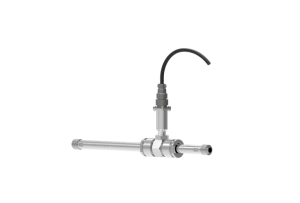
One of our popular products is the High Temperature Flow Meter Vortex Meter. This meter is specifically designed to measure the flow rate of fluids in high - temperature environments. The unique design of the vortex meter takes into account the possible formation of vortices and eddies in the fluid flow, ensuring accurate and reliable measurements even under challenging conditions.
Another product is the Pulse Liquid Turbine Flowmeter With Small Diameter. This flowmeter is suitable for measuring the flow rate of liquids in small - diameter pipes. The presence of eddies in small - diameter pipes can have a significant impact on the measurement accuracy. Our pulse liquid turbine flowmeter is engineered to minimize the influence of eddies, providing precise measurements for various applications.
We also offer the Vortex Flow Meter with SS304 Sensor Application in Steam Flange Connection. This flow meter is ideal for steam applications, where the formation of vortices and eddies can be particularly complex. The SS304 sensor provides excellent corrosion resistance and durability, ensuring long - term reliable operation in steam environments.
The Significance of Our Products in Industry
Our flow vortex products are widely used in various industries, including power generation, chemical processing, and water treatment. In power generation plants, accurate flow measurement is crucial for optimizing the performance of boilers and turbines. Our flow meters can help monitor the flow rate of steam, water, and other fluids, ensuring efficient and safe operation.
In the chemical processing industry, precise flow measurement is essential for controlling the reaction process. Our products can accurately measure the flow rate of reactants and products, helping to maintain the quality and consistency of the final products.
In water treatment plants, flow measurement is necessary for managing the water flow through different treatment stages. Our flow meters can provide real - time data on the flow rate, enabling operators to adjust the treatment process as needed.
Encouraging Contact for Procurement and Collaboration
If you are in need of high - quality flow measurement solutions, we invite you to contact us for procurement and collaboration. Our team of experts is dedicated to providing you with the best products and services tailored to your specific needs. Whether you are dealing with high - temperature fluids, small - diameter pipes, or complex steam applications, we have the right flow vortex products for you.
References
- Batchelor, G. K. (1967). An Introduction to Fluid Dynamics. Cambridge University Press.
- White, F. M. (2011). Fluid Mechanics. McGraw - Hill.
- Schlichting, H., & Gersten, K. (2016). Boundary - Layer Theory. Springer.