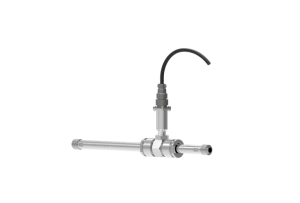
Hey there! As a supplier of vortex meters, I'm super excited to chat with you about the communication protocols these nifty devices support. Vortex meters are pretty awesome for measuring the flow of liquids, gases, and steam in a wide range of industrial applications. And understanding the communication protocols they use is crucial for getting the most out of them.
First off, let's talk about what a communication protocol is. In simple terms, it's like a set of rules that allows different devices to talk to each other. When it comes to vortex meters, these protocols enable the meter to send data about the flow measurements to other systems, like control panels or data loggers.
One of the most common communication protocols supported by vortex meters is the 4 - 20 mA analog signal. This is a tried - and - true method that's been around for ages. The 4 - 20 mA signal represents the flow rate, where 4 mA typically corresponds to the minimum flow and 20 mA corresponds to the maximum flow. It's a simple and reliable way to transmit data over long distances. Many industrial control systems are designed to accept 4 - 20 mA signals, so it's easy to integrate a vortex meter using this protocol. For example, if you have a process control system that monitors the flow of steam in a power plant, the 4 - 20 mA signal from the vortex meter can be directly fed into the system to adjust the valves and maintain the desired flow rate.
Another popular protocol is Modbus. Modbus is a serial communication protocol that allows devices to communicate over a network. It's widely used in industrial automation because it's open - source and easy to implement. Vortex meters with Modbus support can communicate with other Modbus - compatible devices, such as programmable logic controllers (PLCs) or human - machine interfaces (HMIs). With Modbus, you can not only read the flow data but also configure the settings of the vortex meter remotely. This is really handy for troubleshooting and making adjustments without having to be physically present at the meter. You can check out our Good Performance Vortex Flow Meter for Steam with Calibration which supports Modbus for seamless integration into your existing industrial network.
Profibus is also a well - known communication protocol in the industrial world. It's a high - speed fieldbus system that provides reliable communication between devices in a factory automation environment. Vortex meters with Profibus support can quickly and accurately transmit flow data to a central control system. This protocol is great for applications where real - time data is critical, like in chemical processing plants where precise flow control is necessary to ensure product quality. Our Vortex Steam Flow Meter offers Profibus compatibility, ensuring efficient data transfer in demanding industrial settings.


Ethernet/IP is another protocol that's gaining popularity. It uses the standard Ethernet network infrastructure, which means you can easily connect your vortex meter to a local area network (LAN) or even the internet. This allows for remote monitoring and control of the meter from anywhere in the world. With Ethernet/IP, you can access the flow data in real - time using a web browser or a dedicated software application. It's a great option for companies that want to implement an Industry 4.0 approach, where data is collected and analyzed to optimize processes.
HART (Highway Addressable Remote Transducer) is a hybrid protocol that combines analog and digital communication. It uses the 4 - 20 mA analog signal for the primary measurement and adds a digital signal on top of it. This digital signal can carry additional information, such as diagnostic data or configuration settings. HART - enabled vortex meters allow you to communicate with the meter using a handheld communicator or a PC - based software tool. It's a flexible protocol that's widely used in the oil and gas industry, where it's important to have access to detailed information about the flow measurement.
When choosing a vortex meter, it's important to consider which communication protocols are supported based on your specific application requirements. If you're working in an existing industrial facility with a particular control system, you'll want to make sure the vortex meter is compatible with the protocols used by that system. For example, if your plant already uses Modbus for all its devices, then a vortex meter with Modbus support will be the best choice for seamless integration.
We also offer a Pulse Liquid Turbine Flowmeter With Small Diameter which has its own set of communication options. This flowmeter is great for applications where you need to measure the flow of liquids in small pipes. It can support different protocols depending on your needs, whether it's a simple pulse output for basic flow counting or a more advanced protocol for detailed data logging.
In conclusion, the communication protocols supported by vortex meters play a crucial role in their functionality and integration into industrial systems. Whether you need a simple analog signal or a more advanced digital protocol, there's a vortex meter out there that can meet your requirements. At our company, we're committed to providing high - quality vortex meters with a wide range of communication options to ensure that you can get the most accurate and reliable flow measurements for your applications.
If you're interested in learning more about our vortex meters or have specific requirements for your project, we'd love to hear from you. Just reach out to us, and our team of experts will be happy to assist you in choosing the right vortex meter and communication protocol for your needs. Let's work together to optimize your flow measurement processes and improve the efficiency of your operations.
References
- Industrial Communication Protocols Handbook
- Vortex Flow Meter Technical Manuals