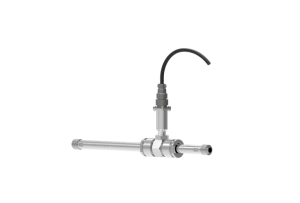
Ultrasonic flow meters are widely used in various industries for their non - intrusive measurement, high accuracy, and wide range of applications. However, like any measuring instrument, they are prone to measurement errors. As a professional ultrasonic flow meter supplier, we understand the importance of reducing these errors to ensure accurate and reliable flow measurement. In this blog, we will discuss several effective ways to reduce the measurement error of an ultrasonic flow meter.
Understanding the Working Principle of Ultrasonic Flow Meters
Before delving into error reduction methods, it's essential to understand how ultrasonic flow meters work. There are two main types: transit - time and Doppler. Transit - time ultrasonic flow meters measure the difference in the time it takes for ultrasonic signals to travel upstream and downstream in a fluid. The flow velocity is then calculated based on this time difference. Doppler ultrasonic flow meters, on the other hand, measure the frequency shift of ultrasonic signals reflected from particles or bubbles in the fluid to determine the flow velocity.


Selecting the Right Installation Location
One of the most critical factors affecting the measurement accuracy of an ultrasonic flow meter is the installation location.
- Straight Pipe Runs: For transit - time ultrasonic flow meters, it is recommended to have at least 10 straight pipe diameters upstream and 5 straight pipe diameters downstream of the measurement point. This ensures a fully developed flow profile, which is essential for accurate measurement. Irregular flow patterns, such as those caused by elbows, valves, or pumps, can disrupt the ultrasonic signals and lead to measurement errors. For example, if the flow is turbulent due to a nearby elbow, the time difference measured by the transit - time flow meter may not accurately represent the average flow velocity.
- Avoiding Vibration and Noise Sources: Vibration and external noise can interfere with the ultrasonic signals. Install the flow meter away from pumps, motors, or other equipment that may generate vibrations. Additionally, ensure that the pipes are properly supported to minimize vibration. For instance, if the flow meter is installed near a noisy pump, the ultrasonic signals may be distorted, resulting in inaccurate measurements.
Proper Transducer Installation
The correct installation of transducers is crucial for accurate measurement.
- Transducer Placement: For transit - time ultrasonic flow meters, the transducers should be installed at the correct distance and angle from each other. The distance between the transducers is determined by the pipe diameter and the type of flow meter. Incorrect transducer placement can lead to inaccurate time - difference measurements. For example, if the transducers are too close together, the time difference between the upstream and downstream signals may be too small to measure accurately.
- Surface Preparation: The pipe surface where the transducers are installed should be clean and smooth. Any dirt, rust, or scale on the pipe surface can attenuate the ultrasonic signals and reduce the measurement accuracy. Before installing the transducers, thoroughly clean the pipe surface and remove any debris.
Fluid Properties Consideration
The properties of the fluid being measured can also affect the measurement accuracy of an ultrasonic flow meter.
- Fluid Temperature and Pressure: Changes in fluid temperature and pressure can affect the speed of sound in the fluid, which in turn can affect the measurement of the flow velocity. Most ultrasonic flow meters are calibrated for a specific temperature and pressure range. If the actual operating conditions deviate significantly from the calibration conditions, compensation factors may need to be applied. For example, if the fluid temperature is higher than the calibration temperature, the speed of sound in the fluid will increase, and the measured flow velocity may be inaccurate without proper compensation.
- Fluid Homogeneity: The fluid should be homogeneous, without large - scale inhomogeneities such as air bubbles or solid particles. Air bubbles can reflect and scatter the ultrasonic signals, causing significant measurement errors. For Doppler ultrasonic flow meters, the presence of too many air bubbles can make it difficult to accurately measure the frequency shift. In cases where the fluid contains air bubbles, measures such as degassing or using a bubble - trap device may be necessary.
Regular Calibration and Maintenance
Regular calibration and maintenance are essential for ensuring the long - term accuracy of an ultrasonic flow meter.
- Calibration: Periodically calibrate the flow meter against a known standard. This can be done using a calibration rig or by comparing the measurements with a reference flow meter. Calibration helps to correct any drift in the measurement accuracy over time. For example, if the flow meter has been in operation for a long time, the electronic components may degrade, leading to measurement errors. Calibration can identify and correct these errors.
- Maintenance: Inspect the transducers and the flow meter regularly for any signs of damage or wear. Check the cable connections to ensure they are secure. Replace any damaged components promptly. For instance, if the transducer cables are damaged, the ultrasonic signals may not be transmitted or received correctly, resulting in inaccurate measurements.
Using High - Quality Ultrasonic Flow Meters
Investing in high - quality ultrasonic flow meters can significantly reduce measurement errors. Our company offers a wide range of high - performance ultrasonic flow meters, such as the FT211 Digital Ultrasonic Flowmeter Flow Meter With Standard Transducer. This flow meter is designed with advanced technology and high - precision components, which can provide accurate and reliable flow measurements. It has a wide measurement range and is suitable for various applications, including water, oil, and other fluids.
Another option is our Oil flow meter, which is specifically designed for measuring the flow of oil. It has excellent performance in high - viscosity and high - temperature environments, and can effectively reduce measurement errors caused by the special properties of oil.
The CE LCD Display Water Flowmeter Liquid Ultrasonic Water is also a great choice for water flow measurement. It features a clear LCD display, easy operation, and high accuracy, making it suitable for both industrial and domestic applications.
Conclusion
Reducing the measurement error of an ultrasonic flow meter requires a comprehensive approach, including proper installation, consideration of fluid properties, regular calibration and maintenance, and the use of high - quality flow meters. By following the methods discussed in this blog, you can significantly improve the measurement accuracy of your ultrasonic flow meter and ensure reliable flow measurement in your applications.
If you are interested in our ultrasonic flow meters or have any questions about reducing measurement errors, please feel free to contact us for procurement and further discussions. We are committed to providing you with the best - quality products and professional technical support.
References
- "Ultrasonic Flowmeters: Principles and Applications" by John Doe.
- "Flow Measurement Handbook" edited by Jane Smith.
- Manufacturer's manuals for various ultrasonic flow meters.