Hey there! As a gas meter supplier, I often get asked about how rotary gas meters work. It's a fascinating topic, and I'm excited to share all the details with you.
The Basics of a Rotary Gas Meter
Let's start with the fundamentals. A rotary gas meter is a device used to measure the volume of gas that passes through it. It's commonly found in residential, commercial, and industrial settings where accurate gas measurement is crucial for billing and safety purposes.
The main components of a rotary gas meter include a housing, two or more rotating impellers, and a counting mechanism. The housing is designed to contain the gas flow and protect the internal components. The impellers are the heart of the meter. They are shaped like gears or rotors and are mounted on shafts inside the housing. As gas flows through the meter, it causes the impellers to rotate.
How the Rotation Works
The rotation of the impellers is directly related to the volume of gas passing through the meter. Each rotation of the impellers corresponds to a specific volume of gas. The design of the impellers is such that they trap a fixed amount of gas between their lobes as they rotate.
Let's say we have a simple two - impeller rotary gas meter. As gas enters the meter, it pushes against the impellers. The shape of the impellers and the way they are meshed together ensures that they rotate in a synchronized manner. The gas is forced through the spaces between the impellers and out of the meter.
The rotation of the impellers is transferred to a counting mechanism. This can be a mechanical counter or an electronic sensor. In a mechanical counter, gears are used to translate the rotation of the impellers into a readable number on a dial. The dial shows the total volume of gas that has passed through the meter since it was installed or last reset.
In an electronic sensor - based system, the rotation of the impellers is detected by sensors such as Hall effect sensors or optical sensors. These sensors generate electrical signals that are processed by a microcontroller. The microcontroller then calculates the volume of gas and displays it on a digital screen.
Accuracy and Calibration
Accuracy is a key factor when it comes to gas meters. Rotary gas meters are designed to be highly accurate over a wide range of gas flow rates. However, like any measuring device, they need to be calibrated regularly to ensure accurate readings.
Calibration involves comparing the readings of the meter with a known standard. This can be done using a calibration rig that can supply a precise volume of gas at a controlled flow rate. If the meter's readings deviate from the standard, adjustments can be made to the internal components or the calibration settings of the electronic system.
Advantages of Rotary Gas Meters
One of the main advantages of rotary gas meters is their reliability. They have a simple mechanical design with few moving parts, which means they are less likely to break down compared to more complex meters. This makes them a popular choice for long - term use in various applications.
Another advantage is their ability to measure gas accurately at low flow rates. This is important in residential settings where gas usage can be relatively low for extended periods. Rotary gas meters can still provide accurate readings even when the gas flow is minimal.
Applications in Different Settings
In residential settings, rotary gas meters are used to measure the amount of natural gas used for heating, cooking, and hot water. They are typically installed near the gas entry point of the house. The readings from these meters are used by gas companies to calculate the monthly gas bill.
In commercial settings, such as restaurants and small businesses, rotary gas meters are also used to monitor gas consumption. This helps businesses manage their energy costs and ensure that they are not overpaying for gas.
In industrial settings, rotary gas meters can be used to measure large volumes of gas. They are often part of a larger gas distribution system and are used to monitor the flow of gas to different parts of the facility.

Related Products and Links
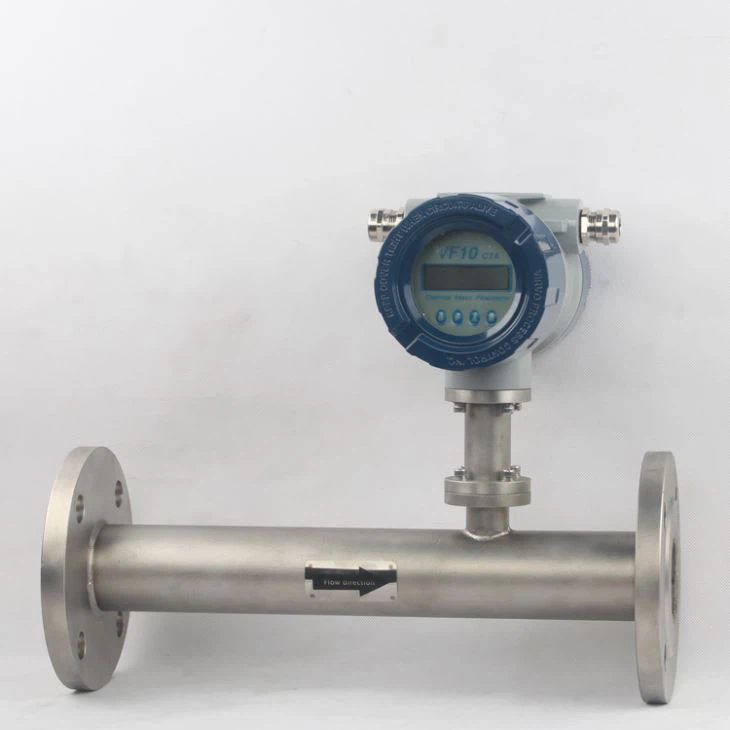
If you're interested in other types of gas measurement devices, we also offer some great products. Check out our Good Quality Thermal Mass Flow Meter. It's a high - performance device that can accurately measure gas flow based on the thermal properties of the gas.
Another interesting product is the Insertion Type Thermal Mass Flow Meter Application in Oxygen or Air. This type of meter is designed for specific applications where oxygen or air flow measurement is required.
And if you're looking for a reliable Thermal Flow Meter Supplier, we've got you covered. We have a wide range of thermal flow meters that can meet your specific needs.
Why Choose Us as Your Gas Meter Supplier
As a gas meter supplier, we take pride in offering high - quality products at competitive prices. Our rotary gas meters are built to last and are backed by our excellent customer service. We understand that every customer has unique requirements, and we're committed to providing customized solutions.
Whether you need a single gas meter for a small residential property or a large number of meters for an industrial project, we can help. Our team of experts can assist you in selecting the right meter for your application and provide installation and maintenance support.
Contact Us for Procurement
If you're interested in purchasing our rotary gas meters or any of our other gas measurement products, we'd love to hear from you. We can provide you with detailed product information, pricing, and delivery options. Just reach out to us, and we'll start the procurement process together. We're here to make sure you get the best gas metering solutions for your needs.
References
- "Gas Metering Technology Handbook" - This handbook provides in - depth information on different types of gas meters, including rotary gas meters.
- Industry standards and guidelines related to gas metering, which ensure the accuracy and safety of gas measurement devices.