INDUSTRIAL GAS FLOW MEASUREMENT
Thermal Mass Air Flow Meter for Industrial Applications
The FlowT Mass Air Flow Meter uses platinum resistance temperature detector (RTD) sensing technology and thermal dispersion principles to measure airflow and compatible industrial gases. Designed for continuous process monitoring, it combines sensitive low-flow detection, digital signal processing and a mechanical design without moving measuring components.
This industrial thermal mass flow meter is suitable for applications such as compressed air monitoring, industrial ventilation, process gas measurement and wastewater aeration. Its wide measurement range supports operations with changing gas consumption and variable airflow demand.
PRODUCT HIGHLIGHTS
Key Features of the Mass Air Flow Meter
Thermal mass sensing and digital correction functions help support stable industrial air and gas flow monitoring.
1000:1
Wide Range Ratio
Published rangeability claim; the available calibrated range depends on application conditions and configuration.
0.001 m/s
Velocity Resolution
Specified signal resolution for detecting small flow changes; this is not the guaranteed minimum measurable velocity.
RTD
Platinum Sensor
Temperature-sensitive platinum sensing technology designed for thermal gas flow measurement.
24/7
Continuous Monitoring
Designed for ongoing monitoring of gas flow in industrial measurement and control systems.
WHY CHOOSE THIS TECHNOLOGY
Advantages of Thermal Mass Air Flow Measurement
01
Stable Platinum RTD Sensing
Platinum temperature sensors provide a stable foundation for the thermal measurement system. Digital processing converts the sensor response into flow information for industrial monitoring.
02
High Low-Flow Sensitivity
Thermal sensing is especially useful where low airflow and changing consumption are important. The 0.001 m/s resolution supports detailed signal monitoring within the validated operating range.
03
No Moving Measuring Parts
The sensing system does not rely on rotating mechanical components. This reduces mechanical wear associated with moving-part meters and simplifies routine maintenance.
04
Digital Signal Correction
Proprietary processing and multipoint correction functions are intended to improve measurement linearity and consistency. The final calibration specification should be confirmed for each configuration.
05
Direct Thermal Mass Measurement
For a calibrated gas, thermal mass technology can avoid the need for separate external pressure and temperature compensation. Gas properties and specified operating limits still affect performance.
06
Continuous Process Integration
The product description identifies current/voltage output correction capabilities, supporting integration with compatible industrial monitoring equipment when the selected output interface is confirmed.
MEASUREMENT TECHNOLOGY
How Does a Thermal Mass Air Flow Meter Work?
A thermal mass air flow meter measures the cooling effect produced when moving gas passes a heated sensing element. The heat-transfer response is processed to determine gas mass flow under the instrument's calibrated conditions.
Step 1: Detect Gas Temperature
The RTD sensing system establishes the temperature reference used in thermal flow measurement.
Step 2: Measure Heat Transfer
Moving gas removes heat from the heated sensing element. The thermal response changes with gas flow.
Step 3: Process the Flow Signal
The transmitter uses calibration data and digital signal processing to convert the measured thermal response into flow information.
Thermal Measurement Process
Gas Flow
Air or compatible calibrated gas
↓
Platinum RTD Sensing
Temperature and heat-transfer response
↓
Digital Signal Processing
Calibration and signal correction
↓
Mass Flow Output
Flow monitoring and process control
Learn more about related measurement technologies in our thermal mass flow meter product category.
TECHNICAL INFORMATION
Mass Air Flow Meter Technical Specifications
The following information is based on the available product description. Model-dependent performance and interface parameters should be confirmed before ordering.
| Parameter | Description |
|---|---|
| Product Type | Industrial thermal mass air flow meter |
| Measurement Principle | Thermal dispersion / heat-transfer measurement |
| Sensing Element | High-stability platinum RTD sensing technology |
| Measurement Medium | Air and other gases compatible with the selected calibration |
| Range Ratio | Up to 1000:1 as stated in the original product description; configuration-dependent |
| Velocity Resolution | 0.001 m/s as stated in the original product description |
| Signal Processing | Proprietary flow calculation and linearization algorithms |
| Correction Functions | 12-point dynamic correction and built-in 10-point adjustment described in original product information; implementation to be confirmed |
| Humidity Processing | Humidity-related correction algorithm described; applicable gas conditions require confirmation |
| Signal Interface | Current/voltage output correction described; exact signal types and ranges to be specified |
| Mechanical Design | No moving measuring components |
| Measurement Accuracy | Confirm from the approved datasheet for the selected gas and measurement range |
| Process Conditions | Operating temperature, pressure and humidity limits to be confirmed |
| Installation Configuration | Pipe size, process connection and available meter configuration to be confirmed |
Specification Note: Resolution, measurement accuracy, minimum measurable flow and rangeability are different performance characteristics. Please request the model-specific datasheet and calibration information before final selection.
PRODUCT REFERENCE
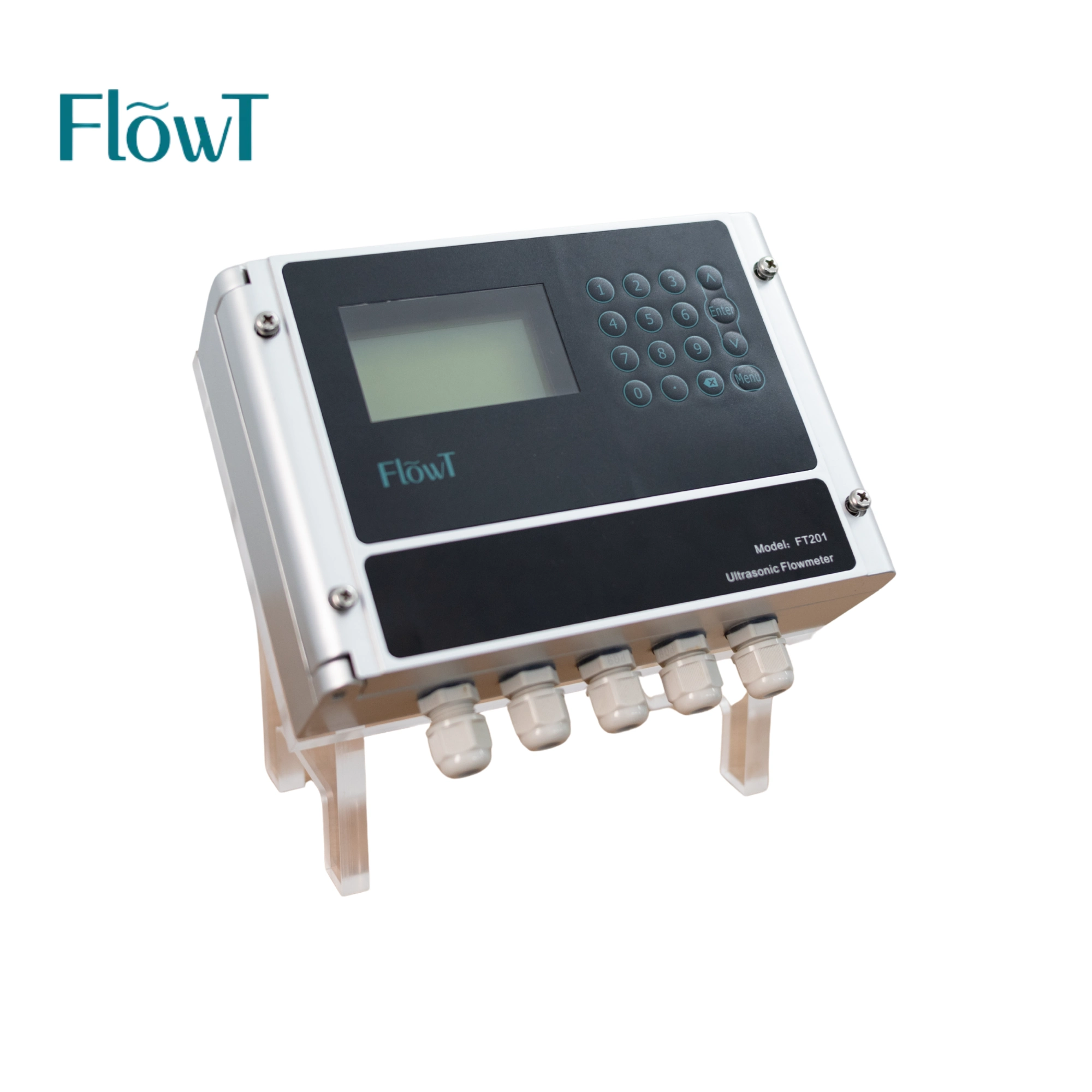
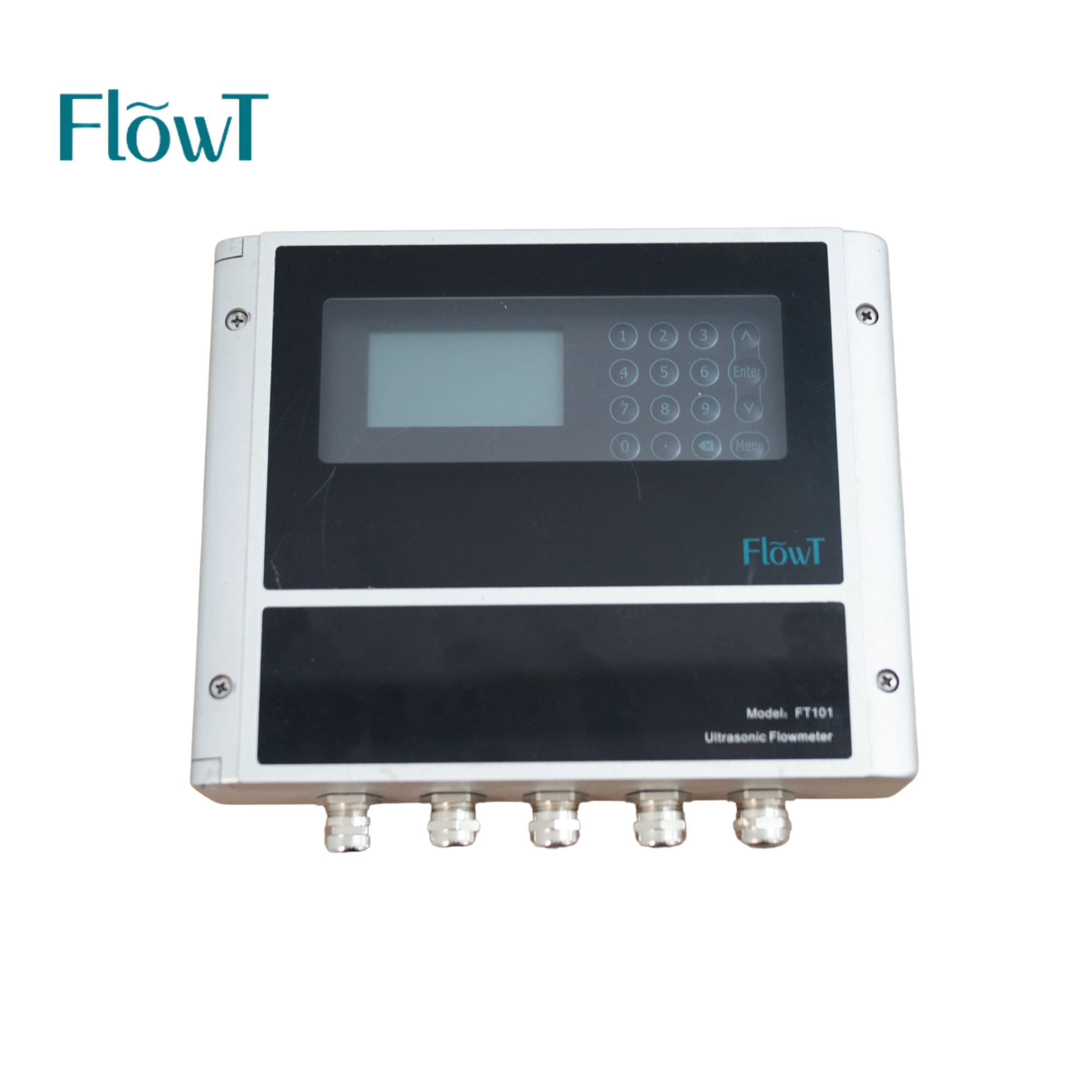
Mass Air Flow Meter Product Reference Image
Reference illustration for the mass air flow meter. Confirm dimensions, mounting arrangement and the latest drawing for the exact model ordered.

Product image is for reference. Approved dimensions and technical specifications should be provided separately for the selected configuration.
INDUSTRIAL APPLICATIONS
Mass Air Flow Meter Applications
Thermal mass flow measurement supports monitoring and optimization across industrial air and gas systems. Actual suitability depends on gas composition, installation conditions and selected calibration.
APPLICATION 01
Compressed Air Monitoring
Measure air consumption in factory compressed-air networks to support energy analysis, production monitoring and investigation of abnormal demand.
APPLICATION 02
Industrial Ventilation
Monitor airflow in industrial ventilation and exhaust systems where continuous data helps operators assess operating conditions and ventilation performance.
APPLICATION 03
Wastewater Aeration
Measure blower air delivery to aeration processes for airflow balancing, operating control and evaluation of treatment-system energy consumption.
APPLICATION 04
Process Gas Measurement
Support measurement of suitable gases in production and utility systems. Gas-specific calibration and compatibility must be checked before installation.
APPLICATION 05
Combustion Air Systems
Monitor air supply in suitable combustion-related systems to provide flow information for operating adjustment and process control.
APPLICATION 06
Industrial Utility Management
Collect airflow data for utility consumption tracking, production cost analysis and operational efficiency improvements.
Explore additional thermal gas mass flow meter solutions for other process gas applications.
SELECTION GUIDE
How to Select the Right Mass Air Flow Meter
Correct meter selection requires more than pipe diameter. Flow range, gas properties and installation conditions directly influence the final configuration.
01
Identify the Gas
Specify air, nitrogen or another gas, including composition, moisture content and potential contaminants.
02
Define Flow Conditions
Provide minimum, normal and maximum flow, operating pressure, temperature and required measurement units.
03
Check the Installation
Confirm actual pipe internal diameter, connection type, available straight-run length and nearby flow disturbances.
04
Specify Control Needs
State the required output signal, power supply, display, communication interface and applicable certifications.
INSTALLATION & OPERATION
Installation and Measurement Considerations
Before Installation
- Confirm that the selected meter is calibrated for the actual gas or gas mixture.
- Check the pipe internal diameter and available mounting position.
- Review upstream and downstream flow disturbances.
- Verify the pressure and temperature limits of the selected configuration.
- Check the wiring and signal output requirements.
During Operation
- Monitor readings against expected process conditions.
- Avoid uncontrolled liquid carryover or condensation at the sensor.
- Inspect sensor surfaces for deposits and contamination.
- Check signal stability and connections during maintenance.
- Follow the manufacturer's calibration verification instructions.
Important Engineering Notes
Pipe Straight Runs: Required straight-run lengths depend on the sensor arrangement and upstream disturbances. Follow the specific installation drawing rather than applying one fixed requirement to all configurations.
Humidity and Dust: Humidity correction and tolerance to small particles do not mean that condensation or heavy contamination has no effect. Confirm compatibility with the actual gas condition.
Calibration: Changes in gas composition can alter thermal properties and affect readings. Use calibration information appropriate to the selected medium.
TECHNOLOGY COMPARISON
Thermal Mass vs. Other Industrial Gas Flow Meters
| Comparison | Thermal Mass | Differential Pressure | Vortex |
|---|---|---|---|
| Measurement | Thermal mass flow | Differential pressure related to flow | Vortex shedding frequency |
| Low-Flow Applications | Generally favorable with suitable calibration | Limited by differential-pressure signal at low flow | Requires sufficient flow velocity and Reynolds number |
| Moving Measuring Parts | None | None in typical primary elements | None |
| Gas Properties | Sensitive to thermal properties and calibration gas | Requires suitable density compensation for mass flow | Gas density compensation may be needed for mass flow |
| Typical Strength | Gas consumption and low-flow monitoring | Versatile established flow measurement method | Suitable gas and steam flow monitoring |
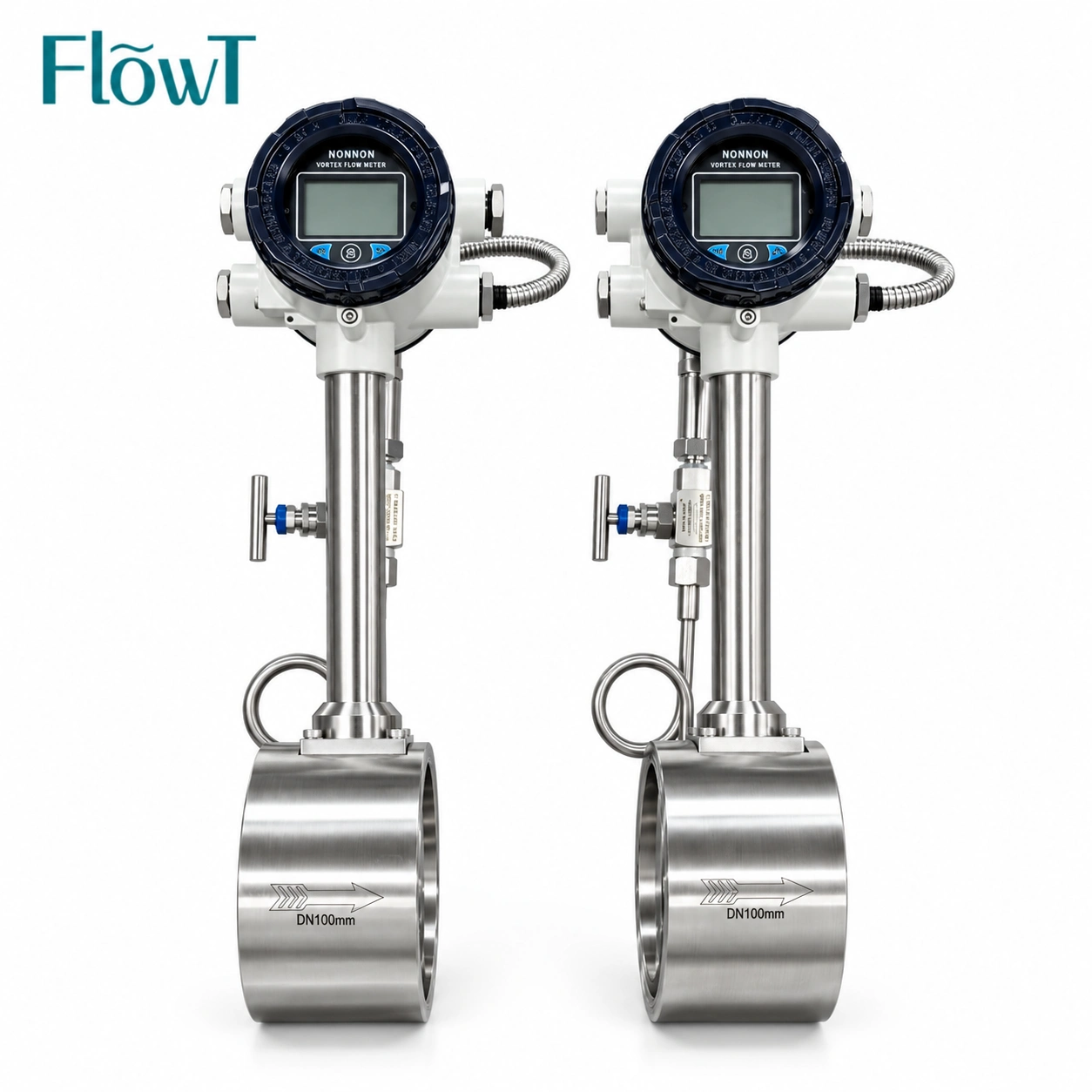
For other flow measurement requirements, explore our vortex flow meters or browse the complete industrial flow meter product range.
FLOWT INSTRUMENT
Industrial Mass Air Flow Meter Selection Support
Share your application requirements with FlowT to determine an appropriate meter configuration, available specifications and quotation details.
Application Review
Discuss medium compatibility, flow range, pipe conditions and required performance before instrument selection.
Configuration Inquiry
Confirm available connection types, electrical outputs, display requirements and installation arrangements.
Technical Documentation
Request the relevant datasheet, configuration details, calibration information and technical drawing.
Learn more about FlowT's thermal flow meter solutions.
FREQUENTLY ASKED QUESTIONS
Mass Air Flow Meter FAQs
1. What is a thermal mass air flow meter?
A thermal mass air flow meter uses heat transfer from a heated sensor to determine the flow of air or a calibrated gas. The measurement principle is widely used for industrial gas consumption and process monitoring.
2. Can this mass air flow meter measure gases other than air?
Thermal mass technology can measure various gases, but the instrument must be calibrated or configured for the actual gas properties. Please provide the gas composition so compatibility and calibration availability can be confirmed.
3. Does a thermal mass flow meter require temperature and pressure compensation?
For a suitable calibrated gas and specified operating range, thermal mass measurement generally does not require separate external compensation in the same way as a volumetric flow measurement. However, gas composition, temperature limits and other operating conditions must still be considered.
4. Is the mass air flow meter suitable for low-flow applications?
Thermal mass sensing offers good potential for low-flow monitoring. This product description states 0.001 m/s resolution and a range ratio up to 1000:1. The guaranteed minimum measurable flow and accuracy must be confirmed against the selected calibration.
5. Can dust or moisture affect a thermal mass air flow meter?
Yes. Light particulate contamination may be manageable in some applications, but sensor deposits, droplets and condensation can alter heat transfer. The original product description mentions dust tolerance and humidity correction; their applicable limits should be verified for the actual process.
6. What information is needed to request a quotation?
Please provide the gas type, flow range, pipe size, operating pressure and temperature, required signal outputs, power supply and installation requirements. These details help determine the suitable meter and quotation.
7. How often does a thermal mass air flow meter need maintenance?
Maintenance frequency depends on gas cleanliness, operating conditions and measurement requirements. Regular inspections should include the sensor condition, wiring, display or signal output, and calibration verification as specified in the instrument manual.
REQUEST A QUOTE
Looking for an Industrial Mass Air Flow Meter?
Send your gas type, flow range and pipe specifications to FlowT. Our team can review your application requirements and provide product configuration and quotation information.
Gas Type | Flow Range | Pipe Size | Operating Conditions | Output Requirements
Hot Tags: mass air flow meter, thermal mass air flow meter, industrial air flow meter, air mass flow sensor, thermal mass flow sensor, gas mass flow meter, compressed air flow meter, mass air flow meter manufacturer, air flow measurement, FlowT, mass flow meter for refining and petrochemicals, thermal mass flow technology, air flow measurement in automotive industry, mass flow meter for calibration, high precision flow meter, thermal flow measurement in building management systems