

For European flow meter buyers, two developments deserve particular attention: the inclusion of cooling energy meters under the harmonized MID framework and updated requirements for gas measurement involving hydrogen and alternative fuel gases.
However, not every industrial flow meter needs MID certification. The applicable requirements depend on the instrument category, intended use, and whether the measurement falls under regulated legal metrology.
This guide explains the 2026 regulatory changes, technical requirements under MI-002, MI-004, and MI-012, conformity assessment considerations, and what buyers should verify before purchasing measurement equipment.
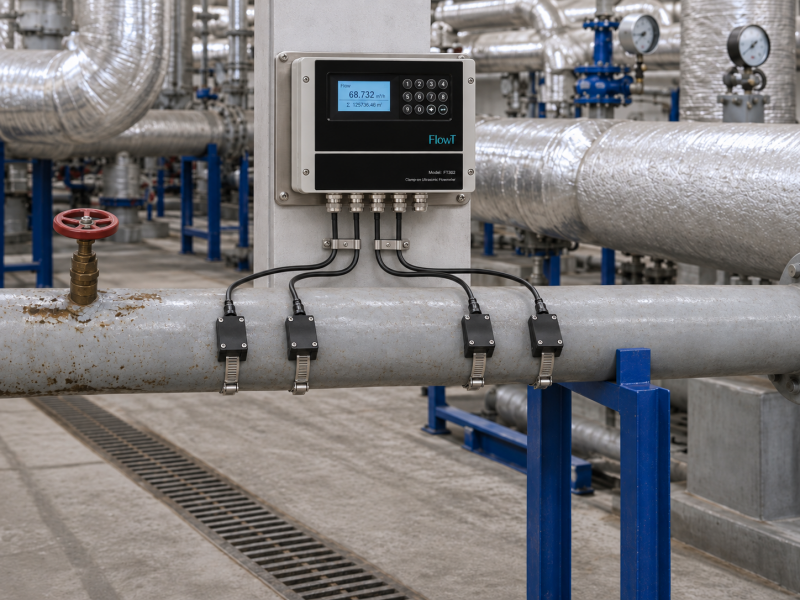
1. What Changed Under the EU MID 2026 Amendment?
Directive 2014/32/EU establishes harmonized requirements for specified measuring instruments placed on the EU market. Its 2026 amendment, Directive (EU) 2026/706, addresses measurement technologies and applications that were not adequately covered by the previous framework.
The main changes relevant to flow measurement include:
- MI-002: Updated requirements for gas meters and conversion devices, including hydrogen, alternative fuel gases, and smart metering.
- MI-004: Thermal energy meters now explicitly cover both heating and cooling applications.
- MI-011: A new category for measuring systems used in electric vehicle supply equipment.
- MI-012: A new category for measuring systems used in compressed gas dispensers.
The amendment also updates requirements for electricity meters, including direct-current measurement.
These changes are intended to improve measurement consistency, support alternative energy technologies, and reduce differences in national conformity assessment arrangements.
The complete legal text is available in Directive (EU) 2026/706 published on EUR-Lex.
2. EU MID 2026 Implementation Timeline and Transitional Rules
The directive entered into force on April 9, 2026, but this does not mean every revised requirement became immediately applicable to manufacturers.
| Date | Regulatory Event | Practical Meaning |
|---|---|---|
| March 20, 2026 | Official publication | Directive (EU) 2026/706 published in the Official Journal. |
| April 9, 2026 | Entry into force | The amendment formally enters into force. |
| April 10, 2028 | National transposition deadline | Member States must adopt the required national measures. |
| October 10, 2028 | Application of national measures | The revised requirements begin to apply under national implementing measures. |
| April 10, 2030 | Special transitional deadline | Applies to qualifying MI-011 and MI-012 instruments under the specified national-law conditions. |
| April 10, 2038 | Maximum certificate validity limit | Applies to certain certificates covered by the transitional provisions. |
Three transitional provisions require particular attention:
- Instruments already compliant with the previous MID framework on April 8, 2026, and placed on the market before October 10, 2028, may continue to be made available and put into use under the specified conditions.
- Qualifying measuring systems under MI-011 and MI-012 that comply with Member State national law and are placed on the market before April 10, 2030, benefit from a separate transitional arrangement.
- Certain certificates issued before October 10, 2028, remain valid until their stated expiry, subject to the maximum date of April 10, 2038.
The 2030 transitional provision should not be interpreted as a general extension for all revised MID instruments. Buyers should check the relevant instrument category and national implementing legislation before relying on it.
3. MI-004: New Requirements for Cooling Energy Meters
One of the most significant changes is the explicit inclusion of cooling applications under MI-004.
Before the amendment, the harmonized MID framework primarily addressed heating energy measurement. Cooling energy meters were covered by different national arrangements in some EU markets, potentially requiring additional conformity assessments.
The revised definition now covers thermal energy absorbed through cooling as well as energy released through heating.
How Does a Cooling Energy Meter Work?
A complete thermal energy meter generally consists of three measurement components:
- Flow sensor: Measures the volume or mass of the circulating thermal energy-conveying liquid.
- Temperature sensor pair: Measures the inlet and outlet temperatures of the liquid.
- Calculator: Uses flow and temperature information to determine transferred thermal energy.
For a simplified water-based system, cooling energy is related to the quantity of circulating water, its thermal properties, and the temperature difference between the supply and return lines.
Actual energy calculations must account for the relevant fluid properties. For water-glycol mixtures, for example, the calculator must use suitable thermal coefficients rather than automatically applying pure-water assumptions.
Important MI-004 Technical Changes
The revised requirements introduce several important changes to rated operating conditions.
| Parameter | Revised Requirement | Buyer Consideration |
|---|---|---|
| Temperature difference | Δθmax / Δθmin ≥ 10, with an exception for cooling applications | Cooling applications are exempt from this particular ratio restriction. |
| Minimum temperature difference | Δθmin is a whole number from 1 K to 10 K | Check the actual approved operating range and measurement performance. |
| Flow rate | qs, qp and qi must be specified | Confirm minimum, permanent and short-term maximum flow conditions. |
| Flow-rate ratio | qp / qi ≥ 5 | Check whether the meter covers the required operating range. |
These requirements do not mean that every cooling energy meter automatically achieves the same accuracy at a 1 K temperature difference. The approved operating conditions, temperature sensor performance, and complete meter configuration remain important.
For engineering teams, temperature sensor matching and installation position are especially important when the operating temperature difference is small.
Where Are MID Cooling Energy Meters Used?
- District cooling networks.
- Commercial building chilled-water systems.
- Data center cooling distribution.
- Industrial process cooling.
- Centralized HVAC energy allocation.
A conventional water flow meter alone cannot determine cooling energy because it does not measure the temperature difference. Buyers should evaluate the complete thermal energy measurement system.
For related product information, see FlowT's ultrasonic BTU flow meter for cooling water and ultrasonic energy meter.
For additional technical considerations, read the guide to BTU meter accuracy and the explanation of how fluid type affects BTU meter performance.
4. MI-002: Hydrogen and Alternative Gas Metering Requirements
The updated MI-002 requirements address developments in gas metering, particularly the use of hydrogen and alternative fuel gases.
The scope of MI-002 covers gas meters and conversion devices intended for residential, commercial, and light industrial applications. It should not be interpreted as a universal certification requirement for every industrial gas flow meter.
Why Does Hydrogen Require Special Attention?
Hydrogen has significantly different physical properties from conventional natural gas. Its density, thermal conductivity, and specific heat characteristics can affect the performance of measurement technologies.
For thermal mass flow meters, heat transfer between the sensing element and the flowing gas is central to the measurement principle. A calibration developed for natural gas cannot automatically be assumed to provide equivalent performance with pure hydrogen or a hydrogen-containing mixture.
Buyers should therefore identify:
- Gas composition and hydrogen concentration.
- Minimum, normal, and maximum operating flow.
- Operating pressure and temperature.
- Required mass or volume measurement.
- Calibration gas and reference conditions.
- Intended measurement purpose and legal metrology requirements.
The revised MI-002 also introduces more explicit provisions for gas calorific value determining devices and energy conversion devices.
A gas meter measures the quantity of fuel gas passing through the instrument. An energy conversion device uses the measured quantity and the superior or gross calorific value to calculate energy.
This distinction matters for commercial gas measurement because volume consumption and energy consumption are not interchangeable.
FlowT's thermal mass flow meter for gas measurement and gas mass flow meter provide further information about industrial gas measurement applications.
Buyers can also review the working principles and applications of ultrasonic gas flow meters when comparing measurement technologies.
Application-Dependent Gas Flow Ranges
The revised MI-002 specifies minimum flow-range conditions for gas meter classes and requires multiple gas application-dependent ranges to be identified clearly on the meter.
| Gas Meter Class | Qmax / Qmin | Qmax / Qt | Qr / Qmax |
|---|---|---|---|
| Class 1.5 | ≥ 150 | ≥ 10 | 1.2 |
| Class 1.0 | ≥ 10 | ≥ 5 | 1.2 |
These are specific MI-002 gas meter requirements, not general performance specifications for every thermal mass flow meter. The manufacturer's declared gas application and approved operating conditions must be checked.
FlowT also provides information on thermal mass flow meter measurement principles and the uncertainty of thermal mass flow measurement.
5. MI-012: Compressed Gas Dispenser Accuracy Requirements
MI-012 is a newly introduced category for measuring systems used in the continuous and dynamic measurement of compressed gas quantities. These systems measure mass and, where applicable, energy transferred through a dispensing system.
Typical applications include compressed hydrogen refueling and other compressed fuel gas dispensing installations.
Maximum Permissible Error Under MI-012
The directive specifies the following maximum permissible errors for the indication of measured or converted quantities transferred at the delivery point:
| Measuring System | Maximum Permissible Error |
|---|---|
| Compressed hydrogen | ±2.0% of measured value |
| Other compressed gases | ±1.5% of measured value |
For the minimum measured quantity (MMQ), the maximum permissible error is twice the corresponding value in the table.
The MMQ must also be selected according to the operating conditions of the measuring system. Except in exceptional cases, the system should not be used to measure quantities below its specified MMQ.
These requirements apply to the complete compressed gas measuring system within MI-012. They should not be treated as accuracy specifications for ordinary industrial pipeline gas flow meters.
The directive also addresses electromagnetic disturbance, durability, display consistency, and the prevention of unauthorized diversion of measured gas.
6. Does Every Industrial Flow Meter Need MID Certification?
No. MID applies to defined instrument categories and intended applications, not every device capable of measuring liquid or gas flow.
| Measurement Application | MID Consideration |
|---|---|
| Industrial water process monitoring | Not automatically covered by MID. |
| Industrial compressed air monitoring | Not automatically covered by MI-002 or MI-012. |
| Residential and commercial gas metering | MI-002 may apply. |
| Regulated cooling energy measurement | MI-004 applies when the instrument and intended use fall within its scope. |
| Hydrogen refueling measurement | MI-012 may apply. |
For example, a factory may use a thermal mass flow meter to monitor nitrogen or hydrogen consumption in a production line. If the measurement is used solely for internal process control, it does not automatically become an MI-002 or MI-012 application.
However, if an instrument forms part of a regulated gas transaction or dispensing system, the relevant legal metrology requirements must be assessed.
For industrial applications, the measurement purpose should be defined before selecting a meter. FlowT's ultrasonic gas flow meter application guide provides additional technical background.
7. CE Marking, M Marking, and MID Conformity Assessment
CE marking and MID conformity are related, but they are not interchangeable.
For instruments falling within MID, the manufacturer must demonstrate conformity with the applicable essential requirements and complete the relevant conformity assessment procedure.
What Does CE + M Marking Mean?
Under the MID marking provisions, a conforming measuring instrument carries the CE marking together with the supplementary metrology marking.
The supplementary metrology marking consists of the letter M and the last two digits of the year in which it is affixed, enclosed within a rectangle. Where required by the selected conformity assessment procedure, the notified body's identification number follows the markings.
Therefore, buyers should not treat an ordinary CE declaration as proof of MID conformity.
Which Documents Should Buyers Request?
- EU Declaration of Conformity.
- Relevant EU-type examination certificate, where applicable.
- Production conformity assessment documentation.
- Notified body details and identification number, where applicable.
- Product model, serial number, and configuration information.
- Approved measurement range and accuracy specifications.
- Installation and operating instructions.
Depending on the instrument category, manufacturers may select conformity assessment routes such as B + D, B + F, G, or H1 where permitted by the relevant MID annex. The applicable route must be verified for the actual instrument rather than assumed from a generic product certificate.
The European Commission's MID guidance and harmonized standards information provides a useful starting point for checking the applicable regulatory framework.
8. Practical MID Compliance Checklist for Flow Meter Buyers
Before ordering measurement equipment for an EU project, buyers should follow a structured verification process.
Step 1: Define the Measurement Purpose
Determine whether the meter is intended for internal process monitoring, energy management, commercial billing, or regulated dispensing. This is the first step in determining whether MID applies.
Step 2: Identify the Relevant Instrument Category
Check whether the application falls under MI-002, MI-004, MI-011, or MI-012. Confirm that the actual product and complete measurement system are within the relevant annex.
Step 3: Verify Technical Operating Conditions
For cooling energy measurement, provide the liquid type, temperature range, temperature difference, flow range, and pressure. For gas applications, provide gas composition, pressure, temperature, flow range, and calibration conditions.
Step 4: Check the Conformity Assessment Documentation
Request documents covering the exact model and configuration. Verify the assessment route, certificate scope, marking, and notified body information where applicable.
Step 5: Confirm the Transitional Arrangements
Check whether the product falls under the previous MID provisions, revised requirements, or a specific transitional arrangement. For projects spanning multiple years, verify the national implementation rules in the destination market.
For installation planning, buyers may also consult FlowT's ultrasonic BTU meter installation guide and its explanation of flow transmitter functions and signal integration.
9. Common MID Compliance Mistakes to Avoid
- Assuming all industrial flow meters need MID: MID applies to specified categories and intended uses, not every process measurement application.
- Confusing CE marking with MID conformity: Check the supplementary metrology marking and applicable assessment documents.
- Using a natural gas calibration for hydrogen without validation: Gas composition and physical properties can change measurement performance.
- Checking only the flow sensor: Some regulated applications require conformity of a complete measuring instrument or system.
- Misinterpreting transition dates: The 2030 provision specifically concerns qualifying MI-011 and MI-012 instruments.
- Assuming a product certificate covers every configuration: Verify the exact model, measuring range, gas application, and approved conditions.
FAQ: EU MID 2026 and Flow Meter Requirements
When Do the New EU MID Requirements Apply?
Directive (EU) 2026/706 entered into force on April 9, 2026. Member States must transpose it by April 10, 2028, and apply the national implementing measures from October 10, 2028.
Are Cooling Energy Meters Now Included in MID?
Yes. The revised MI-004 explicitly includes thermal energy meters measuring energy absorbed through cooling as well as energy released through heating.
Does Every Hydrogen Flow Meter Need MID Approval?
No. The application determines the regulatory scope. MI-002 covers specified gas meters and conversion devices, while MI-012 addresses compressed gas dispensing systems. General industrial process monitoring is not automatically covered by these categories.
What Is the Accuracy Requirement for Compressed Hydrogen Dispensers?
MI-012 specifies a maximum permissible error of 2.0% of the measured value for compressed hydrogen measuring systems. The corresponding value for other compressed gas measuring systems is 1.5%.
Is CE Marking Enough for an MID-Regulated Meter?
No. Instruments within MID scope must meet the applicable legal metrology requirements and conformity assessment procedures. Buyers should also verify the supplementary M marking and supporting documentation.
Can Existing MID Certificates Still Be Used?
Certain certificates issued before October 10, 2028, remain valid until their stated expiry, subject to the maximum date of April 10, 2038, under the transitional provisions of Directive (EU) 2026/706.
Conclusion: Prepare for the Updated EU Measurement Framework
The EU MID 2026 amendment introduces important changes for cooling energy meters, gas metering, and compressed gas dispensing systems. For European buyers, the main challenge is understanding which requirements apply to their specific measurement application.
Before purchasing, confirm the intended use, applicable MID category, technical operating conditions, conformity assessment route, and required documentation. Do not assume that every industrial flow meter requires MID certification or that an ordinary CE declaration is sufficient for a regulated measurement system.
FlowT supplies ultrasonic, electromagnetic, and thermal mass flow measurement solutions for industrial applications. Buyers evaluating equipment for European projects should provide the measured medium, flow range, operating conditions, and intended measurement purpose so that the appropriate technology and documentation can be assessed.
Explore FlowT's ultrasonic liquid flow meter with BTU measurement and related industrial gas measurement solutions for further technical information.
Regulatory reference: This article summarizes selected provisions of Directive (EU) 2026/706 for general technical and purchasing information. It is not legal advice. Manufacturers and buyers should verify the consolidated MID text, applicable national implementing measures, and the conformity assessment requirements for their specific instruments.


