

Finding the right flow meter manufacturer starts with understanding what the instrument needs to measure. A meter that works well in a municipal water network may be unsuitable for compressed air, chemical dosing, or steam measurement. Even manufacturers offering the same technology can differ in sensor design, installation requirements, available configurations, and technical support.
This guide examines 10 industrial flow meter manufacturers, including multinational instrumentation companies and specialized suppliers. It compares their product portfolios, identifies suitable applications, and explains how to evaluate manufacturers before requesting quotations.
Whether you need electromagnetic, ultrasonic, Coriolis, vortex, turbine, or thermal mass technology, the priority is matching the measurement principle to the process. For a broader introduction, review the different types of industrial flow meters before comparing manufacturers.
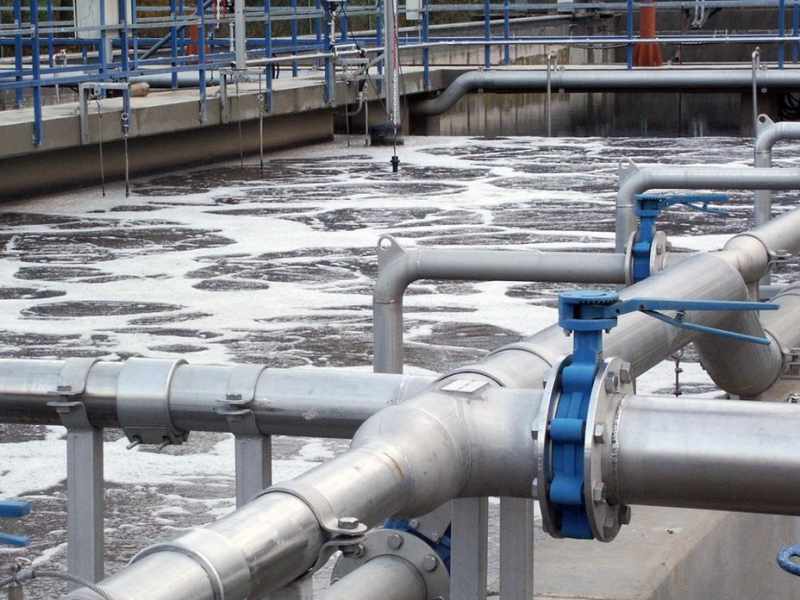
How We Selected These Flow Meter Manufacturers
There is no single manufacturer that is best for every industrial flow measurement application. The companies in this guide were selected using four considerations:
- Measurement technology: A documented product portfolio covering one or more established industrial flow measurement principles.
- Application relevance: Products intended for identifiable industrial processes, fluids, or installation conditions.
- Technical documentation: Available product information that buyers can use to review specifications and operating limitations.
- Supplier specialization: A combination of broad instrumentation manufacturers and companies focused on particular measurement technologies or procurement requirements.
This is an editorial shortlist, not a ranking based on global revenue, market share, or independently measured product performance. The numbering identifies companies for comparison and does not establish their relative market positions. Product availability and certifications should be confirmed for the specific model and country.
10 Leading Flow Meter Manufacturers for Industrial Applications
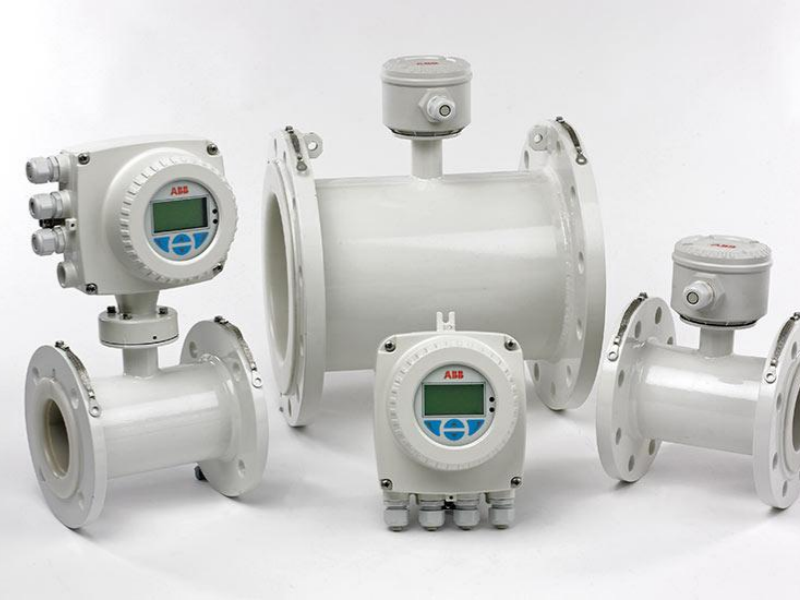
1. ABB - Broad Industrial Process Instrumentation
ABB manufactures flow measurement instruments for industrial processes, utilities, and automation systems. Its portfolio includes electromagnetic, Coriolis, vortex, swirl, thermal mass, and differential pressure technologies.
Representative products include WaterMaster electromagnetic meters for water applications, CoriolisMaster instruments for mass flow measurement, and SensyMaster thermal mass meters for gases. These separate product families allow buyers to evaluate different measurement principles within the same instrumentation supplier.
ABB is relevant to facilities requiring flow measurement alongside other process instrumentation. For water and wastewater projects, buyers should examine the electromagnetic meter's liner, electrode materials, operating range, and diagnostic features. For gas applications, calibration conditions and gas composition become more important.
Buyer consideration: Determine which product family matches the process before comparing transmitters, communication options, and service requirements. See the ABB flow measurement portfolio for its current product range.
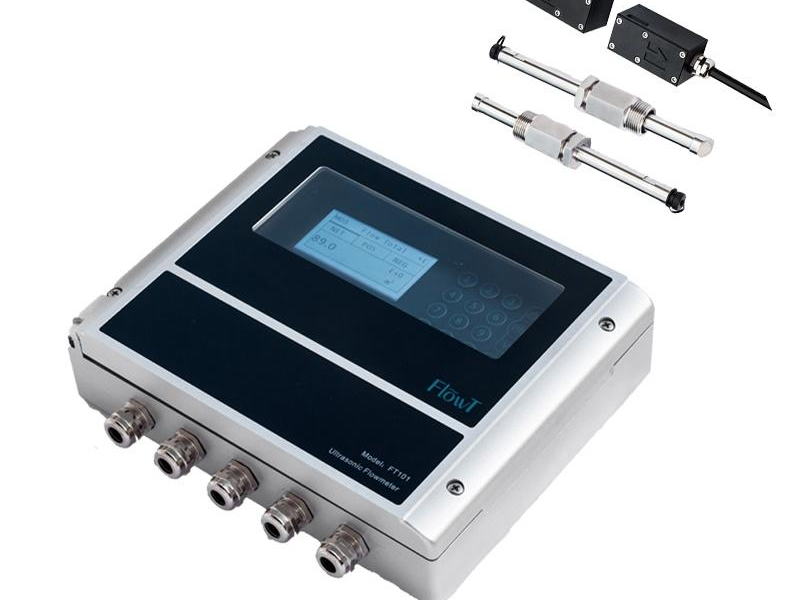
2. FlowT Instrument - Ultrasonic Flow Meters and OEM/ODM Supply
FlowT Instrument (Shenzhen) Limited is a China-based industrial flow measurement manufacturer specializing in ultrasonic and electromagnetic flow meters. Its product offering is particularly relevant to liquid measurement, existing pipeline monitoring, and project-based equipment supply.
FlowT's ultrasonic flow meter range includes clamp-on and other configurations for suitable liquid applications. Clamp-on transit-time measurement is especially useful when an existing pipe cannot be cut or when production interruptions must be avoided.
Unlike an inline mechanical meter, a clamp-on ultrasonic instrument can measure flow without placing a sensor directly inside the fluid. However, performance depends on the fluid's acoustic properties, pipe material, wall thickness, lining, flow profile, and installation quality. These conditions must be checked rather than assuming every pipeline is suitable.
For conductive liquids, FlowT also supplies electromagnetic flow meters for water treatment, industrial water systems, and compatible process fluids. Electrode and liner selection should reflect the operating medium.
FlowT also offers project-based configuration and OEM/ODM cooperation. Its published company information describes actual-flow calibration and manufacturing support. Buyers should request model-specific calibration records, technical drawings, and applicable quality documentation when evaluating a project.
Buyer consideration: FlowT is worth evaluating for clamp-on liquid flow measurement, industrial water monitoring, and private-label supply arrangements. Review its manufacturing and calibration capabilities alongside the relevant instrument datasheet.

3. Emerson - Process Measurement and Automation Integration
Emerson offers a broad flow measurement portfolio through product families including Micro Motion and Rosemount. Its technologies include Coriolis, electromagnetic, vortex, differential pressure, inline ultrasonic, non-intrusive ultrasonic, and multiphase measurement.
Micro Motion Coriolis meters are relevant when direct mass flow and density measurement are important. Rosemount instruments serve other liquid, gas, and steam applications. Emerson also offers ultrasonic solutions for pipelines where the installation method or process conditions make ultrasound appropriate.
Emerson is a practical candidate for chemical processing, refining, oil and gas, and large automation projects involving multiple measurement variables.
Buyer consideration: Distinguish between the requirements for mass flow, volumetric flow, and multiphase measurement. Review process diagnostics, approvals, and system integration rather than selecting solely by the manufacturer's breadth of products. Its official flow measurement catalog provides further product details.
4. Endress+Hauser - Process Flow Measurement and Diagnostics
Endress+Hauser supplies electromagnetic, Coriolis, ultrasonic, vortex, thermal mass, and differential pressure flow measurement technologies. Its Proline portfolio includes Promag electromagnetic meters, Promass Coriolis meters, Prosonic ultrasonic instruments, and Prowirl vortex products.
These product families cover different applications, including conductive liquids, hygienic processes, gas measurement, and steam monitoring. Certain models also provide advanced diagnostic and verification functions, although capabilities vary by instrument.
The company is especially relevant when procurement involves standardized process instrumentation, documented technical requirements, and long-term instrument management.
Buyer consideration: Compare specific sensor and transmitter combinations, installation limits, process connections, and available diagnostic functions. The Endress+Hauser flow measurement overview outlines its technology families.

5. KROHNE - Specialized Flow Measurement Technologies
KROHNE develops process instrumentation with a substantial focus on flow measurement. Its well-established product families include OPTIFLUX electromagnetic meters, OPTIMASS Coriolis meters, OPTISONIC ultrasonic meters, and OPTISWIRL vortex meters.
The portfolio covers conductive liquids, mass flow applications, and suitable gas or steam measurement processes. KROHNE offers different sensor designs and configurations for industrial conditions that cannot be addressed by one universal meter.
For corrosive or abrasive liquids, selection should include wetted materials and the actual operating environment. For ultrasonic measurement, the relevant fluid and pipeline conditions must also be assessed.
Buyer consideration: Identify the appropriate measurement principle first, then compare the applicable product series and options. The KROHNE flowmeter catalog provides the product-specific starting point.
6. Siemens - Flow Measurement for Industrial Automation
Siemens provides industrial flow measurement through its SITRANS portfolio, including electromagnetic, Coriolis, ultrasonic, and vortex technologies.
Its offerings are relevant to manufacturing facilities, water utilities, chemical processing, and industrial installations where flow data must be integrated into automation systems.
For example, a project using an existing PLC architecture may place considerable importance on communication protocols, diagnostics, transmitter configuration, and maintenance access. These requirements can be just as important as the sensor's measurement specification.
Buyer consideration: Review the complete sensor-transmitter configuration and verify compatibility with the plant's control system. Siemens provides technical information through its SITRANS process instrumentation portfolio.
7. Badger Meter - Water and Industrial Flow Measurement
Badger Meter has an extensive presence in water and industrial flow monitoring. Its product families include ModMAG electromagnetic instruments, Dynasonics ultrasonic meters, and Blancett turbine products.
These technologies address different requirements. Electromagnetic meters are useful for compatible conductive liquids, ultrasonic instruments provide additional installation choices, and turbine meters serve suitable clean-fluid measurement applications.
Badger Meter is especially relevant to water utilities, industrial water systems, building services, and selected process measurement projects.
Buyer consideration: Check whether the project requires inline or clamp-on installation, low-flow performance, remote monitoring, or integration with water management systems. See its commercial and industrial measurement solutions for application-specific options.
8. Yokogawa - Flow Measurement for Continuous Processes
Yokogawa manufactures industrial flow measurement instruments including ADMAG electromagnetic meters, ROTAMASS Coriolis instruments, and VY series vortex meters.
The company serves continuous process industries where measurement reliability, process control, and instrument maintenance are important. Its portfolio is relevant to chemicals, petrochemicals, power generation, and industrial utilities.
An electromagnetic meter may be appropriate for conductive process liquid, while a Coriolis instrument may be preferable when mass flow or density is a required variable. Vortex products offer a separate option for suitable liquid, gas, and steam applications.
Buyer consideration: Compare model-specific process limits, diagnostics, calibration provisions, and approval requirements. Yokogawa publishes these product families in its flowmeter portfolio.
9. Sierra Instruments - Gas Mass Flow and Specialized Measurement
Sierra Instruments specializes in flow measurement and control, with particular expertise in thermal mass technology. Its portfolio also includes vortex and transit-time ultrasonic instruments.
Thermal mass flow meters are commonly evaluated for compressed air, industrial gases, and gas consumption monitoring. They can provide direct mass flow measurement without requiring a separate calculation from volumetric flow, pressure, and temperature under suitable conditions.
Gas composition deserves attention. A meter calibrated for one gas or mixture may not provide the expected performance with another unless appropriate compensation or recalibration is available.
Buyer consideration: Confirm gas composition, flow range, calibration basis, and process connections. Sierra's official product information identifies the technologies available for different applications.
10. Honeywell - VersaFlow Process Measurement
Honeywell supplies industrial flow measurement instruments through its VersaFlow portfolio, which includes electromagnetic, Coriolis, vortex, and clamp-on ultrasonic technologies.
These products serve different operating conditions. Coriolis meters support suitable mass flow applications, electromagnetic meters address conductive liquids, and clamp-on ultrasonic instruments provide an alternative when users cannot modify an existing process line.
Honeywell is relevant to industrial facilities evaluating flow instrumentation alongside broader process automation equipment.
Buyer consideration: Determine whether the project needs direct mass flow, non-invasive installation, or process-specific measurement features before comparing models. Current options are available through Honeywell's flow meter product directory.
Flow Meter Manufacturer Comparison
A manufacturer with the largest product portfolio is not automatically the best supplier for a particular installation. The following comparison highlights areas where each company may be relevant.
| Manufacturer | Representative Technologies | Applications or Purchasing Focus |
|---|---|---|
| ABB | Electromagnetic, Coriolis, vortex, thermal mass | Process instrumentation, water, utilities |
| FlowT | Ultrasonic, electromagnetic and other industrial flow categories | Liquid measurement, existing pipelines, OEM/ODM projects |
| Emerson | Coriolis, electromagnetic, ultrasonic, vortex, DP | Complex processes, oil and gas, automation |
| Endress+Hauser | Electromagnetic, Coriolis, ultrasonic, vortex, thermal | Process measurement, diagnostics, hygienic applications |
| KROHNE | Electromagnetic, Coriolis, ultrasonic, vortex | Specialized industrial flow measurement |
| Siemens | Electromagnetic, Coriolis, ultrasonic, vortex | Industrial automation integration |
| Badger Meter | Electromagnetic, ultrasonic, turbine | Water systems, utilities, industrial monitoring |
| Yokogawa | Electromagnetic, Coriolis, vortex | Continuous process industries |
| Sierra Instruments | Thermal mass, vortex, ultrasonic | Gas mass flow and specialized measurement |
| Honeywell | Electromagnetic, Coriolis, vortex, ultrasonic | Process measurement and automation |
The table identifies relevant product categories, not verified performance superiority. Buyers should compare specific models using the same operating conditions, accuracy definitions, and technical requirements.
Which Flow Meter Technology Fits Your Application?
Before contacting manufacturers, narrow the available technologies. Each measurement principle has operating conditions that can affect accuracy, reliability, and installation cost.
| Technology | Typical Applications | Important Limitations |
|---|---|---|
| Electromagnetic | Conductive water, wastewater, compatible chemical liquids | Requires sufficient conductivity and suitable pipe filling |
| Ultrasonic | Water systems, cooling circuits, suitable liquid pipelines | Depends on acoustic properties, installation, and flow conditions |
| Coriolis | Mass flow measurement, chemical dosing, process liquids | Installation, pressure drop, size, and cost require evaluation |
| Vortex | Suitable steam, gas, and liquid applications | Minimum measurable flow and flow disturbances matter |
| Thermal Mass | Compressed air and industrial gas monitoring | Gas composition and calibration conditions affect performance |
| Turbine | Suitable clean liquids and selected gas applications | Moving components, fluid properties, and maintenance requirements |
For compressed air or industrial gas projects, compare the measurement conditions and available configurations of thermal mass flow meters. For steam applications, a vortex flow meter may be worth evaluating, with pressure and temperature compensation considered where required.
For suitable clean-liquid processes, turbine flow meters provide another option. Their mechanical design makes fluid cleanliness, viscosity, and maintenance relevant to selection.
Choosing Manufacturers by Industrial Application
Water and Wastewater Treatment
Conductive wastewater is commonly measured using electromagnetic technology. Buyers should check fluid conductivity, solids content, liner compatibility, electrode material, and installation conditions. Applications and limitations are discussed further in this guide to magnetic flow meter applications.
Existing Cooling Water Pipelines
When shutdowns or pipe cutting are undesirable, clamp-on transit-time ultrasonic measurement deserves consideration. However, the pipe must support reliable acoustic transmission, and the flow profile must be suitable. See the practical discussion of non-intrusive ultrasonic flow measurement.
HVAC Energy Measurement
Chilled and hot water projects may require more than volumetric flow. Thermal energy calculation also depends on temperature measurements and appropriate fluid property calculations. An ultrasonic energy meter may be relevant when the system requires flow and thermal energy monitoring.
Gas, Chemical and Steam Processes
Gas composition, pressure, temperature, fluid compatibility, and the required measurement variable should determine the technology shortlist. Thermal mass, Coriolis, vortex, differential pressure, and other methods have different strengths. Do not assume a meter specified for air is suitable for every industrial gas, or that a general-purpose liquid meter can handle a chemically aggressive process.
Practical Example: Selecting a Meter for a Cooling Water Pipeline
Consider an illustrative industrial cooling water installation with the following operating conditions:
- Pipe internal diameter: 100 mm
- Minimum flow: 3 m³/h
- Normal flow: 20 m³/h
- Maximum flow: 40 m³/h
- Fluid: Water
- Installation requirement: Avoid interrupting production
The average fluid velocity can be estimated using v = Q/A, where Q is the volumetric flow rate in m³/s and A is the internal cross-sectional area of the pipe.
| Operating Point | Flow Rate | Approximate Velocity |
|---|---|---|
| Minimum | 3 m³/h | 0.106 m/s |
| Normal | 20 m³/h | 0.707 m/s |
| Maximum | 40 m³/h | 1.415 m/s |
These values illustrate why the nominal pipe size alone is insufficient. The selected meter must operate reliably at the lowest expected velocity as well as the maximum flow.
Because the installation should not interrupt production, a clamp-on ultrasonic flow meter is a reasonable technology to investigate. Final suitability still depends on the actual pipe material, wall thickness, lining, sensor configuration, fluid condition, and available installation location.
This is a calculation example, not a documented customer installation or a claim that a particular model is suitable without further verification.
How to Evaluate a Flow Meter Manufacturer Before Purchasing
1. Confirm the Actual Measurement Range
Provide minimum, normal, and maximum flow rates. Ask the supplier to confirm performance across that range, including operating points close to the minimum measurable flow.
Compare accuracy specifications carefully. An accuracy stated as a percentage of reading differs from one stated as a percentage of full scale. The distinction can be particularly important at low flow.
2. Review Installation Requirements
Ask for the installation manual before ordering. Check pipe orientation, sensor accessibility, grounding, straight pipe availability, vibration, and nearby fittings.
Elbows, pumps, control valves, reducers, and tees can disturb the velocity profile. Straight pipe requirements depend on the meter technology and upstream configuration; one universal distance should not be assumed. Read more about the effects of insufficient straight pipe sections.
3. Verify Calibration and Measurement Traceability
Ask whether the instrument receives factory calibration, what reference method is used, and which test points are included. When traceability is required, request documentation identifying the reference standards and associated measurement uncertainty.
The National Institute of Standards and Technology explains that metrological traceability involves a documented chain of calibrations, each contributing to measurement uncertainty. A certificate alone should not be treated as proof that an instrument meets every application requirement.
For additional context, review liquid flow meter calibration methods and clarify which records the supplier can provide for your order.
4. Check Manufacturing and Supplier Responsibilities
Not every company selling flow meters manufactures the instruments. Identify whether you are dealing with the original manufacturer, an OEM supplier, an authorized distributor, or a trading company.
Ask who is responsible for product configuration, factory inspection, calibration, warranty claims, replacement components, and technical assistance. For OEM/ODM projects, clarify labeling, documentation, software configuration, and acceptance requirements before placing the order.
5. Confirm Communication and Control System Compatibility
A meter must deliver the required data to the receiving system. Check electrical characteristics, signal type, communication protocol, output scaling, and totalization requirements.
For example, a PLC may use a 4–20 mA signal for continuous flow monitoring and pulse output for accumulated volume. The correct configuration depends on the input hardware and control strategy. Understanding the role of a flow transmitter can help clarify these integration requirements.
What Should You Include in a Flow Meter RFQ?
A complete request for quotation makes technical comparisons more meaningful. Send the same operating information to every shortlisted supplier.
- Fluid: Name, composition, conductivity, viscosity, or relevant properties.
- Flow conditions: Minimum, normal, and maximum operating flow.
- Pipeline: Actual internal diameter, material, wall thickness, lining, and pipe orientation.
- Process: Pressure, temperature, and any abnormal operating conditions.
- Installation: Inline or non-invasive preference, shutdown restrictions, and nearby fittings.
- Performance: Required accuracy, repeatability, and calibration documentation.
- Integration: Power supply, output signals, communication protocols, and display requirements.
- Commercial terms: Quantity, delivery destination, documentation, warranty, and expected technical support.
Do not compare quotations on instrument price alone. Installation modifications, commissioning, calibration, maintenance, and replacement costs may change the overall project cost. Where different technologies are proposed, ask suppliers to explain why each option meets the operating requirements.
Frequently Asked Questions About Flow Meter Manufacturers
Who are the leading industrial flow meter manufacturers?
Established manufacturers include ABB, Emerson, Endress+Hauser, KROHNE, Siemens, Badger Meter, Yokogawa, Sierra Instruments, and Honeywell. Specialized manufacturers such as FlowT also supply products for defined industrial applications. The right shortlist depends on technology requirements rather than brand recognition alone.
Is a specialized flow meter manufacturer better than a large instrumentation company?
Neither is automatically better. Large suppliers may offer extensive instrumentation portfolios and integration options. Specialized manufacturers may be suitable for focused technologies, particular installation requirements, or OEM supply. Compare the actual product, documentation, service obligations, and project requirements.
Which flow meter manufacturers should I consider for water measurement?
Manufacturers offering electromagnetic or ultrasonic technology are useful starting points. Electromagnetic meters suit conductive liquids, while ultrasonic solutions provide options for suitable inline or non-invasive installations. Fluid condition, pipe geometry, and required accuracy determine the final choice.
What documents should a flow meter supplier provide?
Request a datasheet, installation instructions, wiring information, applicable product approvals, and the agreed calibration or inspection documents. Material certificates, hazardous-area approvals, or additional verification records may be necessary for particular projects.
Can a manufacturer customize flow meters for OEM projects?
Some manufacturers offer OEM or ODM services, but capabilities differ. Potential modifications include branding, process connections, communication settings, documentation, or other project-specific configurations. Confirm feasibility and acceptance criteria directly with the supplier.
How do I choose between ultrasonic and electromagnetic flow meters?
Electromagnetic meters are generally appropriate for conductive liquids and require the correct wetted materials and installation conditions. Clamp-on ultrasonic meters can be attractive when pipes must remain intact, but acoustic conditions and flow profiles are important. Compare the total installation requirements, not simply the advertised accuracy.
Conclusion: Choose the Manufacturer That Fits the Process
The best flow meter manufacturer for one industrial project may not be the right supplier for another. ABB, Emerson, Endress+Hauser, KROHNE, Siemens, and other established companies offer broad process measurement portfolios, while specialized manufacturers such as FlowT can be evaluated for focused liquid measurement and project-based supply requirements.
Start with the fluid, measurement objective, flow range, and installation constraints. Then compare technical documentation, calibration, supplier responsibilities, communication requirements, and long-term support. A well-defined specification produces a more useful shortlist than a brand ranking alone.
If your project involves ultrasonic or electromagnetic liquid flow measurement, contact FlowT's technical team with your pipe details and operating conditions to discuss an appropriate instrument configuration.


