


Hey there! As a pressure transmitter supplier, I often get asked about the pressure - to - output relationship of a pressure transmitter. It's a crucial topic that can help you understand how these devices work and how to choose the right one for your needs. So, let's dive right in!
What is a Pressure Transmitter?
Before we talk about the pressure - to - output relationship, let's quickly go over what a pressure transmitter is. A pressure transmitter is a device that measures pressure and converts it into an electrical signal. This signal can then be used for various purposes, like monitoring, control, or data logging.
We offer a wide range of pressure transmitters, including the Pressure Transmitter with Hart Protocol for Water Measurement, which is great for water - related applications. It uses the Hart protocol, which allows for digital communication and additional functionality.
Another option is the Industrial Pressure Transmitter for Liquid Measurement Smart Type Flow Meter. This one is designed specifically for liquid measurement and has smart features that make it very accurate and reliable.
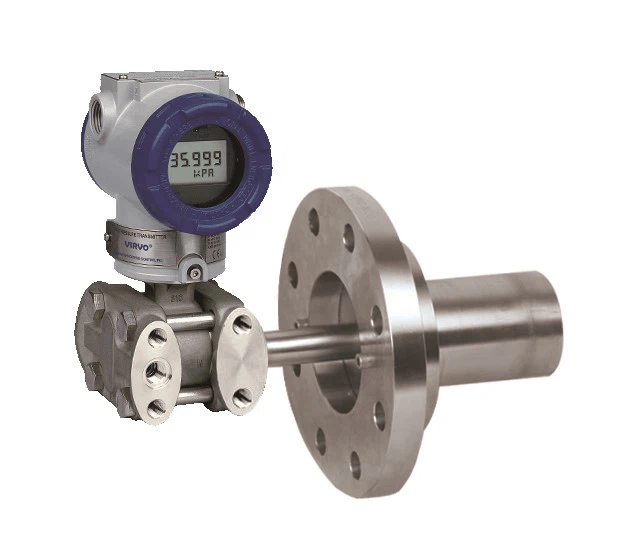
And if you need to measure differential pressure, our Differential Pressure Transmitter with Single or Double Flanges Flow Meter is a great choice. It can handle different types of applications, whether you need single or double flanges.
The Basics of Pressure - to - Output Relationship
The pressure - to - output relationship of a pressure transmitter is all about how the device translates the physical pressure it measures into an electrical output. Most pressure transmitters use a sensor element that changes its electrical properties in response to pressure.
For example, many pressure transmitters use a strain - gauge sensor. When pressure is applied to the sensor, it causes a deformation. This deformation changes the resistance of the strain gauges, and this change in resistance is then converted into an electrical signal.
The output of a pressure transmitter is usually a standardized signal, such as 4 - 20 mA or 0 - 10 V. The 4 - 20 mA signal is very common in industrial applications. In this system, 4 mA represents the minimum pressure (usually zero or a pre - set lower limit), and 20 mA represents the maximum pressure (the upper limit of the transmitter's measurement range).
Let's say you have a pressure transmitter with a measurement range of 0 - 100 psi. When the pressure is 0 psi, the output will be 4 mA. As the pressure increases to 100 psi, the output will increase linearly to 20 mA. So, if you measure an output of 12 mA, you can calculate the pressure using the following formula:
[Pressure=\frac{(Output - 4)}{(20 - 4)}\times(Upper\ Limit - Lower\ Limit)+Lower\ Limit]
[Pressure=\frac{(12 - 4)}{(20 - 4)}\times(100 - 0)+0=\frac{8}{16}\times100 = 50\ psi]

Factors Affecting the Pressure - to - Output Relationship
There are several factors that can affect the pressure - to - output relationship of a pressure transmitter. One of the most important factors is temperature. Temperature changes can cause the sensor element to expand or contract, which can affect its electrical properties. This can lead to errors in the pressure measurement.
To compensate for temperature effects, many modern pressure transmitters have built - in temperature compensation circuits. These circuits adjust the output signal to account for temperature changes, ensuring more accurate measurements.
Another factor is the accuracy of the sensor itself. The accuracy of a pressure transmitter is usually specified as a percentage of the full - scale output. For example, a transmitter with an accuracy of ±0.5% of full - scale means that the measured pressure could be off by up to 0.5% of the maximum pressure in the measurement range.
The installation of the pressure transmitter can also affect its performance. If the transmitter is not installed correctly, it may be subject to mechanical stress or vibration, which can cause errors in the measurement. It's important to follow the manufacturer's installation instructions carefully to ensure accurate and reliable operation.
Calibration and Maintenance
Calibration is a crucial part of maintaining the accuracy of the pressure - to - output relationship. Over time, the performance of a pressure transmitter can drift due to factors like temperature changes, aging of the sensor, or mechanical stress. Calibration involves comparing the output of the transmitter to a known pressure standard and adjusting the transmitter's settings if necessary.
Most pressure transmitters need to be calibrated periodically. The calibration interval depends on several factors, such as the application, the environment, and the accuracy requirements. In some industrial applications, calibration may be required every few months, while in less critical applications, it may be sufficient to calibrate once a year.
Maintenance is also important. Regularly checking the transmitter for physical damage, ensuring proper electrical connections, and keeping the sensor clean can help prevent problems and ensure accurate measurements.
Choosing the Right Pressure Transmitter
When choosing a pressure transmitter, it's important to consider the pressure - to - output relationship and how it fits your specific application. You need to determine the appropriate measurement range for your application. If you choose a transmitter with a range that is too large, you may sacrifice accuracy. On the other hand, if the range is too small, the transmitter may be damaged if the pressure exceeds its maximum limit.
You also need to consider the output signal type. As mentioned earlier, 4 - 20 mA is a common choice for industrial applications because it is less susceptible to electrical interference. However, if you need a voltage output for a specific control system, a transmitter with a 0 - 10 V output may be more suitable.
The accuracy and reliability of the transmitter are also important factors. Look for a transmitter with a high - quality sensor and good temperature compensation. Reading customer reviews and getting recommendations from other users can also help you make an informed decision.
Conclusion
Understanding the pressure - to - output relationship of a pressure transmitter is essential for getting accurate and reliable pressure measurements. Whether you're monitoring the pressure in a water system, measuring the pressure of a liquid in an industrial process, or need to measure differential pressure, choosing the right pressure transmitter and maintaining it properly is crucial.
If you're in the market for a pressure transmitter, we're here to help. We have a wide range of products to suit different applications and requirements. Don't hesitate to contact us for more information or to start a procurement discussion. We'll work with you to find the best solution for your needs.
References
- Pressure Transmitter Handbook, Industry Standard Publication
- Technical Documents from Pressure Transmitter Manufacturers


