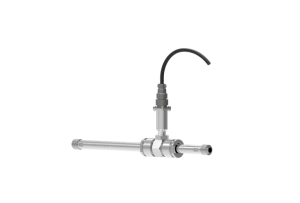
As a supplier of mag meters, I am often asked about the measurement range of these devices. Mag meters, also known as electromagnetic flow meters, are widely used in various industries to measure the flow rate of conductive fluids. In this blog post, I will delve into the measurement range of mag meters, exploring the factors that influence it and the typical ranges available in the market.
Understanding Mag Meters
Mag meters operate based on Faraday's law of electromagnetic induction. When a conductive fluid flows through a magnetic field generated by the meter, a voltage is induced across the fluid. This voltage is proportional to the flow velocity of the fluid, allowing the meter to accurately measure the flow rate. One of the key advantages of mag meters is their ability to measure a wide range of flow rates, making them suitable for diverse applications.
Factors Influencing the Measurement Range
Several factors can influence the measurement range of mag meters. These include the size of the meter, the conductivity of the fluid, the magnetic field strength, and the design of the meter's electrodes.


- Meter Size: The size of the mag meter plays a crucial role in determining its measurement range. Larger meters are generally capable of measuring higher flow rates, while smaller meters are more suitable for lower flow rates. This is because the cross-sectional area of the meter affects the velocity of the fluid passing through it. A larger cross-sectional area allows for a greater volume of fluid to flow, resulting in a higher flow rate.
- Fluid Conductivity: Mag meters require the fluid being measured to have a certain level of conductivity. The conductivity of the fluid affects the strength of the induced voltage, which in turn impacts the accuracy of the measurement. Most mag meters can measure fluids with a conductivity ranging from a few microsiemens per centimeter (μS/cm) to several thousand μS/cm. However, some specialized meters can measure fluids with even lower or higher conductivity.
- Magnetic Field Strength: The strength of the magnetic field generated by the mag meter also affects its measurement range. A stronger magnetic field can induce a higher voltage across the fluid, allowing for more accurate measurements at lower flow rates. However, increasing the magnetic field strength also requires more power and can lead to higher costs.
- Electrode Design: The design of the meter's electrodes can also influence its measurement range. Different electrode materials and configurations can affect the sensitivity and accuracy of the meter. For example, some electrodes are designed to be more resistant to corrosion and fouling, which can improve the long-term performance of the meter.
Typical Measurement Ranges
The measurement range of mag meters can vary significantly depending on the specific model and application. However, most mag meters available in the market can measure flow rates ranging from a few liters per hour (L/h) to several thousand cubic meters per hour (m³/h).
- Low Flow Rates: For applications requiring the measurement of low flow rates, such as in laboratory settings or small-scale industrial processes, mag meters with a measurement range of a few L/h to a few hundred L/h are commonly used. These meters are typically smaller in size and have a higher sensitivity to accurately measure the low flow velocities.
- Medium Flow Rates: In many industrial applications, such as water treatment plants, chemical processing, and food and beverage production, mag meters with a measurement range of a few hundred L/h to a few thousand m³/h are used. These meters are designed to handle a wide range of flow rates and are suitable for both continuous and batch processes.
- High Flow Rates: For large-scale applications, such as in the oil and gas industry or power generation plants, mag meters with a measurement range of several thousand m³/h to tens of thousands of m³/h are required. These meters are typically larger in size and are designed to withstand high pressures and flow velocities.
Applications of Mag Meters with Different Measurement Ranges
The wide measurement range of mag meters makes them suitable for a variety of applications across different industries. Here are some examples:
- Water and Wastewater Treatment: Mag meters are commonly used in water and wastewater treatment plants to measure the flow rate of water, sewage, and other fluids. They can accurately measure both low and high flow rates, making them ideal for monitoring the intake, distribution, and treatment processes. For example, in a water treatment plant, mag meters can be used to measure the flow rate of raw water entering the plant, as well as the flow rate of treated water leaving the plant.
- Chemical Processing: In the chemical industry, mag meters are used to measure the flow rate of various chemicals, including acids, bases, and solvents. They can handle a wide range of flow rates and are resistant to corrosion, making them suitable for use in harsh chemical environments. For example, in a chemical manufacturing plant, mag meters can be used to measure the flow rate of reactants entering a reactor, as well as the flow rate of products leaving the reactor.
- Food and Beverage Production: Mag meters are also widely used in the food and beverage industry to measure the flow rate of liquids such as milk, juice, beer, and soft drinks. They are hygienic and easy to clean, making them suitable for use in food processing applications. For example, in a dairy processing plant, mag meters can be used to measure the flow rate of milk during the pasteurization and homogenization processes.
- Oil and Gas Industry: In the oil and gas industry, mag meters are used to measure the flow rate of crude oil, natural gas, and other petroleum products. They can handle high flow rates and are designed to withstand the harsh conditions of the oil and gas production environment. For example, in an oil refinery, mag meters can be used to measure the flow rate of crude oil entering the refinery, as well as the flow rate of refined products leaving the refinery.
Choosing the Right Mag Meter for Your Application
When selecting a mag meter for your application, it is important to consider the specific requirements of your process, including the flow rate range, fluid conductivity, and operating conditions. Here are some tips to help you choose the right mag meter:
- Determine the Flow Rate Range: First, determine the minimum and maximum flow rates that you need to measure. This will help you select a mag meter with an appropriate measurement range. Make sure to choose a meter that can handle the expected flow rates with sufficient accuracy and precision.
- Consider the Fluid Conductivity: Check the conductivity of the fluid being measured and ensure that the mag meter you choose is compatible with it. If the fluid has a low conductivity, you may need to select a meter with a higher sensitivity or a specialized electrode design.
- Evaluate the Operating Conditions: Consider the operating conditions of your process, such as the temperature, pressure, and chemical composition of the fluid. Make sure the mag meter you choose can withstand these conditions and provide reliable performance over time.
- Look for Additional Features: Some mag meters come with additional features, such as built-in diagnostic tools, communication interfaces, and remote monitoring capabilities. These features can enhance the functionality and usability of the meter, making it easier to integrate into your existing system.
Our Product Offerings
As a leading supplier of mag meters, we offer a wide range of products to meet the diverse needs of our customers. Our mag meters are designed to provide accurate and reliable flow measurement in various applications. Here are some of our popular products:
- Mag Meter Flow Meter for Water Inline Type Flange Connection: This mag meter is specifically designed for the measurement of water flow. It features an inline type design with a flange connection, making it easy to install and integrate into your water distribution system. The meter has a wide measurement range and high accuracy, making it suitable for both residential and commercial applications.
- Electromagnetic Water Flow Meter for Measuring Flow Capavitive: This electromagnetic water flow meter is based on capacitive technology, which provides high sensitivity and accuracy in measuring water flow. It is suitable for use in applications where the measurement of low flow rates is required, such as in irrigation systems and water conservation projects.
- Electronic Electric Water Depth Measurement Output Signal Water Level Meter: This water level meter is designed to measure the depth of water in tanks, wells, and other water bodies. It uses electronic and electric sensors to provide accurate and reliable water level measurements. The meter can output the measurement data in various formats, making it easy to integrate into your monitoring system.
Contact Us for Procurement
If you are interested in purchasing mag meters for your application, we would be happy to assist you. Our team of experts can help you select the right meter based on your specific requirements and provide you with a competitive quote. Please feel free to contact us to discuss your needs and start the procurement process.
References
- ISO 9104:1991, “Measurement of fluid flow in closed conduits - Electromagnetic flowmeters for conductive liquids”.
- American Petroleum Institute (API) Publication 550, “Measurement of Liquid Hydrocarbons by Coriolis and Magnetic Flowmeters”.
- Flow Research, “The World Market for Flowmeters - 2023 Edition”.