


Hey there! As a transmitter supplier, I often get asked about various technical aspects of transmitters. One question that pops up quite frequently is, "What is the impedance of a transmitter antenna?" In this blog, I'm gonna break it down for you in a way that's easy to understand.
First off, let's get a basic understanding of what impedance is. Impedance is like the electrical resistance in an AC (alternating current) circuit. It's not just about the pure resistance but also includes the effects of capacitance and inductance. In simple terms, it's a measure of how much a circuit resists the flow of an AC signal.
When it comes to a transmitter antenna, impedance plays a crucial role. The impedance of an antenna determines how well it can transfer power from the transmitter to the airwaves. If the impedance of the antenna doesn't match the impedance of the transmitter, a lot of the power that's supposed to go out into the air will bounce back to the transmitter. This is called a reflection, and it's not a good thing. It can cause overheating in the transmitter and reduce the overall efficiency of the system.
The standard impedance for most transmitter antennas is 50 ohms. This has become a widely accepted value in the industry. Why 50 ohms? Well, it's a compromise between power handling and low loss. A 50 - ohm system can handle a decent amount of power without getting too hot, and it also has relatively low signal loss.
Let's dig a bit deeper into how impedance affects the performance of a transmitter antenna. Imagine you're trying to push water through a hose. If the hose is too narrow, it's hard to get a lot of water through, and if it's too wide, the water doesn't have enough pressure to go very far. The impedance of the antenna is like the width of the hose. If it's not the right value, the power (or the water in our analogy) won't flow smoothly.
When the impedance is mismatched, we use something called a matching network. A matching network is a circuit that's designed to make the impedance of the antenna look like the impedance of the transmitter. It's like putting an adapter on the hose to make the water flow better. There are different types of matching networks, such as L - networks, Pi - networks, and T - networks. Each type has its own advantages and is used depending on the specific requirements of the system.
Now, let's talk about how we measure the impedance of a transmitter antenna. There are a few ways to do this. One common method is to use a network analyzer. A network analyzer sends a signal through the antenna and measures the reflection coefficient. From the reflection coefficient, we can calculate the impedance. Another way is to use a VSWR (Voltage Standing Wave Ratio) meter. The VSWR is a measure of how well the antenna is matched to the transmitter. A VSWR of 1:1 means a perfect match, and as the ratio gets higher, the mismatch gets worse.
As a transmitter supplier, we offer a wide range of products that are designed with proper impedance matching in mind. For example, our Stable Gauge or Absolute Pressure Transmitter with Digital Signal Output is built to ensure efficient power transfer. It has a well - designed antenna system with the right impedance to provide reliable performance.
Our Differential Pressure Transmitter with Single or Double Flanges Flow Meter also takes impedance into account. The antenna in this transmitter is carefully calibrated to match the internal circuitry, which helps in accurate measurement and long - term stability.
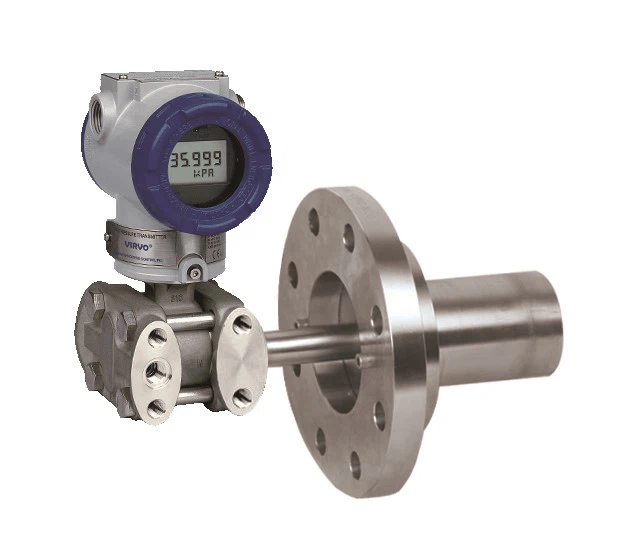

And if you're looking for a transmitter for water measurement, our Pressure Transmitter with Hart Protocol for Water Measurement is a great choice. It has an optimized antenna impedance that ensures minimal signal loss and maximum efficiency.
In conclusion, understanding the impedance of a transmitter antenna is essential for anyone working with transmitters. It affects the performance, efficiency, and reliability of the system. As a transmitter supplier, we're committed to providing high - quality products that are designed with proper impedance matching. If you're in the market for a transmitter and want to learn more about how impedance affects your specific application, don't hesitate to reach out. We're here to help you make the right choice and ensure that your system works at its best. Whether you're a small business or a large corporation, we have the expertise and the products to meet your needs. So, if you're interested in purchasing our transmitters or have any questions, feel free to contact us for a purchase negotiation. We're looking forward to working with you!
References:
- "Antenna Engineering Handbook" by John L. Volakis
- "RF Circuit Design" by Chris Bowick


