


Yo, I'm a supplier of mag flow meters, and today I wanna chat about something super important in the world of flow measurement: the impact of pipe diameter on the performance of a mag flow meter.
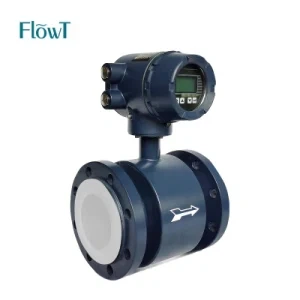
First off, let's quickly understand what a mag flow meter is. It's a device that measures the flow rate of conductive fluids, like water, sewage, and various industrial liquids. It works based on Faraday's law of electromagnetic induction. When a conductive fluid flows through a magnetic field generated by the mag flow meter, a voltage is induced, and this voltage is proportional to the flow rate of the fluid. Cool, right?
Now, let's dig into how pipe diameter affects the performance of these meters.
1. Flow Velocity
The pipe diameter has a direct impact on the flow velocity of the fluid. According to the principle of continuity equation (Q = A × V, where Q is the volumetric flow rate, A is the cross - sectional area of the pipe, and V is the flow velocity), for a given flow rate, the flow velocity is inversely proportional to the cross - sectional area of the pipe. And since the cross - sectional area of a pipe is related to the square of its diameter (A = π × (d/2)^2, where d is the pipe diameter), a larger pipe diameter means a lower flow velocity for the same flow rate.
In a mag flow meter, the induced voltage is related to the flow velocity of the fluid. If the flow velocity is too low, the induced voltage may be very small, which can lead to measurement inaccuracies. For example, in a large - diameter pipe with a relatively low flow rate, the fluid may flow sluggishly, and the mag flow meter might have trouble accurately detecting the flow. On the other hand, in a small - diameter pipe, the flow velocity can be quite high for the same flow rate, which can sometimes cause issues like excessive wear and tear on the meter components due to the high - speed fluid flow.
2. Signal Strength
The signal strength of a mag flow meter is also affected by the pipe diameter. As we mentioned earlier, the induced voltage is related to the flow velocity. In a larger - diameter pipe, with lower flow velocities, the induced voltage is weaker. This weak signal can be more susceptible to noise and interference from the surrounding environment. Electrical noise, electromagnetic interference from other equipment, or even mechanical vibrations can all have a greater impact on a weak signal.
To compensate for the weak signal in large - diameter pipes, some mag flow meters are designed with more sensitive sensors or advanced signal - processing algorithms. But this can also increase the cost and complexity of the meter. In contrast, in small - diameter pipes, the stronger signal makes it easier to measure the flow accurately, and the meter is generally less affected by external interference.
3. Installation and Maintenance
Pipe diameter also plays a role in the installation and maintenance of mag flow meters. Larger - diameter pipes require larger mag flow meters, which are generally more expensive and heavier. Installation of these large meters can be more challenging, as they may need special lifting equipment and more space. Also, accessing the meter for maintenance or calibration can be more difficult in large - diameter pipes, especially if they are buried underground or installed in hard - to - reach locations.
On the other hand, small - diameter mag flow meters are easier to install and maintain. They are lighter, more compact, and can be installed in tight spaces. However, they may be more prone to clogging if the fluid contains particles or debris, as the smaller flow passages can get blocked more easily.

4. Cost Considerations
Cost is always an important factor when choosing a mag flow meter. Larger - diameter mag flow meters are typically more expensive than smaller ones. This is because they require more materials for construction, larger sensors, and more powerful signal - processing units to handle the lower flow velocities and weaker signals.
In addition to the initial purchase cost, the operating cost can also be affected by the pipe diameter. For example, in a large - diameter pipe, if the flow rate is low, the mag flow meter may need to operate at a higher sensitivity level, which can consume more power. On the other hand, small - diameter mag flow meters generally have lower power consumption, but they may need more frequent maintenance if they are prone to clogging.
Product Recommendations
If you're looking for a mag flow meter for water with an inline type flange connection, check out our Mag Meter Flow Meter for Water Inline Type Flange Connection. It's suitable for a wide range of pipe diameters and offers accurate flow measurement.
For those who need an electromagnetic water flow meter, our Electromagnetic Water Flow Meter is a great choice. It's designed to provide reliable performance in various water - related applications.
And if you're dealing with sewage, our Electromagnetic Flowmeters Electrical Meter For Sewage is specifically engineered to handle the challenges of measuring sewage flow, regardless of the pipe diameter.
Conclusion
In conclusion, the pipe diameter has a significant impact on the performance of a mag flow meter. It affects the flow velocity, signal strength, installation and maintenance, and cost. When choosing a mag flow meter, it's crucial to consider the pipe diameter of your application to ensure accurate and reliable flow measurement.
If you're interested in our mag flow meters or have any questions about how to choose the right one for your specific pipe diameter and application, don't hesitate to reach out. We're here to help you make the best decision for your flow measurement needs.
References
- "Flow Measurement Handbook: Industrial Designs and Applications" by Richard W. Miller
- "Electromagnetic Flowmeters: Theory, Design, and Application" by various authors in the field of flow measurement


