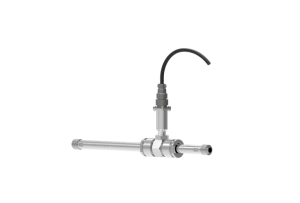
In the field of fluid measurement, flow meters and liquid meters are two commonly used devices, but many people often confuse them. As a supplier of liquid meters, I am here to clarify the differences between these two types of meters, which will help you make more informed decisions when choosing the right measurement equipment for your specific needs.


Definition and Basic Function
A flow meter is a device used to measure the flow rate of a fluid, which can be a liquid, gas, or steam, through a pipe or a system. It provides information about how much fluid is passing through a particular point in a given period of time. Flow meters are widely used in various industries such as oil and gas, water treatment, chemical processing, and HVAC systems. They are essential for process control, billing, and ensuring the efficient operation of industrial processes.
On the other hand, a liquid meter is a specialized type of flow meter that is specifically designed to measure the flow of liquids. While it also measures the flow rate, its application is more focused on liquid substances. Liquid meters are commonly used in industries where the accurate measurement of liquids is crucial, such as the beverage industry, pharmaceutical manufacturing, and food processing.
Measurement Principles
Flow Meters
Flow meters can operate based on different principles, depending on the type of fluid and the required accuracy. Some common types of flow meters and their measurement principles include:
- Differential Pressure Flow Meters: These meters measure the flow rate by creating a pressure difference across a constriction in the pipe. The most well - known example is the orifice plate. According to Bernoulli's principle, the pressure drop is related to the flow velocity, and by measuring the pressure difference, the flow rate can be calculated.
- Positive Displacement Flow Meters: They measure the flow by trapping a fixed volume of fluid and then counting the number of times this volume is filled and emptied. This type of meter is very accurate for measuring viscous liquids and is often used in the fuel industry.
- Ultrasonic Flow Meters: Ultrasonic flow meters use ultrasonic waves to measure the flow rate. There are two main types: transit - time and Doppler. Transit - time ultrasonic flow meters measure the difference in the time it takes for ultrasonic waves to travel upstream and downstream in the fluid. Doppler ultrasonic flow meters, on the other hand, measure the frequency shift of the ultrasonic waves reflected from particles or bubbles in the fluid. You can find a variety of ultrasonic flow meters, such as the Factory Handheld Ultrasonic Water Flowmeter Price For Sale Ultrasonic Flow Meter and FLOWT OEM DN25 - DN1200mm China Wall Mounted Ultrasonic Water Flowmeter Price,Ultrasonic Flow Meter.
Liquid Meters
Liquid meters also use various measurement principles, but they are often optimized for liquid applications. For example, turbine liquid meters use a turbine that rotates as the liquid flows through it. The rotational speed of the turbine is proportional to the flow rate of the liquid. Another type is the electromagnetic liquid meter, which measures the flow rate based on Faraday's law of electromagnetic induction. When a conductive liquid flows through a magnetic field, an electromotive force is generated, and by measuring this voltage, the flow rate can be determined.
Accuracy and Precision
Accuracy and precision are two important factors when it comes to fluid measurement. Accuracy refers to how close the measured value is to the true value, while precision refers to the repeatability of the measurements.
- Flow Meters: The accuracy of flow meters can vary widely depending on the type and the application. For example, differential pressure flow meters may have an accuracy of around ±1 - 5%, while some high - end ultrasonic flow meters can achieve an accuracy of up to ±0.5%. However, factors such as fluid properties, installation conditions, and calibration can affect the actual accuracy.
- Liquid Meters: Liquid meters are generally designed to provide high accuracy for liquid measurements. In industries where the quality and quantity of liquids are critical, such as the pharmaceutical industry, liquid meters can achieve very high levels of accuracy, often better than ±0.1%. This is because they are specifically calibrated and optimized for liquid substances.
Application Scenarios
Flow Meters
- Gas and Steam Measurement: Flow meters are widely used to measure the flow of gases and steam in power plants, chemical factories, and natural gas distribution systems. For example, in a power plant, the accurate measurement of steam flow is essential for efficient power generation and control.
- Multi - phase Flow Measurement: In the oil and gas industry, flow meters are used to measure the flow of multi - phase mixtures, which consist of oil, gas, and water. Specialized flow meters are designed to handle these complex mixtures and provide accurate flow rate measurements.
Liquid Meters
- Beverage and Food Industry: In the beverage industry, liquid meters are used to measure the amount of ingredients such as water, sugar, and flavorings. In food processing, they are used to ensure the accurate dosing of liquids in various production processes.
- Pharmaceutical Manufacturing: In the pharmaceutical industry, the accurate measurement of liquids is crucial for the production of drugs. Liquid meters are used to measure the volume of solvents, reagents, and active ingredients, ensuring the quality and consistency of the final products.
Cost Considerations
The cost of flow meters and liquid meters can vary significantly depending on the type, size, accuracy, and application.
- Flow Meters: High - end flow meters, especially those used in complex industrial applications such as multi - phase flow measurement, can be quite expensive. For example, some advanced ultrasonic flow meters with high accuracy and special features can cost several thousand dollars. On the other hand, simple differential pressure flow meters are relatively inexpensive and are suitable for applications where a lower level of accuracy is acceptable.
- Liquid Meters: Liquid meters also vary in cost. Precision liquid meters used in the pharmaceutical and food industries, which require high accuracy and compliance with strict hygiene standards, are generally more expensive. However, for less demanding applications, there are also cost - effective liquid meters available.
Maintenance and Calibration
Both flow meters and liquid meters require regular maintenance and calibration to ensure accurate and reliable measurement.
- Flow Meters: The maintenance requirements of flow meters depend on the type. For example, differential pressure flow meters may require regular inspection of the pressure taps to prevent clogging. Ultrasonic flow meters need to be checked for proper installation and the integrity of the ultrasonic transducers. Calibration intervals also vary, but in general, flow meters should be calibrated at least once a year.
- Liquid Meters: Liquid meters, especially those used in industries with strict quality control, require more frequent calibration. In addition, they may need to be cleaned regularly to prevent the buildup of contaminants, which can affect the measurement accuracy.
Conclusion
In summary, while both flow meters and liquid meters are used to measure the flow of fluids, there are significant differences between them in terms of definition, measurement principles, accuracy, application scenarios, cost, and maintenance. As a liquid meter supplier, we understand the importance of providing high - quality liquid measurement solutions for our customers. Whether you are in the beverage industry, pharmaceutical manufacturing, or any other industry that requires accurate liquid measurement, we can offer a wide range of liquid meters to meet your needs.
If you are interested in our liquid meters or need more information about fluid measurement, please feel free to contact us for procurement and further discussions. We are committed to providing you with the best products and services.
References
- ISO 5167 - 1:2003, Measurement of fluid flow by means of pressure differential devices inserted in circular cross - section conduits running full - Part 1: General principles and requirements.
- American Petroleum Institute (API) standards for flow measurement in the oil and gas industry.
- ASME MFC - 3M - 2004, Measurement of Fluid Flow in Closed Conduits Using Ultrasonic Flow Meters.