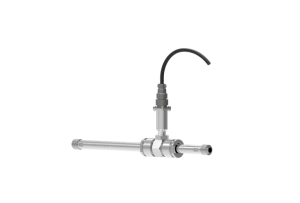
When it comes to measuring and monitoring fluid flow and energy consumption in various systems, two types of meters often come into play: BTU meters and regular water meters. As a supplier of BTU meters, I'm frequently asked about the differences between these two types of meters. In this blog post, I'll delve into the details to help you understand the unique features, functions, and applications of BTU meters and regular water meters.
Understanding Regular Water Meters
Regular water meters are devices used to measure the volume of water passing through a pipe. They are commonly installed in residential, commercial, and industrial settings to monitor water consumption for billing purposes. The basic principle behind a water meter is to measure the flow rate of water and accumulate the volume over time.
There are several types of regular water meters, including mechanical meters, ultrasonic meters, and electromagnetic meters. Mechanical meters, such as the traditional positive displacement meters and turbine meters, use moving parts to measure the flow of water. Ultrasonic meters, on the other hand, use ultrasonic waves to measure the velocity of water and calculate the volume based on the cross-sectional area of the pipe. Electromagnetic meters use the principle of electromagnetic induction to measure the flow of conductive fluids, such as water.
One of the key advantages of regular water meters is their simplicity and reliability. They are relatively easy to install and maintain, and they provide accurate measurements of water volume. However, regular water meters have limitations. They only measure the volume of water and do not provide information about the energy content of the water. This means that they are not suitable for applications where energy consumption needs to be monitored, such as in heating and cooling systems.
Introducing BTU Meters
BTU meters, also known as energy meters or heat meters, are designed to measure the amount of energy transferred by a fluid, typically water, in a heating or cooling system. The term "BTU" stands for British Thermal Unit, which is a unit of energy commonly used in the United States and other countries. One BTU is defined as the amount of energy required to raise the temperature of one pound of water by one degree Fahrenheit.
BTU meters work by measuring both the volume of water flowing through a pipe and the temperature difference between the inlet and outlet of the system. By multiplying the volume of water by the temperature difference and a specific heat capacity factor, the BTU meter can calculate the amount of energy transferred by the water. This information is then used to determine the energy consumption of the heating or cooling system.


There are several types of BTU meters, including ultrasonic BTU meters, electromagnetic BTU meters, and mechanical BTU meters. Ultrasonic BTU meters are the most commonly used type, as they offer high accuracy, reliability, and non-intrusive installation. They use ultrasonic waves to measure the flow rate of water and temperature sensors to measure the temperature difference.
Key Differences between BTU Meters and Regular Water Meters
Now that we have a basic understanding of regular water meters and BTU meters, let's take a closer look at the key differences between the two:
Measurement Function
The most significant difference between BTU meters and regular water meters is their measurement function. Regular water meters only measure the volume of water passing through a pipe, while BTU meters measure both the volume of water and the energy transferred by the water. This means that BTU meters can provide more comprehensive information about the performance of a heating or cooling system.
Application
Regular water meters are primarily used for water billing purposes in residential, commercial, and industrial settings. They are suitable for applications where the volume of water consumption needs to be monitored. BTU meters, on the other hand, are specifically designed for use in heating and cooling systems. They are used to measure the energy consumption of these systems, which is essential for energy management, cost allocation, and system optimization.
Accuracy
Both regular water meters and BTU meters are designed to provide accurate measurements. However, the accuracy requirements for BTU meters are typically higher than those for regular water meters. This is because the energy consumption of a heating or cooling system is a critical parameter that can have a significant impact on energy costs and system performance. BTU meters are required to meet strict accuracy standards to ensure reliable and accurate energy measurements.
Installation and Maintenance
Regular water meters are relatively easy to install and maintain. They can be installed in a variety of locations, including indoor and outdoor settings. BTU meters, on the other hand, require more careful installation and calibration. They need to be installed in a location where the temperature sensors can accurately measure the temperature difference between the inlet and outlet of the system. Additionally, BTU meters may require periodic maintenance and calibration to ensure accurate measurements.
Applications of BTU Meters
BTU meters have a wide range of applications in various industries, including:
District Heating and Cooling Systems
In district heating and cooling systems, BTU meters are used to measure the energy consumption of individual buildings or customers. This information is used for billing purposes and to ensure fair and accurate cost allocation. By monitoring the energy consumption of each customer, district heating and cooling providers can optimize the operation of their systems and reduce energy waste.
Industrial Processes
In industrial processes, BTU meters are used to measure the energy consumption of heating and cooling systems. This information is used for process control, energy management, and cost reduction. By monitoring the energy consumption of industrial processes, manufacturers can identify opportunities for energy efficiency improvements and reduce their operating costs.
Commercial Buildings
In commercial buildings, BTU meters are used to measure the energy consumption of heating, ventilation, and air conditioning (HVAC) systems. This information is used for energy management, tenant billing, and system optimization. By monitoring the energy consumption of HVAC systems, building owners and managers can identify energy-saving opportunities and improve the comfort and efficiency of their buildings.
Our BTU Meter Products
As a leading supplier of BTU meters, we offer a wide range of high-quality products to meet the needs of different applications. Our BTU meters are designed to provide accurate and reliable energy measurements, and they are easy to install and maintain.
One of our popular products is the FLOWT OEM DN25 - DN1200mm China Wall Mounted Ultrasonic Water Flowmeter Price,Ultrasonic Flow Meter. This ultrasonic BTU meter is suitable for use in a variety of heating and cooling systems, and it offers high accuracy and reliability. It is wall-mounted and can be easily installed in a variety of locations.
Another product is the Portaflow FT221. This portable BTU meter is ideal for temporary or spot measurements. It is easy to carry and operate, and it provides accurate energy measurements.
We also offer the Ultrasonic Flow Meter Portable Flowmeter Portable. This portable ultrasonic flow meter can be used to measure the flow rate of water and other fluids. It is a versatile tool that can be used in a variety of applications.
Conclusion
In conclusion, BTU meters and regular water meters are two different types of meters with different functions and applications. Regular water meters are used to measure the volume of water, while BTU meters are used to measure the energy consumption of heating and cooling systems. Understanding the differences between these two types of meters is essential for choosing the right meter for your application.
If you are in the market for a BTU meter, we encourage you to contact us to learn more about our products and services. Our team of experts can help you select the right BTU meter for your specific needs and provide you with professional installation and support. We are committed to providing high-quality products and excellent customer service to our clients.
References
- ASHRAE Handbook - HVAC Systems and Equipment. American Society of Heating, Refrigerating and Air-Conditioning Engineers.
- International Organization for Standardization (ISO) standards related to energy measurement and heat metering.
- Manufacturers' technical documentation for BTU meters and regular water meters.