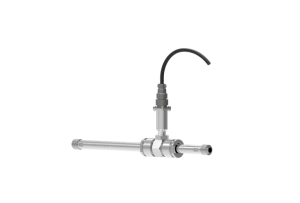
Hey there! As a mag flow meter supplier, I often get asked about how to calibrate these nifty devices. Calibrating a mag flow meter is crucial to ensure accurate measurements, and in this blog, I'll walk you through the process step by step.
First off, let's understand what a mag flow meter is. A mag flow meter, short for electromagnetic flow meter, measures the flow rate of conductive liquids. It works based on Faraday's law of electromagnetic induction. When a conductive liquid flows through a magnetic field generated by the meter, a voltage is induced, and this voltage is proportional to the flow rate of the liquid.
Now, why is calibration so important? Well, over time, factors like wear and tear, changes in the liquid properties, or electrical interference can affect the accuracy of the flow meter readings. Calibration helps to correct these inaccuracies and ensures that the meter is providing reliable data.
Step 1: Preparation
Before you start the calibration process, you need to do some prep work. First, gather all the necessary tools and equipment. You'll typically need a reference flow meter, which is a highly accurate meter that you'll use to compare the readings of your mag flow meter. You'll also need a calibration stand or a test rig where you can set up the meters and create a controlled flow environment.
Next, make sure the mag flow meter is clean and free of any debris or contaminants. A dirty meter can give inaccurate readings, so it's a good idea to flush it out with clean water or a suitable cleaning solution. Check the meter for any visible damage or signs of wear, such as cracks in the housing or loose connections. If you find any issues, it's best to repair or replace the meter before proceeding with the calibration.
Step 2: Installation
Once you've prepared the meter, it's time to install it on the calibration stand. Make sure the meter is installed correctly, following the manufacturer's instructions. The orientation of the meter is important, as it can affect the accuracy of the readings. Most mag flow meters are designed to be installed horizontally, but some can be installed vertically as well. Check the manual to see what's recommended for your specific meter.
Connect the meter to the calibration stand using the appropriate fittings and tubing. Make sure the connections are tight and leak-free. You may need to use some sealant or thread tape to ensure a good seal. Once the meter is installed, connect it to a power source and any other necessary equipment, such as a data logger or a display unit.
Step 3: Zeroing the Meter
Before you start taking flow measurements, you need to zero the meter. This means setting the meter to read zero when there is no flow. To do this, close all the valves in the calibration stand to stop the flow of liquid. Wait for a few minutes to allow the meter to stabilize, and then adjust the zero setting on the meter until it reads zero. Most mag flow meters have a zero adjustment potentiometer or a digital zero setting function that you can use to make this adjustment.
Step 4: Taking Reference Measurements
Once the meter is zeroed, it's time to take some reference measurements using the reference flow meter. Start by opening the valves in the calibration stand to allow the liquid to flow through the meters. Make sure the flow rate is stable and within the range of the meters. You can adjust the flow rate using a flow control valve or a pump.
Take a series of flow measurements using the reference flow meter at different flow rates. Record the readings along with the corresponding flow rates. Make sure to take multiple readings at each flow rate to ensure accuracy. You can use a data logger or a spreadsheet to record the data.
Step 5: Comparing Readings
After you've taken the reference measurements, it's time to compare them with the readings from the mag flow meter. Start by taking the same series of flow measurements using the mag flow meter at the same flow rates. Record the readings and compare them with the reference readings.
If the readings from the mag flow meter are significantly different from the reference readings, you'll need to adjust the calibration of the meter. Most mag flow meters have a calibration factor or a linearization function that you can use to adjust the readings. Follow the manufacturer's instructions to make the necessary adjustments.
Step 6: Fine-Tuning the Calibration
Once you've made the initial adjustments, take another series of flow measurements using both the mag flow meter and the reference flow meter. Compare the readings again to see if the accuracy has improved. If there are still some discrepancies, you may need to fine-tune the calibration by making small adjustments to the calibration factor or the linearization function.
Keep repeating this process until the readings from the mag flow meter are within an acceptable range of the reference readings. The acceptable range will depend on the specific application and the accuracy requirements of your system.
Step 7: Verification
After you've completed the calibration and fine-tuning, it's important to verify the accuracy of the meter. You can do this by taking a final series of flow measurements using the mag flow meter and comparing them with the reference readings. Make sure the readings are consistent and within the acceptable range.
If the meter passes the verification test, you can consider it calibrated and ready for use. However, it's a good idea to perform regular calibration checks to ensure that the meter remains accurate over time.
Conclusion
Calibrating a mag flow meter is a relatively straightforward process, but it requires some careful preparation and attention to detail. By following the steps outlined in this blog, you can ensure that your mag flow meter is providing accurate and reliable flow measurements.
If you're in the market for a high-quality mag flow meter, be sure to check out our Mag Water Meter, Magnetic Flow Meter for Water Measurement with Calibration, and Mag Meter for Liquid High Accuracy Insertion Flow Meter Easy to Installation. Our meters are designed to provide accurate and reliable flow measurements in a wide range of applications.


If you have any questions or need further assistance with calibration or any other aspect of mag flow meters, don't hesitate to reach out. We're here to help you get the most out of your flow measurement equipment.
References
- [Manufacturer's Manual for Mag Flow Meters]
- [Industry Standards for Flow Meter Calibration]