In the field of fluid measurement, magnetic flow meters, also known as mag flow meters, have gained widespread use due to their high accuracy, wide rangeability, and the ability to handle various types of fluids. As a mag flow meter supplier, I understand the importance of magnetic field strength in determining the performance of these essential instruments. In this blog, I will explore how magnetic field strength affects mag flow meter performance.
Understanding the Basics of Magnetic Flow Meters
Magnetic flow meters work based on Faraday's law of electromagnetic induction. When an electrically conductive fluid flows through a magnetic field, a voltage is induced across the fluid. This induced voltage is proportional to the flow velocity of the fluid, the strength of the magnetic field, and the length of the conductor (in this case, the diameter of the flow tube). The formula for Faraday's law in the context of a mag flow meter is (E = B \times D \times V), where (E) is the induced voltage, (B) is the magnetic field strength, (D) is the diameter of the flow tube, and (V) is the average velocity of the fluid.
Impact of Magnetic Field Strength on Measurement Accuracy
One of the most critical aspects of mag flow meter performance is measurement accuracy. The magnetic field strength has a direct bearing on the accuracy of the measurement. Higher magnetic field strength generally leads to a greater induced voltage. This is beneficial because a larger induced voltage is easier to measure with high precision. Noise, which is an inevitable part of any electrical measurement system, has less impact on a larger signal.
For example, in applications where the flow velocity of the conductive fluid is relatively low, a stronger magnetic field can still generate a detectable induced voltage. Without a sufficient magnetic field strength, the induced voltage may be so small that it gets buried in the noise, leading to inaccurate flow measurements. In industrial settings where precise flow measurement is crucial for process control and quality assurance, such inaccuracies can have significant consequences.
On the other hand, if the magnetic field strength is not properly calibrated or is inconsistent, it can also introduce errors in the measurement. A weak or fluctuating magnetic field can cause the induced voltage to deviate from the expected value, resulting in inaccurate readings. Therefore, it is essential to ensure that the magnetic field in a mag flow meter is stable and of the appropriate strength for the intended application.
Influence on the Rangeability of Mag Flow Meters
Rangeability is another important performance parameter of mag flow meters. It refers to the ratio between the maximum and minimum flow rates that a flow meter can measure accurately. Magnetic field strength plays a role in determining the rangeability of a mag flow meter.
A stronger magnetic field allows for more accurate measurement at lower flow rates. As mentioned earlier, a higher magnetic field generates a larger induced voltage even when the flow velocity is low. This means that the lower end of the flow measurement range can be extended, increasing the overall rangeability of the meter.
For instance, in a water treatment plant, there may be times when the flow rate of the water is very low, such as during periods of low water consumption. A mag flow meter with a strong magnetic field can still accurately measure these low flow rates, ensuring that the plant's operators have reliable data for efficient water management.
Conversely, if the magnetic field is too weak, the meter may not be able to accurately measure low flow rates, reducing the rangeability of the device. This can limit the versatility of the mag flow meter and make it less suitable for applications where a wide range of flow rates needs to be measured.
Effects on the Installation Requirements and Fluid Characteristics
Magnetic field strength can also influence the installation requirements of mag flow meters. Stronger magnetic fields may require more robust shielding to prevent interference with nearby electrical equipment. In industrial environments, there are often many electrical devices operating in close proximity to each other, and the magnetic field from a mag flow meter could potentially affect the performance of these devices. Therefore, when using a mag flow meter with a high - strength magnetic field, proper shielding must be installed to minimize such interference.
In addition, the magnetic field strength can interact with the characteristics of the fluid being measured. Some conductive fluids may contain particles or additives that can respond to the magnetic field. In cases where the magnetic field strength is high, these particles may be affected, potentially leading to changes in the fluid's flow behavior or causing material buildup on the flow tube walls. This can, in turn, affect the accuracy and reliability of the flow measurement. For example, in a mining operation where the fluid contains magnetic particles, a very strong magnetic field could cause these particles to accumulate near the flow tube, disrupting the normal flow pattern and introducing measurement errors.
Considerations for Different Applications
When selecting a mag flow meter for a specific application, the magnetic field strength needs to be carefully considered. Different applications have different requirements for flow measurement accuracy, rangeability, and tolerance to environmental factors.
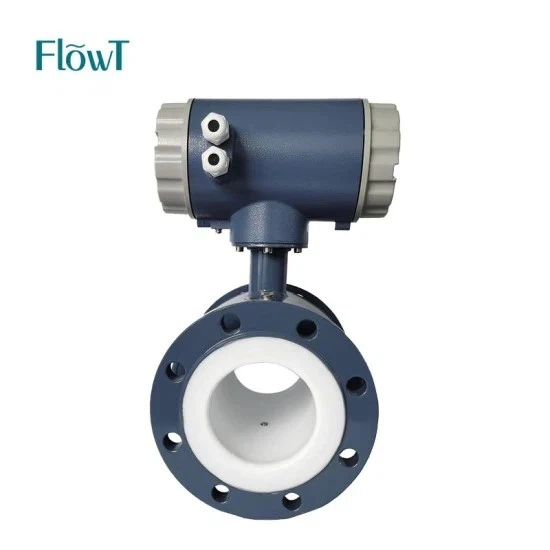

For applications in the chemical industry, where corrosive fluids are often involved, the focus may be on a mag flow meter that can provide accurate and reliable measurements in a harsh environment. A moderate - to - high magnetic field strength may be preferred to ensure accurate measurement of the fluid flow, even if the flow rate is relatively low. The Electromagnetic Flowmeters Electrical Meter For Sewage offered by our company is designed to meet these needs, with a well - calibrated magnetic field strength to ensure accurate measurement of conductive fluids.
In the water and wastewater treatment industry, where large volumes of water are typically measured, rangeability is often a key concern. A mag flow meter with a strong magnetic field can accurately measure both high and low flow rates, making it suitable for different stages of the treatment process. Our Mag Meter Flow Meter for Water Inline Type Flange Connection is an excellent choice for such applications, providing a wide range of measurement capabilities and reliable performance.
For applications where cost - effectiveness is a major consideration, such as in some small - scale industrial processes, a mag flow meter with a lower magnetic field strength may be sufficient. However, it is important to ensure that the reduced magnetic field strength does not compromise the accuracy of the measurement to an unacceptable level. Our China Factory Promotions DN4 - DN2000mm Electromagnetic Flowmeter offers a range of options with different magnetic field strengths to meet the diverse needs of our customers.
Conclusion
In conclusion, the magnetic field strength has a profound impact on the performance of mag flow meters. It affects measurement accuracy, rangeability, installation requirements, and the interaction with fluid characteristics. As a mag flow meter supplier, we understand the importance of carefully selecting the appropriate magnetic field strength for different applications.
If you are in the market for a high - quality mag flow meter and need to determine the right magnetic field strength for your specific application, we are here to help. We have a team of experts who can provide you with professional advice and guidance. Contact us for a detailed discussion on your procurement needs and let us work together to find the best mag flow meter solution for you.
References
- Beck, M. S., & Plaskowski, A. (1987). Flow Measurement Using Electromagnetic Techniques. New York: Wiley.
- Spitzer, D. W. (2001). Flow Measurement: Practical Guides for Measurement and Control. East Greenwich, RI: ISA - The Instrumentation, Systems, and Automation Society.
- Miller, R. W. (1996). Flow Measurement Engineering Handbook. New York: McGraw - Hill.