


Hey there! As a gas meter supplier, I often get asked about how ultrasonic gas meters work. It's a pretty cool technology, and I'm excited to break it down for you.
The Basics of Ultrasonic Gas Meters
So, let's start with the basics. An ultrasonic gas meter is a type of flow meter that uses ultrasonic waves to measure the flow of gas through a pipeline. Unlike traditional mechanical gas meters, which rely on moving parts to measure gas flow, ultrasonic gas meters have no moving parts. This makes them more reliable, accurate, and durable.
The way an ultrasonic gas meter works is based on the principle of the time difference of ultrasonic waves traveling in the gas flow. In simple terms, the meter has two ultrasonic transducers, one upstream and one downstream. These transducers send and receive ultrasonic signals through the gas.
When there is no gas flow, the time it takes for an ultrasonic wave to travel from the upstream transducer to the downstream transducer is the same as the time it takes to travel in the opposite direction. However, when gas is flowing, the speed of the gas affects the time of flight of the ultrasonic waves.
The wave traveling in the direction of the gas flow will be carried along by the gas, so it will take less time to reach the other transducer. On the other hand, the wave traveling against the gas flow will be slowed down, and it will take more time to reach the transducer.
The meter measures the difference in the time of flight of the two ultrasonic waves. This time difference is directly proportional to the velocity of the gas flow. By knowing the cross - sectional area of the pipeline, the meter can then calculate the volume of gas flowing through the pipeline over a given period of time.
The Components of an Ultrasonic Gas Meter
Now, let's take a closer look at the main components of an ultrasonic gas meter.
Ultrasonic Transducers
The ultrasonic transducers are the heart of the meter. They are responsible for generating and receiving the ultrasonic waves. These transducers are usually made of piezoelectric materials, which can convert electrical energy into mechanical vibrations (ultrasonic waves) and vice versa.
When an electrical pulse is applied to the transducer, it vibrates and generates an ultrasonic wave. When the ultrasonic wave hits the other transducer, it causes the transducer to vibrate, which in turn generates an electrical signal. The meter then measures the time it takes for this process to occur.
Measuring Tube
The measuring tube is where the gas flows through. It is designed to ensure a stable and uniform gas flow. The inner surface of the measuring tube is usually smooth to minimize any turbulence that could affect the accuracy of the measurement.
Electronic Circuitry
The electronic circuitry in the meter is responsible for controlling the operation of the transducers, measuring the time differences, and calculating the gas flow rate. It also processes the data and can communicate the measurement results to other devices, such as data loggers or control systems.
Advantages of Ultrasonic Gas Meters
There are several advantages to using ultrasonic gas meters, which is why they are becoming more and more popular in the gas industry.
High Accuracy
One of the biggest advantages of ultrasonic gas meters is their high accuracy. Since they have no moving parts, there is no mechanical wear and tear that can affect the measurement accuracy over time. They can measure gas flow with a very high degree of precision, even at low flow rates.
Wide Measurement Range
Ultrasonic gas meters can measure a wide range of gas flow rates. They can accurately measure both very low and very high flow rates, which makes them suitable for a variety of applications, from residential gas meters to large - scale industrial gas measurement.

Low Pressure Loss
Another advantage is that ultrasonic gas meters cause very little pressure loss in the pipeline. This is because there are no obstructions in the gas flow path, unlike some other types of flow meters. Low pressure loss means that less energy is wasted in the gas distribution system, which can result in cost savings.
Long Service Life
With no moving parts, ultrasonic gas meters have a long service life. They are less prone to mechanical failures and require less maintenance compared to traditional mechanical gas meters. This can save both time and money in the long run.
Applications of Ultrasonic Gas Meters
Ultrasonic gas meters are used in a wide range of applications.
Residential Gas Metering
In residential settings, ultrasonic gas meters are used to measure the gas consumption of households. They provide accurate and reliable measurements, which are important for billing purposes. Their long service life also means that homeowners don't have to worry about frequent meter replacements.
Industrial Gas Measurement
In the industrial sector, ultrasonic gas meters are used to measure the gas flow in factories, power plants, and other industrial facilities. They can accurately measure the gas consumption for process control, energy management, and environmental monitoring.
Gas Distribution Networks
In gas distribution networks, ultrasonic gas meters are used to measure the gas flow at various points in the pipeline. This helps gas companies to manage the gas supply, detect leaks, and ensure the efficient operation of the network.
Related Products
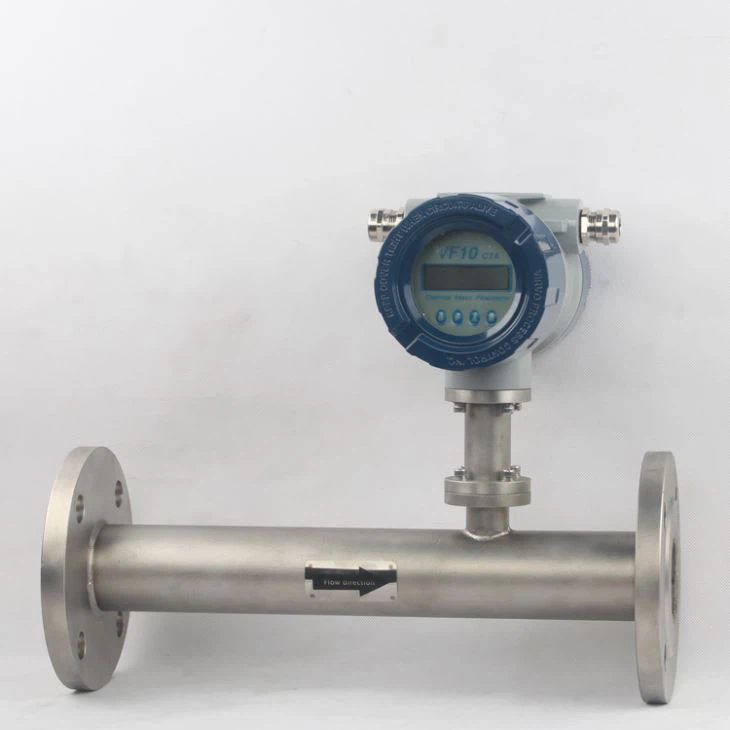
If you're interested in other types of flow meters, we also offer Gas Mass Flow Meter and Air Mass Flow Meter. These meters are based on different principles but also provide accurate and reliable flow measurements. We also have Good Quality Thermal Mass Flow Meter that can be a great option for specific applications.
Contact Us for Purchase
If you're in the market for a high - quality gas meter, whether it's an ultrasonic gas meter or other types, we'd love to hear from you. We have a team of experts who can help you choose the right meter for your specific needs and provide you with all the support you need. Don't hesitate to reach out to us for a purchase negotiation. We're confident that our products will meet your expectations and help you with your gas measurement requirements.
References
- "Flow Measurement Handbook: Industrial Designs and Applications" by Richard W. Miller
- "Ultrasonic Flowmeters: Principles and Applications" by various industry experts


