


In the complex landscape of industrial automation, closed - loop control systems stand as the backbone of precision and efficiency. At the heart of many such systems lies a crucial component: the pressure transmitter. As a leading pressure transmitter supplier, I am excited to delve into how these devices operate within a closed - loop control system.
Understanding Closed - Loop Control Systems
Before we explore the role of pressure transmitters, it's essential to understand the basics of closed - loop control systems. A closed - loop control system is designed to maintain a desired output by continuously comparing it with a reference input. This comparison generates an error signal, which is then used to adjust the system's input to minimize the error. In essence, it's a self - regulating system that ensures the process variable (such as pressure, temperature, or flow) remains within the desired range.
The Fundamentals of Pressure Transmitters
A pressure transmitter is a device that measures pressure and converts it into an electrical signal. This signal is proportional to the pressure applied to the transmitter. The basic components of a pressure transmitter include a pressure sensor, a signal conditioning circuit, and an output stage.
The pressure sensor is the heart of the transmitter. It can be based on different technologies, such as strain - gauge, capacitive, or piezoelectric. For example, a strain - gauge pressure sensor works on the principle that when pressure is applied to a diaphragm, it deforms, and this deformation causes a change in the resistance of the strain gauges attached to the diaphragm. This change in resistance is then measured and converted into an electrical signal.
The signal conditioning circuit amplifies and processes the weak electrical signal from the pressure sensor. It also compensates for factors like temperature variations and linearizes the output signal. Finally, the output stage converts the conditioned signal into a standard output format, such as 4 - 20 mA or 0 - 10 V, which can be easily read by control systems.
How Pressure Transmitters Fit into Closed - Loop Control Systems
In a closed - loop control system, the pressure transmitter serves as the sensing element. It continuously measures the pressure of the process fluid or gas and sends the corresponding electrical signal to the controller.
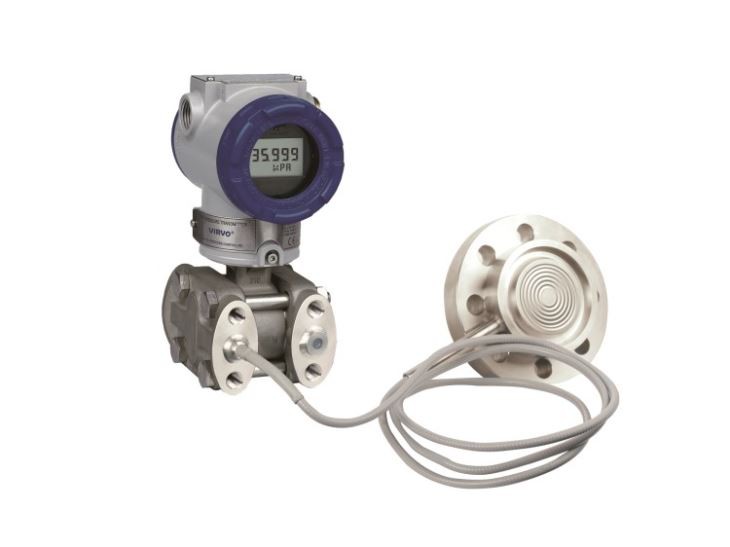

Let's take the example of a hydraulic system. The desired pressure in the hydraulic system is set as the reference input in the controller. The pressure transmitter measures the actual pressure in the system and sends this information to the controller. The controller then compares the actual pressure (measured by the transmitter) with the desired pressure. If there is a difference (error), the controller sends a control signal to an actuator, such as a valve or a pump.
The actuator adjusts the flow or pressure in the system to reduce the error. For instance, if the measured pressure is lower than the desired pressure, the controller may send a signal to increase the pump speed or open a valve further to increase the pressure. As the pressure changes, the pressure transmitter continues to monitor it, and the process repeats until the actual pressure matches the desired pressure.
Types of Pressure Transmitters in Closed - Loop Control Systems
There are different types of pressure transmitters that can be used in closed - loop control systems, each with its own advantages and applications.
- Gauge Pressure Transmitters: These transmitters measure the pressure relative to the atmospheric pressure. They are commonly used in applications where the pressure difference from the ambient pressure is of interest, such as in industrial pipelines and storage tanks. Our Stable Gauge or Absolute Pressure Transmitter with Digital Signal Output offers high stability and accurate measurement for such applications.
- Absolute Pressure Transmitters: These measure the pressure relative to a perfect vacuum. They are used in applications where absolute pressure is critical, such as in vacuum systems and altitude measurement.
- Differential Pressure Transmitters: These transmitters measure the difference in pressure between two points. They are widely used in flow measurement applications, where the pressure drop across a flow element (such as an orifice plate or a venturi tube) is proportional to the flow rate. Our Differential Pressure Transmitter with Single or Double Flanges Flow Meter is specifically designed for such flow measurement applications in closed - loop control systems.
- Liquid Pressure Transmitters: These are designed to measure the pressure of liquids. They are used in applications like water treatment plants, chemical processing, and food and beverage industries. Our Industrial Pressure Transmitter for Liquid Measurement Smart Type Flow Meter provides accurate and reliable measurement for liquid pressure in closed - loop control systems.
Benefits of Using Pressure Transmitters in Closed - Loop Control Systems
The use of pressure transmitters in closed - loop control systems offers several benefits.
- Precision Control: Pressure transmitters provide accurate and real - time pressure measurement, allowing the closed - loop control system to make precise adjustments. This ensures that the process variable remains within the desired range, resulting in high - quality products and efficient operations.
- Safety: By continuously monitoring the pressure, pressure transmitters help prevent over - pressure or under - pressure situations, which can be dangerous in industrial processes. For example, in a steam boiler, maintaining the correct pressure is crucial to prevent explosions.
- Energy Efficiency: Closed - loop control systems with pressure transmitters can optimize the use of energy. By adjusting the system based on the actual pressure requirements, energy consumption can be reduced. For instance, in a pumping system, the pump speed can be adjusted according to the pressure demand, saving electricity.
Challenges and Considerations
While pressure transmitters are essential for closed - loop control systems, there are some challenges and considerations to keep in mind.
- Calibration: Pressure transmitters need to be calibrated regularly to ensure accurate measurement. Over time, factors such as sensor drift and environmental conditions can affect the accuracy of the transmitter.
- Environmental Conditions: The performance of pressure transmitters can be affected by environmental factors such as temperature, humidity, and vibration. It's important to select a transmitter that is suitable for the specific environmental conditions of the application.
- Compatibility: The pressure transmitter needs to be compatible with the controller and other components in the closed - loop control system. This includes ensuring that the output signal of the transmitter is in a format that can be read by the controller.
Conclusion
In conclusion, pressure transmitters play a vital role in closed - loop control systems. They provide the necessary pressure measurement data that enables the system to maintain the desired process variable. As a pressure transmitter supplier, we offer a wide range of high - quality transmitters suitable for various closed - loop control applications. Whether you need a gauge pressure transmitter for a simple pipeline system or a differential pressure transmitter for complex flow measurement, we have the right solution for you.
If you are interested in learning more about our pressure transmitters or would like to discuss your specific application requirements, we invite you to contact us for procurement and further technical discussions. Our team of experts is ready to assist you in finding the best pressure transmitter for your closed - loop control system.
References
- Dorf, R. C., & Bishop, R. H. (2011). Modern Control Systems. Pearson.
- Beckwith, T. G., Buck, N. L., & Marangoni, R. D. (2007). Mechanical Measurements. Addison - Wesley.


