


Power line carrier (PLC) technology has emerged as a crucial component in modern communication systems, offering a cost - effective and reliable means of transmitting data over existing power lines. As a trusted transmitter supplier, I am excited to delve into the inner workings of a power line carrier transmitter and shed light on its functionality, applications, and benefits.
The Basics of Power Line Carrier Transmission
At its core, power line carrier transmission involves using the electrical power distribution network as a medium for data communication. Instead of relying on dedicated communication cables, PLC systems leverage the existing power lines to send and receive information. This approach eliminates the need for extensive cabling infrastructure, making it a highly attractive option for various industries.
The power line carrier transmitter is the key device responsible for injecting the data signals onto the power lines. It takes the digital or analog data from a source, such as a sensor, a control system, or a monitoring device, and modulates it onto a high - frequency carrier signal. This carrier signal is then combined with the power frequency (usually 50Hz or 60Hz) and transmitted over the power lines.
How a Power Line Carrier Transmitter Works
Signal Generation
The first step in the operation of a power line carrier transmitter is signal generation. The data to be transmitted is first processed by the transmitter's internal circuitry. If the data is in analog form, it may be converted to digital using an analog - to - digital converter (ADC). Digital data is then prepared for modulation.
The carrier signal, which is a high - frequency sinusoidal wave, is generated within the transmitter. The frequency of the carrier signal is carefully chosen to avoid interference with the power frequency and other existing signals on the power lines. Typical carrier frequencies for power line carrier systems range from a few kilohertz to several megahertz.
Modulation
Once the carrier signal and the data signal are ready, the next step is modulation. Modulation is the process of altering the characteristics of the carrier signal in accordance with the data signal. There are several modulation techniques used in power line carrier transmitters, including amplitude modulation (AM), frequency modulation (FM), and phase - shift keying (PSK).
- Amplitude Modulation (AM): In AM, the amplitude of the carrier signal is varied in proportion to the amplitude of the data signal. This is a relatively simple modulation technique but is more susceptible to noise and interference.
- Frequency Modulation (FM): FM changes the frequency of the carrier signal based on the data signal. FM provides better noise immunity compared to AM, making it suitable for applications where the power line environment is noisy.
- Phase - Shift Keying (PSK): PSK modulates the phase of the carrier signal to represent the data. It is a digital modulation technique that offers high data rates and good noise performance, making it a popular choice for modern power line carrier systems.
Coupling
After modulation, the modulated carrier signal needs to be coupled onto the power lines. This is achieved using a coupling device, such as a transformer or a capacitor. The coupling device ensures that the high - frequency carrier signal can be efficiently transferred to the power lines while isolating the transmitter from the high - voltage power supply.
The coupling device also provides impedance matching between the transmitter and the power lines. Impedance matching is crucial to ensure maximum power transfer and minimize signal reflection, which can degrade the quality of the transmitted signal.
Transmission
Once the modulated carrier signal is coupled onto the power lines, it travels along the power network. The power lines act as a waveguide for the high - frequency signal. However, the power line environment is complex, and the signal may encounter various types of interference, such as noise from electrical appliances, power surges, and signal attenuation due to the length of the power lines.
To overcome these challenges, power line carrier transmitters often incorporate error - correction codes and signal - boosting techniques. Error - correction codes allow the receiver to detect and correct errors in the received signal, while signal - boosting techniques, such as repeaters, can be used to amplify the signal at regular intervals along the power lines.

Applications of Power Line Carrier Transmitters
Power line carrier transmitters have a wide range of applications across different industries.
Smart Grid
In the smart grid, power line carrier transmitters play a vital role in enabling two - way communication between the utility company and the consumers. They are used to transmit data such as electricity consumption, voltage levels, and fault information from smart meters to the utility's control center. This data helps the utility company to manage the power grid more efficiently, optimize energy distribution, and detect and respond to power outages quickly.
Home Automation
Power line carrier technology is also widely used in home automation systems. Transmitters can be used to control various home appliances, such as lights, thermostats, and security systems, over the existing power lines. This eliminates the need for additional wiring in the house, making home automation more accessible and cost - effective.
Industrial Automation
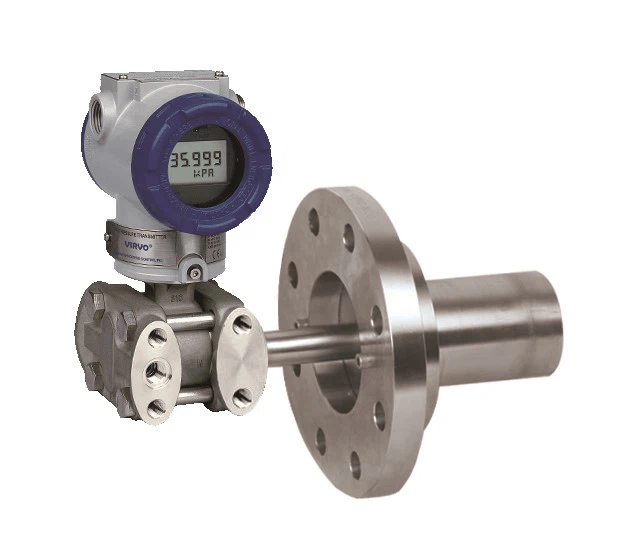
In industrial settings, power line carrier transmitters are used for monitoring and controlling industrial equipment. They can transmit data from sensors installed on machines, such as temperature, pressure, and vibration sensors, to a central control system. This allows for real - time monitoring of the equipment's performance and early detection of potential faults. For example, you can explore our Industrial Pressure Transmitter for Liquid Measurement Smart Type Flow Meter, Pressure Transmitter with Hart Protocol for Water Measurement, and Differential Pressure Transmitter with Single or Double Flanges Flow Meter which can work in conjunction with power line carrier transmitters for efficient industrial data transmission.
Benefits of Using Power Line Carrier Transmitters
Cost - Effectiveness
One of the main advantages of power line carrier transmitters is their cost - effectiveness. Since they use the existing power lines for data transmission, there is no need to install additional communication cables. This significantly reduces the installation and maintenance costs, especially in large - scale applications such as smart grids and industrial automation.
Easy Installation
Power line carrier transmitters are relatively easy to install. They can be connected directly to the power lines without the need for complex wiring or infrastructure. This makes them a convenient option for retrofitting existing systems with communication capabilities.
Wide Coverage
Power lines are already installed in most areas, providing a wide coverage area for data transmission. This means that power line carrier systems can be used to communicate over long distances without the need for extensive network infrastructure.
Conclusion
Power line carrier transmitters are an essential component in modern communication systems, offering a reliable and cost - effective way to transmit data over existing power lines. Their ability to work in various industries, from smart grids to home and industrial automation, makes them a versatile solution for many applications.
If you are looking for high - quality power line carrier transmitters or other related products, we are here to assist you. Our team of experts can provide you with detailed information and guidance on choosing the right transmitter for your specific needs. Contact us today to start a procurement discussion and take advantage of our reliable products and excellent service.
References
- "Power Line Communications: Principles, Techniques, and Applications" by Domenico Falcão and António Silva.
- "Industrial Communication Technology Handbook" by Andreas Schröder.


