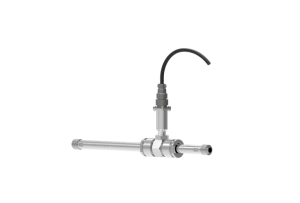
Hey there! I'm a supplier of BTU meters, and I'm super excited to share with you how these nifty devices measure the energy consumption of different apartments in a building. It's a topic that's not only important for building owners and managers but also for the residents themselves, as it can lead to more efficient energy use and cost savings.


What's a BTU Meter Anyway?
First things first, let's break down what a BTU meter is. BTU stands for British Thermal Unit, which is a unit of measurement for energy. A BTU meter is a device that measures the amount of thermal energy (heat or cold) transferred through a fluid, usually water, in a heating or cooling system. In the context of an apartment building, these meters are installed in the pipes that supply hot or cold water to each individual apartment.
How Does It Work?
The basic principle behind a BTU meter is pretty straightforward. It measures two main things: the flow rate of the water and the temperature difference between the supply and return pipes.
Measuring the Flow Rate
To measure the flow rate, we use different types of flow meters. One of the most popular options is the Efficient and convenient Water Flow Rate Meter. This type of meter uses ultrasonic technology to measure the speed of the water flowing through the pipe. It's non - intrusive, which means it doesn't require cutting into the pipe, making it easy to install and maintain.
Another great option is the Clamp - On Ultrasonic Water Flow Meter. As the name suggests, you can simply clamp it onto the outside of the pipe. This is especially useful when you don't want to disrupt the existing plumbing system. And for small pipes, we have the Clamp On Ultrasonic Flow Meter Small Pipe Solution, which is specifically designed to accurately measure the flow in narrow pipes.
The flow meter sends a signal to the BTU meter, telling it how much water is passing through the pipe per unit of time, usually in gallons per minute or liters per second.
Measuring the Temperature Difference
The BTU meter also has temperature sensors installed on both the supply and return pipes. The supply pipe carries the hot or cold water into the apartment, while the return pipe brings the water back after it has been used for heating or cooling. The temperature sensors measure the temperature of the water at these two points.
The BTU meter then calculates the temperature difference between the supply and return water. This difference is crucial because it tells us how much heat or cold has been transferred from the water to the apartment.
Calculating the Energy Consumption
Once the BTU meter has the flow rate and the temperature difference, it can calculate the energy consumption. The formula for calculating the energy (in BTUs) is:
Energy (BTU) = Flow Rate (gallons per minute) x Temperature Difference (°F) x 500
The number 500 is a constant that takes into account the specific heat of water and the conversion factors. If you're using the metric system, the formula is a bit different, but the principle remains the same.
Why Is It Important for Different Apartments?
In a multi - apartment building, each unit may have different energy usage patterns. Some apartments may be larger, have more occupants, or have different types of appliances. By installing a BTU meter in each apartment, we can accurately measure the energy consumption of each unit.
This is beneficial for several reasons. For building owners and managers, it allows for fair billing. Instead of dividing the total energy cost equally among all the apartments, they can bill each tenant based on their actual energy usage. This encourages residents to be more energy - conscious, as they know they're only paying for what they use.
For residents, it gives them more control over their energy costs. They can monitor their energy consumption and make adjustments to their usage habits if they want to save money. For example, they can turn down the thermostat or use energy - efficient appliances.
Installation and Maintenance
Installing a BTU meter is usually a straightforward process. Our team of experts can come in and install the flow meter and temperature sensors in a matter of hours, depending on the complexity of the plumbing system. We make sure to minimize any disruption to the building's operations.
Maintenance is also relatively easy. The ultrasonic flow meters we use have no moving parts, which means there's less wear and tear. We recommend regular checks to ensure the sensors are working properly and to clean the meters if necessary.
Conclusion
So, there you have it! That's how a BTU meter measures the energy consumption of different apartments in a building. It's a simple yet effective way to accurately track energy usage, promote fair billing, and encourage energy efficiency.
If you're a building owner, manager, or even a property developer, and you're interested in installing BTU meters in your building, I'd love to talk to you. We have a wide range of high - quality BTU meters and flow meters to suit your needs. Just reach out, and we can start a conversation about how we can help you make your building more energy - efficient and cost - effective.
References
- ASHRAE Handbook - HVAC Systems and Equipment. American Society of Heating, Refrigerating and Air - Conditioning Engineers.
- "Flow Measurement Handbook: Principles and Applications". Richard W. Miller.