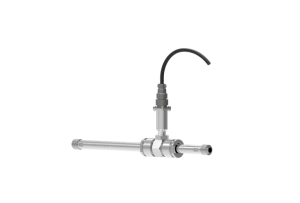
Pulsating flow is a common phenomenon in many industrial applications, which can pose challenges to the accurate measurement of fluid flow. As a leading supplier of magnetic flow meters (mag meters), we understand the intricacies of handling pulsating flow and have developed effective solutions to ensure reliable and precise flow measurement. In this blog, we will explore how mag meters handle pulsating flow, the challenges they face, and the strategies we employ to overcome these issues.
Understanding Pulsating Flow
Pulsating flow occurs when the fluid flow rate varies periodically over time. This can be caused by a variety of factors, including pump operation, valve opening and closing, and the reciprocating motion of machinery. Pulsating flow can have a significant impact on the accuracy of flow measurement, as it can cause fluctuations in the measured flow rate and introduce errors in the data.
The characteristics of pulsating flow can vary widely depending on the source and nature of the pulsations. Some pulsations may be regular and periodic, with a well-defined frequency and amplitude, while others may be random and irregular. The frequency and amplitude of the pulsations can also vary over time, making it difficult to accurately measure the flow rate.
How Mag Meters Work
Magnetic flow meters, also known as electromagnetic flow meters, are based on Faraday's law of electromagnetic induction. According to this law, when a conductive fluid flows through a magnetic field, an electromotive force (EMF) is induced in the fluid, which is proportional to the flow velocity of the fluid. The mag meter measures this induced EMF and uses it to calculate the flow rate of the fluid.
Mag meters are well-suited for measuring the flow of conductive fluids, such as water, wastewater, and various chemical solutions. They offer several advantages over other types of flow meters, including high accuracy, wide turndown ratio, and the ability to measure bidirectional flow. However, pulsating flow can pose challenges to the accurate operation of mag meters, as the fluctuations in the flow rate can cause corresponding fluctuations in the induced EMF.
Challenges of Pulsating Flow for Mag Meters
Pulsating flow can present several challenges to the accurate measurement of fluid flow using mag meters. Some of the main challenges include:
1. Signal Fluctuations
The fluctuations in the flow rate caused by pulsating flow can result in corresponding fluctuations in the induced EMF measured by the mag meter. These signal fluctuations can make it difficult to accurately determine the average flow rate, as the meter may be unable to distinguish between the true flow rate and the noise caused by the pulsations.
2. Frequency Response
Mag meters have a limited frequency response, which means that they may not be able to accurately measure high-frequency pulsations. If the frequency of the pulsations is higher than the meter's frequency response, the meter may not be able to follow the rapid changes in the flow rate, resulting in inaccurate measurements.


3. Zero Point Shift
Pulsating flow can also cause a zero point shift in the mag meter, which means that the meter may indicate a non-zero flow rate when there is actually no flow. This can be caused by the residual magnetic field in the meter or the electrical noise generated by the pulsations.
4. Flow Profile Distortion
The pulsations in the flow rate can also cause the flow profile to become distorted, which can affect the accuracy of the flow measurement. A distorted flow profile can result in uneven distribution of the fluid velocity across the cross-section of the pipe, which can lead to errors in the measurement of the average flow rate.
Strategies for Handling Pulsating Flow
To overcome the challenges posed by pulsating flow, we have developed several strategies and techniques to ensure the accurate and reliable operation of our mag meters. Some of the key strategies include:
1. Signal Processing
Our mag meters are equipped with advanced signal processing algorithms that can filter out the noise caused by the pulsations and accurately determine the average flow rate. These algorithms use digital signal processing techniques to analyze the measured EMF signal and remove the high-frequency components associated with the pulsations.
2. Extended Frequency Response
We have also developed mag meters with an extended frequency response, which allows them to accurately measure high-frequency pulsations. These meters are designed to have a faster response time and a wider bandwidth, enabling them to follow the rapid changes in the flow rate caused by the pulsations.
3. Zero Point Calibration
To prevent zero point shift, our mag meters are carefully calibrated to ensure that they indicate a zero flow rate when there is actually no flow. This calibration process involves measuring the residual magnetic field in the meter and adjusting the zero point setting accordingly.
4. Flow Conditioning
In some cases, flow conditioning devices can be used to reduce the pulsations in the flow rate and improve the accuracy of the flow measurement. Flow conditioning devices, such as straighteners and diffusers, can help to smooth out the flow profile and reduce the turbulence in the fluid, which can minimize the impact of the pulsations on the mag meter.
Our Product Solutions
As a leading supplier of mag meters, we offer a wide range of products that are specifically designed to handle pulsating flow. Our mag meters are available in various sizes and configurations to meet the needs of different applications.
One of our popular products is the China Factory Promotions DN4-DN2000mm Electromagnetic Flowmeter. This flowmeter is suitable for measuring the flow of conductive fluids in pipes with diameters ranging from DN4 to DN2000mm. It features advanced signal processing algorithms and an extended frequency response, making it ideal for applications with pulsating flow.
Another product that is well-suited for handling pulsating flow is the Flange Electromagnetic Flow Meter With 316 Stainless Steel. This flowmeter is made of high-quality 316 stainless steel, which provides excellent corrosion resistance and durability. It is also equipped with advanced signal processing technology to ensure accurate and reliable flow measurement in pulsating flow conditions.
We also offer the Mag Meter Flow Meter for Water Inline Type Flange Connection, which is specifically designed for measuring the flow of water in inline applications. This flowmeter features a flange connection for easy installation and a compact design that allows it to be used in tight spaces. It is also capable of handling pulsating flow and providing accurate flow measurement.
Conclusion
Pulsating flow is a common challenge in many industrial applications, but with the right strategies and products, it can be effectively managed. As a leading supplier of mag meters, we have the expertise and experience to provide our customers with reliable and accurate flow measurement solutions for pulsating flow applications. Our advanced signal processing technology, extended frequency response, and careful calibration ensure that our mag meters can accurately measure the flow rate even in the presence of pulsations.
If you are facing challenges with pulsating flow in your application and are looking for a reliable flow measurement solution, we encourage you to [contact us](contact information not provided) to discuss your specific needs. Our team of experts will be happy to assist you in selecting the right mag meter for your application and providing you with the support and guidance you need to ensure accurate and reliable flow measurement.
References
- [List of relevant technical papers or industry standards related to mag meters and pulsating flow]
- [Any other relevant references used in the preparation of this blog]