


As a supplier of air meters, I've often been asked whether our products can be effectively used in textile mills for air monitoring. The short answer is yes, and in this blog post, I'll delve into the details of how air meters can play a crucial role in textile manufacturing environments.
The Importance of Air Monitoring in Textile Mills
Textile mills are complex industrial settings where a variety of processes take place. From spinning and weaving to dyeing and finishing, each step involves different materials and operations that can have a significant impact on the air quality within the facility.
Health and Safety
One of the primary reasons for air monitoring in textile mills is to ensure the health and safety of workers. Many textile processes generate dust, fibers, and chemical fumes that can be harmful if inhaled. For example, cotton dust, which is a common by - product in cotton spinning mills, can cause respiratory problems such as byssinosis, also known as "brown lung disease." By using air meters to monitor the concentration of these pollutants, mill operators can take appropriate measures to protect their employees, such as implementing ventilation systems or providing personal protective equipment.
Process Efficiency
Air quality can also affect the efficiency of textile manufacturing processes. For instance, in dyeing and finishing operations, the humidity and temperature of the air can influence the color fastness and texture of the fabrics. If the air is too dry, the fabrics may become brittle and prone to breakage during processing. On the other hand, excessive humidity can lead to mold growth and uneven dyeing. By monitoring the air conditions using air meters, mill operators can optimize the environmental parameters to ensure consistent product quality and improve overall process efficiency.

Environmental Compliance
Textile mills are subject to various environmental regulations regarding air emissions. These regulations aim to limit the release of pollutants such as volatile organic compounds (VOCs), particulate matter, and hazardous air pollutants (HAPs) into the atmosphere. Air meters can help mills comply with these regulations by accurately measuring the concentration of these pollutants and providing data for reporting purposes. This not only helps mills avoid potential fines and legal issues but also demonstrates their commitment to environmental sustainability.
Types of Air Meters Suitable for Textile Mills
There are several types of air meters that can be used in textile mills, depending on the specific monitoring requirements.
Particle Counters
Particle counters are used to measure the concentration and size distribution of airborne particles. In textile mills, these devices can be used to monitor the levels of dust and fibers in the air. They work by drawing in a sample of air and counting the number of particles in different size ranges. This information can be used to assess the effectiveness of dust control measures and to determine whether the air quality is within acceptable limits for worker health.
Gas Analyzers
Gas analyzers are used to measure the concentration of specific gases in the air, such as VOCs, carbon monoxide (CO), and oxygen (O₂). In textile mills, gas analyzers can be used to monitor the emissions from dyeing and finishing processes, which often involve the use of chemicals that can release VOCs. They can also be used to ensure that the oxygen levels in confined spaces are safe for workers.
Thermal Mass Flow Meters
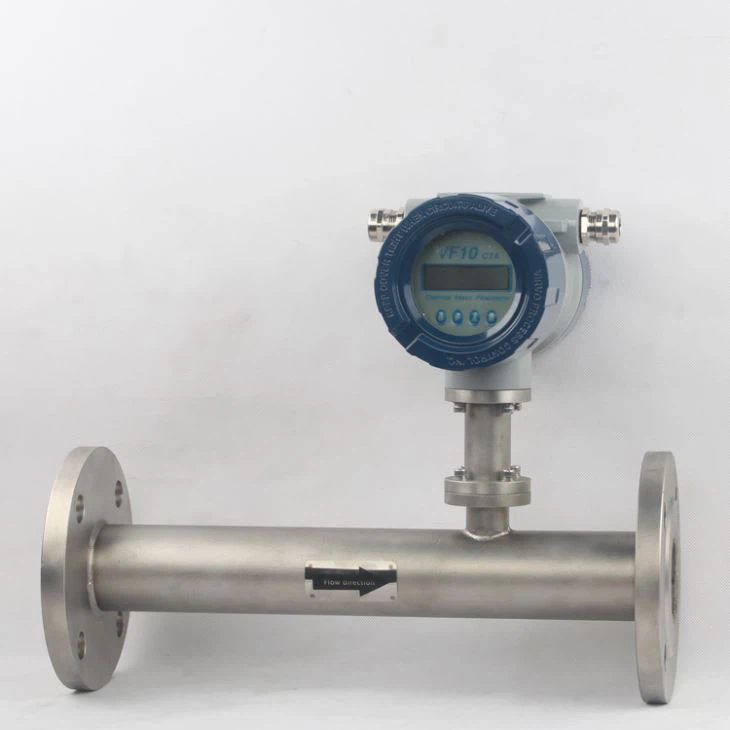
Thermal mass flow meters are particularly useful for measuring the flow rate of air in ventilation systems. These meters work by measuring the heat transfer from a heated sensor to the flowing air. They are highly accurate and can provide real - time data on the air flow rate, which is essential for ensuring proper ventilation in textile mills. For more information on the application of thermal mass flow meters in oxygen or air, you can visit Insertion Type Thermal Mass Flow Meter Application in Oxygen or Air. If you are interested in gas mass flow meters for air flow measurement, check out Gas Mass Flow Meter Air Flow Measure. And for a good quality thermal mass flow meter, visit Good Quality Thermal Mass Flow Meter.
Installation and Maintenance of Air Meters in Textile Mills
Proper installation and maintenance of air meters are crucial for ensuring accurate and reliable monitoring results.
Installation
When installing air meters in textile mills, it is important to choose the right locations based on the specific monitoring requirements. For example, particle counters should be installed in areas where dust and fiber generation is high, such as near spinning machines or in dust collection systems. Gas analyzers should be placed in areas where gas emissions are likely to occur, such as in dyeing and finishing rooms. Thermal mass flow meters should be installed in the ventilation ducts to measure the air flow rate accurately.
Maintenance
Regular maintenance of air meters is essential to ensure their proper functioning. This includes cleaning the sensors, calibrating the meters at regular intervals, and replacing any worn - out parts. It is also important to keep a record of the maintenance activities and the monitoring results for future reference.
Case Studies: Successful Use of Air Meters in Textile Mills
There are many examples of textile mills that have successfully implemented air monitoring programs using air meters.
Case Study 1: A Cotton Spinning Mill
A cotton spinning mill in the United States installed particle counters and thermal mass flow meters in its production areas. By monitoring the dust levels and air flow rates, the mill was able to identify areas where the dust control measures were not effective and make necessary adjustments. As a result, the mill was able to reduce the dust concentration in the air by 50%, improving the working environment for its employees and reducing the risk of respiratory diseases.
Case Study 2: A Dyeing and Finishing Mill
A dyeing and finishing mill in Europe installed gas analyzers to monitor the emissions of VOCs from its dyeing processes. By using the data from the gas analyzers, the mill was able to optimize its dyeing processes and reduce the use of chemicals, resulting in a significant reduction in VOC emissions. The mill also improved its product quality by ensuring that the air quality in the dyeing rooms was within the optimal range.
Conclusion
In conclusion, air meters can be effectively used in textile mills for air monitoring. They play a crucial role in ensuring the health and safety of workers, improving process efficiency, and ensuring environmental compliance. By choosing the right type of air meters and implementing a proper installation and maintenance program, textile mills can benefit from accurate and reliable air quality monitoring.
If you are a textile mill operator and are interested in learning more about how our air meters can help you improve your air quality monitoring, please feel free to contact us for a consultation. We are committed to providing high - quality air monitoring solutions that meet your specific needs.
References
- American Conference of Governmental Industrial Hygienists (ACGIH). Threshold Limit Values (TLVs) for Chemical Substances and Physical Agents and Biological Exposure Indices. Cincinnati, OH: ACGIH, 2023.
- Occupational Safety and Health Administration (OSHA). Textile Mills Standards. Washington, DC: OSHA, 2023.
- World Health Organization (WHO). Air Quality Guidelines. Geneva, Switzerland: WHO, 2023.


