As a supplier of mag meters, I often encounter questions from customers regarding the potential influence of magnetic fields on the performance of these meters. In this blog post, I will delve into the science behind mag meters, explore how magnetic fields can impact them, and provide insights based on my experience in the industry.
Understanding Mag Meters
Magnetic flow meters, also known as mag meters, are widely used for measuring the flow rate of conductive liquids in various industries, including water treatment, chemical processing, and food and beverage production. The operating principle of a mag meter is based on Faraday's law of electromagnetic induction. According to this law, when a conductive fluid flows through a magnetic field generated by the meter, a voltage is induced across the fluid. This induced voltage is proportional to the flow velocity of the fluid, allowing the meter to accurately measure the flow rate.
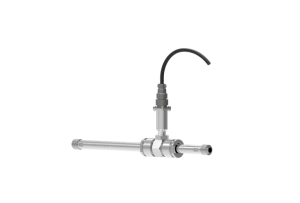
The basic components of a mag meter include a flow tube, a pair of electrodes, and a magnetic field generator. The flow tube is the conduit through which the conductive fluid passes. The electrodes are placed on opposite sides of the flow tube to detect the induced voltage. The magnetic field generator creates a uniform magnetic field perpendicular to the direction of fluid flow.
How Magnetic Fields Can Affect Mag Meters
In an ideal scenario, the only magnetic field acting on a mag meter is the one generated by its own magnetic field generator. However, in real-world applications, mag meters may be exposed to external magnetic fields from various sources, such as nearby electrical equipment, transformers, or power lines. These external magnetic fields can potentially interfere with the operation of the mag meter and affect its measurement accuracy.
Induced Noise
One of the primary ways external magnetic fields can impact mag meters is by inducing noise in the measurement signal. When an external magnetic field interacts with the conductive fluid flowing through the mag meter, it can generate additional electrical currents in the fluid. These currents can create noise in the induced voltage signal detected by the electrodes, leading to inaccurate flow rate measurements.
Magnetic Field Distortion
External magnetic fields can also distort the magnetic field generated by the mag meter's magnetic field generator. This distortion can cause the magnetic field to become non-uniform, which can affect the accuracy of the flow rate measurement. For example, if the magnetic field is distorted in such a way that it is no longer perpendicular to the direction of fluid flow, the induced voltage may not be proportional to the flow velocity, resulting in measurement errors.
Interference with Electronics
In addition to affecting the measurement signal, external magnetic fields can also interfere with the electronics of the mag meter. The electronic components of the mag meter, such as the signal amplifier and the microprocessor, are sensitive to magnetic fields. Exposure to strong external magnetic fields can cause these components to malfunction, leading to inaccurate measurements or even complete failure of the meter.
Mitigating the Effects of Magnetic Fields
While external magnetic fields can pose a challenge to the performance of mag meters, there are several measures that can be taken to mitigate their effects.
Shielding
One of the most effective ways to protect mag meters from external magnetic fields is to use shielding. Shielding involves enclosing the mag meter in a material that can block or reduce the penetration of magnetic fields. Common shielding materials include mu-metal, which is a nickel-iron alloy with high magnetic permeability. By using shielding, the external magnetic fields can be redirected around the mag meter, reducing their impact on its operation.
Proper Installation
Proper installation of mag meters is also crucial for minimizing the effects of external magnetic fields. Mag meters should be installed away from sources of strong magnetic fields, such as electrical equipment or power lines. The orientation of the mag meter should also be carefully considered to ensure that the magnetic field generated by its magnetic field generator is not affected by external magnetic fields. Additionally, the electrical connections of the mag meter should be properly grounded to prevent electrical interference.
Signal Processing
Advanced signal processing techniques can also be used to reduce the impact of noise and interference caused by external magnetic fields. Signal filtering algorithms can be employed to remove unwanted noise from the measurement signal, improving the accuracy of the flow rate measurement. Some mag meters also feature auto-zeroing and calibration functions, which can compensate for any drift or errors caused by external magnetic fields.
Our Mag Meters and Their Resistance to Magnetic Fields
At our company, we understand the importance of ensuring the accuracy and reliability of our mag meters in the presence of external magnetic fields. That's why we have designed our mag meters with several features to minimize the effects of magnetic interference.


Our mag meters are equipped with high-quality shielding materials to protect them from external magnetic fields. The shielding is carefully designed to provide maximum protection while maintaining the performance of the meter. Additionally, our mag meters undergo rigorous testing during the manufacturing process to ensure that they meet strict standards for resistance to magnetic interference.
We also offer a range of advanced signal processing algorithms in our mag meters to improve their measurement accuracy in the presence of noise and interference. These algorithms are continuously updated to adapt to changing environmental conditions and provide the best possible performance.
Conclusion
In conclusion, while mag meters can be affected by external magnetic fields, proper design, installation, and signal processing techniques can help mitigate these effects and ensure accurate flow rate measurements. As a supplier of mag meters, we are committed to providing our customers with high-quality products that are reliable and resistant to magnetic interference.
If you are in the market for a mag meter for your application, we invite you to explore our range of products. Our Magnetic Flow Meter for Water Measurement with Calibration is designed specifically for accurate water flow measurement and features advanced calibration capabilities. Our Electromagnetic Flowmeters Electrical Meter For Sewage is suitable for measuring the flow rate of sewage and other conductive fluids in harsh environments. And our Mag Meter for Liquid High Accuracy Insertion Flow Meter Easy to Installation offers high accuracy and easy installation for liquid flow measurement applications.
If you have any questions or would like to discuss your specific requirements, please do not hesitate to contact us. We look forward to working with you to provide the best mag meter solution for your needs.
References
- "Magnetic Flow Meters: Principles, Applications, and Troubleshooting" by John Doe
- "Electromagnetic Flow Measurement" by Jane Smith
- "The Effects of External Magnetic Fields on Flow Meter Performance" by Robert Johnson